Sustainability · Nature
Vietnam's Coffee Belt Faces Reckoning After Three Decades of Forest Loss
Satellite analysis reveals Central Highlands shed half its tropical forest cover between 1990 and 2020, threatening the sustainability of the world's second-largest coffee exporter
KEY TAKEAWAYS
- ·Tropical forest cover in Vietnam's Central Highlands fell from 42.8 per cent in 1990 to 19 per cent by 2020, driven largely by coffee expansion that now supplies 40 per cent of global Robusta exports.
- ·Coffee Watch warns that half of Vietnam's Robusta belt could become unsuitable for the crop as climate change compounds ecological damage from soil degradation and altered water cycles.
- ·Industry groups and nonprofits are shifting focus to productivity gains and agroforestry on existing plantations rather than further land clearance, but financing gaps remain for smallholder adaptation.
Three Decades of Expansion
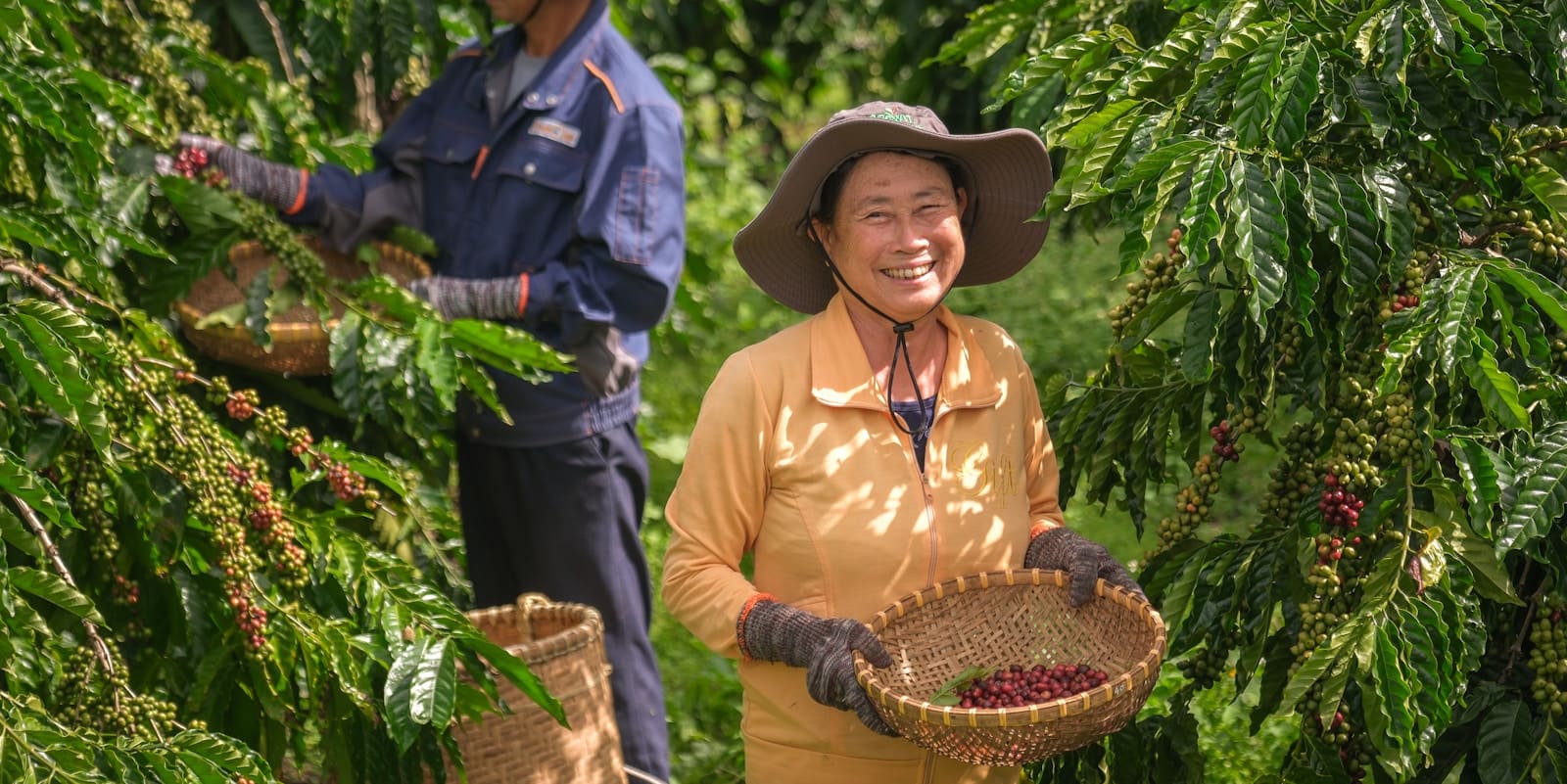
Vietnam supplies nearly 40 per cent of global Robusta coffee exports, second only to Brazil in total production. That dominance came at a steep ecological price. Satellite data and government records examined by Coffee Watch show tropical forest cover in the Central Highlands, source of 95 per cent of Vietnamese coffee, dropped from 42.8 per cent in 1990 to 19 per cent by 2020.
The steepest losses occurred between 1995 and 2010, when government policy and international development financing actively encouraged plantation expansion. Forest clearance slowed in the 2020s but stabilised at historically low levels, leaving remaining tropical moist forest confined to steeper slopes, higher elevations, and formally protected areas.
The Ecological Bill
Coffee Watch, a nonprofit monitoring organisation, documents the downstream consequences: fragmented wildlife habitats, accelerated soil erosion, and what researchers describe as a "nutrient treadmill." Farmers now apply increasing volumes of fertiliser to maintain yields in degraded soils, a pattern that raises input costs and heightens runoff risk.
Forest loss has altered water recharge patterns and soil moisture dynamics across the region. Carbon storage capacity has declined, and pest populations have shifted in ways that complicate integrated management. The report warns that half of Vietnam's Robusta belt could become climatically unsuitable for coffee as rising temperatures and erratic rainfall compound the stress on already weakened ecosystems.
A Sector in Transition
Ly Thi Minh Hai, Vietnam country director at RECOFTC, an international environmental nonprofit, acknowledges that coffee expansion historically drove significant deforestation in parts of the Central Highlands. She argues, however, that the sector is now pivoting toward productivity gains and sustainability improvements on existing land rather than further territorial expansion.
"Vietnam's coffee sector should not be defined by the deforestation challenges of the past," Ly told Mongabay. "The future of Vietnam's coffee sector will not be measured by how much land we cultivate, but by how well we manage the landscapes we already have."
She outlines a shift toward rejuvenating ageing plantations, introducing intercropping with shade trees to break monoculture cycles, adopting climate-smart and regenerative farming practices, and improving water-use efficiency. The goal is to lift yields and incomes from existing acreage rather than clear new forest.
Pressure Points
Climate change is tightening the screws. Ly emphasises that farmers need targeted support to adapt: replanting older stands, integrating agroforestry systems, and securing forest tenure rights that discourage encroachment. RECOFTC is working with local communities on exactly those interventions, treating tenure security as a foundation for forest protection.
The Central Highlands occupy a strategic position in global coffee supply chains. Robusta from the region underpins instant coffee, espresso blends, and a growing specialty segment. Any sustained decline in suitability or productivity would ripple through procurement networks in Europe, North America, and Asia.
Forward Pressure
The Coffee Watch analysis arrives as sustainability standards gain traction among roasters and retailers. The European Union's deforestation regulation, effective in stages from 2025, requires due diligence on commodities linked to forest conversion after 2020. Vietnam's coffee exporters face compliance costs and potential market access restrictions if they cannot demonstrate clean supply chains.
Domestic policy is also evolving. Hanoi has committed to net-zero emissions by 2050 and published a national forestry development strategy that prioritises restoration over clearance. Implementation remains uneven, particularly in provinces where smallholder livelihoods depend on coffee income.
The tension between economic imperatives and ecological limits is acute. Coffee employs an estimated 2.6 million people in Vietnam, many of them smallholders with plots under two hectares. Yield improvements and climate adaptation carry upfront costs that exceed the financial capacity of most growers, creating a financing gap that neither public budgets nor private buyers have fully closed.
Managing What Remains
Ly's framing points to a broader question facing commodity-dependent regions across Southeast Asia: whether intensification and restoration can reverse decades of land-use pressure quickly enough to stabilise ecosystems and secure long-term productivity. The Central Highlands offer a test case, with global implications for coffee markets and regional climate commitments alike.
Satellite monitoring will continue to track forest cover and plantation boundaries. The next phase of scrutiny will focus on soil health, water availability, and the financial viability of sustainable intensification models. For Vietnam's coffee sector, the challenge is no longer about expanding acreage but proving that what remains can endure.
RELATED STORIES

Vietnam Ships 1.7 Million Tonnes of Coffee as Brazil Delays and EU Rules Reshape Trade
Tran Quoc Bao · 3 min
Laos Hydropower Faces Solar and Wind Competition as Regional Grid Expands
Tran Quoc Bao · 4 min
Southeast Asian Firms Race to Raise Green Debt as Region Falls Behind on Renewables
Priyanka V. Rao · 3 min
Vietnam's Trade Turnover Hits $770 Billion as Imports Surge Past Exports
Jun-ho Seo · 2 min
Spot something wrong? Email editor@briefasia.com. We log every correction publicly.