Finance · Markets
US Treasury Buys Yen in First Joint Intervention With Japan Since 2011
Washington moved to bolster the weakening Japanese currency after Tokyo spent nearly $59 billion defending it against historic lows.
KEY TAKEAWAYS
- ·The US Treasury bought yen on July 31 in its first joint intervention with Japan since 2011, as the currency traded near 40-year lows around 164 to the dollar.
- ·Japan deployed an estimated $58.97 billion on July 30 alone to stabilize the yen, with further intervention reported during New York trading hours on July 31.
- ·Japan's Finance Ministry confirmed access to the Federal Reserve's FIMA repo facility, allowing it to raise dollar liquidity without selling US Treasuries outright.
Washington Joins Tokyo in Currency Defense
The US Treasury purchased Japanese yen on July 31, marking Washington's first coordinated currency intervention with Tokyo in more than a decade. The move comes as the yen trades near its weakest levels against the dollar in four decades, prompting Japanese authorities to deploy an estimated $58.97 billion in foreign exchange reserves over recent days.
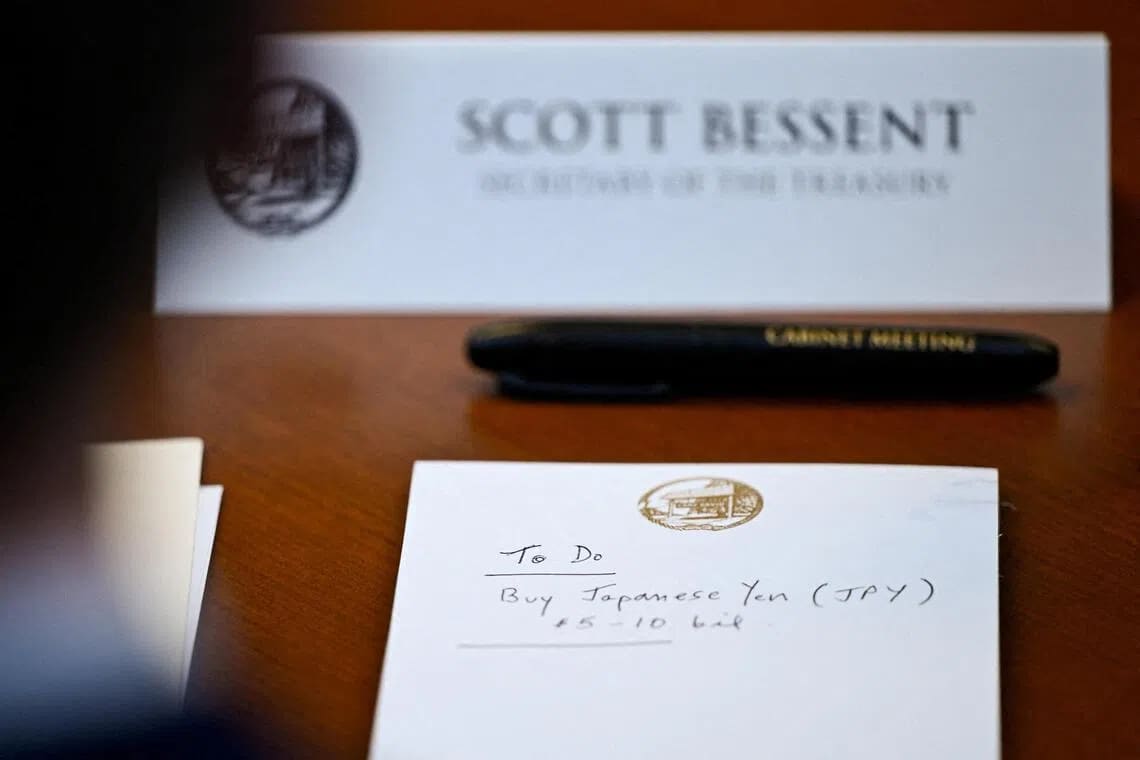
The Federal Reserve Bank of New York executed the operation, selling euros to acquire yen through Goldman Sachs and Morgan Stanley. A photograph of US Treasury Secretary Scott Bessent's notepad during a Cabinet meeting at Camp David showed a to-do item reading "Buy Japanese Yen (JPY) $5-10 bil," though the actual purchase amount remains unconfirmed.
Earlier on July 31, the Treasury contacted multiple banks to signal potential market action and instructed them to prepare for further operations, according to a source familiar with the matter. The last time the United States directly supported the yen was in 2011, when G7 nations coordinated interventions following Japan's earthquake and tsunami disaster.
Scale of Japan's Solo Efforts
Central bank data released on July 31 indicated that Japan may have spent as much as $58.97 billion on July 30 alone to purchase yen and arrest its slide. Tokyo reportedly intervened again during New York trading hours on July 31, according to the Nikkei.
The dollar had climbed to nearly 164 yen in recent weeks, its highest since 1986. Following news of potential US involvement, the currency pair dropped to approximately 157.6 yen by 5pm EDT on July 31, down from roughly 158.9 yen earlier that afternoon.
Liquidity Firepower and Federal Reserve Backstop
Japan's Finance Ministry moved quickly to address market concerns about the sustainability of large-scale intervention. In a post on X, the ministry emphasized that monetary authorities possess "a broad range of tools to address market liquidity needs" and remain prepared to deploy them to support orderly market functioning.
Among those tools is potential access to the Federal Reserve's standing Foreign and International Monetary Authorities repo facility, established in 2020 during the COVID-19 pandemic. The FIMA facility allows foreign central banks and monetary authorities to temporarily exchange their US Treasury securities for dollars without selling the bonds outright, easing funding pressures during periods of dollar scarcity.
This mechanism is particularly relevant for Japan, which holds substantial US Treasury reserves. By using the FIMA facility, Tokyo can secure dollar liquidity to fund yen purchases without depleting its Treasury holdings or disrupting bond markets.
Regional Implications
The joint intervention underscores the strategic sensitivity of yen weakness for both Tokyo and Washington. A sharply depreciating yen complicates Japan's inflation management, raises import costs, and can destabilize broader Asian currency markets as regional central banks face pressure to respond.
For the United States, a yen trading at multi-decade lows risks amplifying trade imbalances and complicating monetary policy coordination within the G7. The decision to intervene alongside Japan signals that Washington views yen stability as a shared priority, particularly as Japan remains a key economic and security partner in the Indo-Pacific.
The scale and coordination of this intervention will be closely watched across Asian financial centers, where currency volatility has rippled through equity and bond markets in recent months. Whether the action marks a one-time stabilization effort or the beginning of sustained joint operations remains to be seen, but it clearly reflects heightened concern in both capitals about the trajectory of the yen.
RELATED STORIES
SoftBank Prices ¥1 Trillion Retail Bond in Largest Offering Since 2020
Aiko Nakamura · 3 min
Bank of Japan Eyes Rate Increase as Inflation Risks Mount
Cheng Wei-Lun · 4 min
Yen Climbs to Eight-Month High as Rate Hike Expectations Shift Sentiment
Jun-ho Seo · 3 min

Japan Wage Growth Hits 29-Year High, Reinforcing Central Bank Rate Path
Aiko Nakamura · 3 min
Spot something wrong? Email editor@briefasia.com. We log every correction publicly.