Sustainability · Energy
U.S. Rare Earth Industry Faces 2027 Supply Crunch as Domestic Capacity Lags
Washington confronts stark choice between strategic autonomy goals and manufacturing reality as deadline approaches
KEY TAKEAWAYS
- ·U.S. domestic rare earth processing capacity remains years behind 2027 policy deadlines requiring non-Chinese sourcing for defense procurement and electric vehicle tax credits.
- ·China controls approximately 85 percent of global rare earth refining and 90 percent of magnet production, a dominance built over decades through state investment and vertical integration.
- ·Washington faces a choice between maintaining Chinese mineral exclusions to preserve strategic autonomy or granting waivers to keep supply chains functional for automakers and defense contractors.
Mountain Pass and the Capacity Gap
The United States faces a critical timeline mismatch in its rare earth supply chain. Domestic mining and processing infrastructure remains years behind the scale needed to replace Chinese imports, with 2027 policy deadlines approaching faster than new facilities can come online.
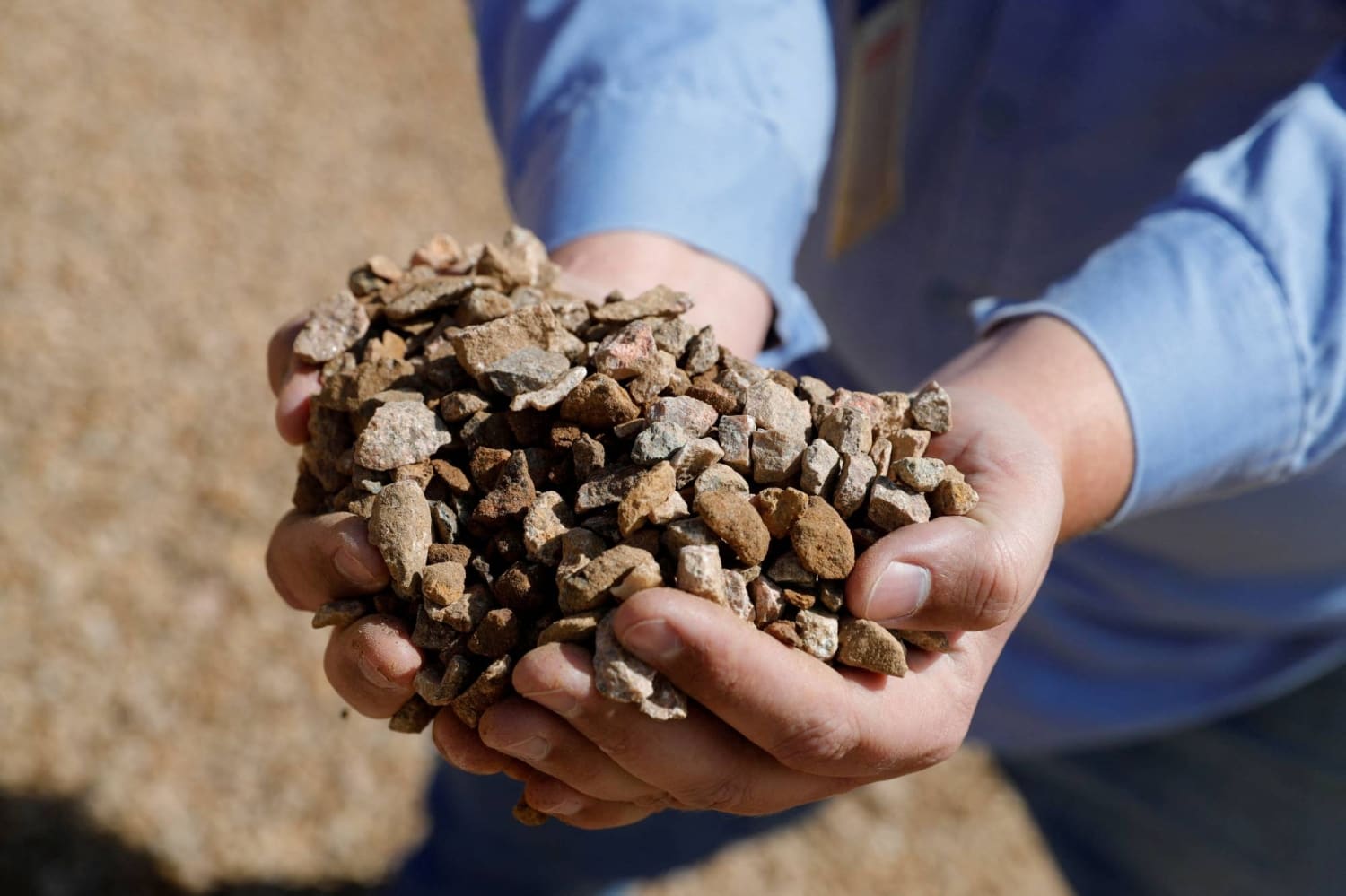
MP Materials operates the only significant rare earth mine in the U.S. at Mountain Pass, California. The site produces ore containing neodymium, praseodymium, and other elements essential for electric vehicle motors, wind turbines, and defense systems. But extracting ore is only the first step. Separating, refining, and processing rare earths into usable materials requires additional facilities that remain largely absent from American soil.
The infrastructure deficit is stark. China controls roughly 85 percent of global rare earth refining capacity and nearly 90 percent of rare earth magnet production. Building equivalent domestic capacity requires multi-billion-dollar investments, permitting that can stretch across years, and technical expertise concentrated in Asia.
The 2027 Deadline and Political Reality
Several policy mechanisms converge in 2027. Defense procurement rules increasingly mandate non-Chinese rare earth content. Electric vehicle tax credits under the Inflation Reduction Act phase in stricter sourcing requirements. Both initiatives assume a domestic supply base that does not yet exist at commercial scale.
Industry executives have warned that meeting these timelines without Chinese material is unrealistic. MP Materials ships most of its Mountain Pass ore to China for processing because no U.S. facility can handle the volume. The company is building a Texas separation plant, but full-scale operation remains uncertain for 2027.
Other projects face similar hurdles. Lynas Rare Earths, an Australian miner, is developing a Texas processing facility in partnership with the Department of Defense. USA Rare Earth is advancing a Oklahoma separation plant. Both projects have encountered financing delays, permitting obstacles, and construction timelines that push commercial output into 2028 or beyond.
Strategic Calculations
Washington must now weigh competing imperatives. Maintaining Chinese mineral exclusions preserves strategic autonomy rhetoric but risks stalling electric vehicle adoption, raising defense costs, and disadvantaging U.S. manufacturers against foreign competitors who retain access to cheaper Chinese inputs.
Allowing temporary Chinese imports keeps supply chains functional but undermines years of policy designed to reduce dependency. It also raises questions about whether domestic rare earth projects can achieve commercial viability if lower-cost Chinese material remains available.
The Department of Defense has already granted waivers for certain weapons programs. The Pentagon determined that excluding Chinese rare earths would delay critical systems and inflate budgets beyond acceptable levels. Similar logic may extend to civilian sectors.
Asia's Structural Advantage
China built its rare earth dominance over decades through state-supported investment, environmental trade-offs, and vertical integration from mining through magnet manufacturing. Replicating that system in the U.S. requires not only capital but also workforce training, regulatory accommodation, and tolerance for environmental impact.
Other Asian producers are positioning themselves as alternative suppliers. Vietnam is expanding rare earth processing. Malaysia hosts Lynas refining operations. Japan has invested in recycling technology to recover rare earths from electronic waste. These sources diversify supply but do not eliminate Asia's central role.
Singapore and South Korea are developing rare earth trading and financing hubs, positioning themselves as intermediaries in a supply chain that will remain substantially Asian regardless of U.S. policy preferences.
Industry Pressure Mounts
Automakers, wind turbine manufacturers, and electronics companies are pressing for regulatory flexibility. Ford, General Motors, and Tesla have warned that strict sourcing mandates could slow electric vehicle production and raise prices. Siemens Gamesa and GE Vernova have flagged similar concerns for wind energy projects tied to federal incentives.
The tension is particularly acute for companies trying to qualify products for Inflation Reduction Act tax credits. The law's critical mineral requirements tighten annually, but domestic supply growth has not kept pace with the legislative schedule.
Trade associations representing manufacturers have lobbied for extended timelines, broader definitions of "domestic" processing, and temporary exemptions for materials without viable non-Chinese alternatives.
What Happens Next
The administration faces a decision point in the coming months. Extending Chinese mineral access through waivers or regulatory adjustments would provide immediate relief but complicate long-term independence goals. Holding the line on exclusions would preserve policy consistency but impose real costs on industry and consumers.
Some analysts expect a hybrid approach: maintaining restrictions for defense applications while allowing greater flexibility for commercial sectors. Others anticipate a broader delay of 2027 deadlines, reframed as a recalibration rather than a retreat.
The rare earth challenge reflects a larger pattern across critical mineral supply chains. Lithium, cobalt, graphite, and nickel face similar bottlenecks. Policy ambitions for rapid re-shoring collide with the capital intensity, time horizons, and technical complexity of building extraction and processing industries from scratch.
For now, the 2027 deadline stands. But the gap between policy intent and industrial reality is narrowing the options available to policymakers who must soon choose between strategic purity and practical supply.
RELATED STORIES

SK Hynix Eyes Deeper Collaboration With Japan's Chip Sector
Cheng Wei-Lun · 4 min

Japan Deploys $96.5 Billion in Currency Intervention to Halt Yen's Slide
Aiko Nakamura · 3 min
SK Hynix May Fast-Track Gwangju Fab Investment Alongside Yongin Expansion
Jun-ho Seo · 3 min

Seoul Stocks Drop on Mideast Tensions and Oil Price Surge
Tran Quoc Bao · 3 min
Spot something wrong? Email editor@briefasia.com. We log every correction publicly.