Technology · Dev
SK Hynix May Fast-Track Gwangju Fab Investment Alongside Yongin Expansion
South Korea's second-largest memory chipmaker is exploring simultaneous development of two major semiconductor clusters, a shift that could reshape equipment procurement timelines.
KEY TAKEAWAYS
- ·SK Hynix is evaluating simultaneous development of its Gwangju and Yongin semiconductor sites, departing from the typical sequential expansion approach.
- ·The decision will determine whether equipment suppliers see additive demand or reallocated budgets from later Yongin phases to earlier Gwangju orders.
- ·South Korea's push to decentralise chip production beyond Seoul is driving infrastructure investment in secondary cities like Gwangju, with government backing for power and water upgrades.
Parallel Development Under Consideration
SK Hynix is evaluating plans to accelerate capital deployment in South Korea's proposed Gwangju semiconductor cluster, moving forward with development even as construction and equipment installation continue at its Yongin site, the company confirmed. The strategy represents a departure from the sequential approach typically employed in large-scale fab expansion, where one phase reaches operational maturity before significant capital flows to the next.
Industry sources indicate that the memory chipmaker's leadership is assessing whether to overlap the two projects rather than wait for Yongin's later construction stages to progress before committing resources to Gwangju. The decision carries implications beyond SK Hynix's internal capital allocation, as it would reshape order flows and delivery schedules for the network of equipment vendors, chemical suppliers, and infrastructure contractors serving South Korea's semiconductor manufacturing sector.
Equipment Procurement Timeline in Question
The potential timeline shift has introduced a critical planning variable for semiconductor equipment manufacturers. If SK Hynix proceeds with simultaneous development, suppliers face a scenario in which Gwangju orders arrive earlier than anticipated but may draw from budgets previously earmarked for subsequent Yongin phases. The alternative - purely additive demand - would require suppliers to expand production capacity and secure additional components during a period when global semiconductor equipment lead times remain extended.
Gwangju's designation as a national semiconductor cluster has been part of South Korea's broader industrial strategy to decentralise chip production beyond the traditional Seoul metropolitan corridor. The city, located in the country's south-west, has received government backing for infrastructure development, including power grid reinforcement and water supply upgrades necessary to support advanced fabrication facilities. SK Hynix has not publicly disclosed the scale of planned investment in Gwangju, though the cluster is expected to focus on memory production aligned with the company's core DRAM and NAND product lines.
Yongin Buildout Progresses
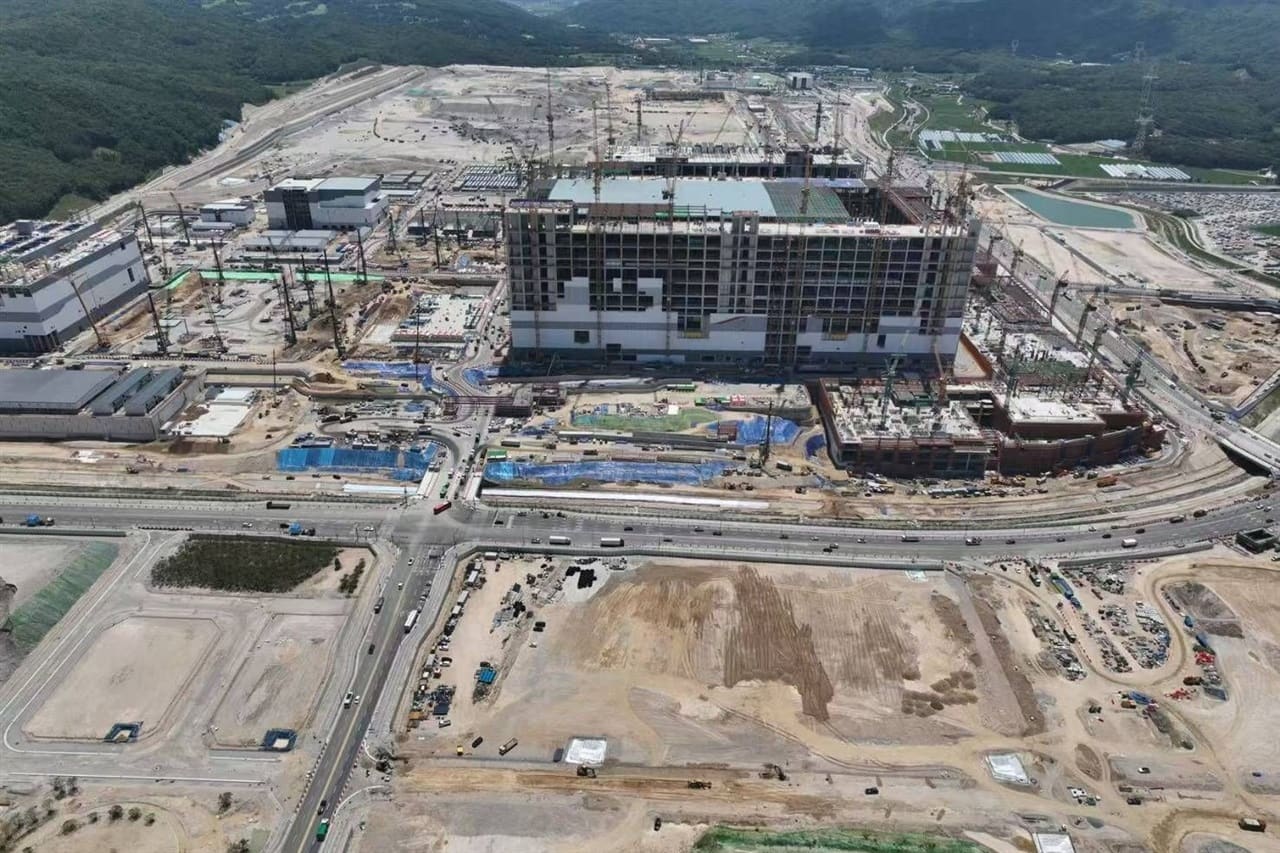
SK Hynix's Yongin site, situated approximately 40 kilometres south of Seoul, is currently under phased construction as part of a multi-year expansion programme. The facility is designed to house advanced packaging operations alongside wafer fabrication, reflecting the industry's push toward integrated manufacturing that combines logic, memory, and heterogeneous integration under one roof. Equipment installation for initial production lines at Yongin has been under way since late 2025, with volume production targeted for the latter half of 2026.
The Yongin project has already absorbed substantial capital expenditure, contributing to SK Hynix's elevated investment intensity over the past two fiscal years. Accelerating Gwangju investment would compress the timeline between major capital cycles, a move that typically requires coordination with both domestic and international equipment suppliers, many of whom operate on multi-quarter order-to-delivery schedules.
Regional Capacity Strategy
South Korea's semiconductor industry has faced persistent questions about geographic concentration, particularly after extreme weather events and regional power supply constraints exposed vulnerabilities in centralised manufacturing. The government has responded with incentives for companies to establish production capacity in secondary cities, pairing financial support with infrastructure commitments designed to reduce the operational cost differential between metropolitan and provincial sites.
For SK Hynix, the decision to pursue Gwangju investment on an accelerated schedule would signal confidence in both domestic demand for memory products and the company's ability to manage two large-scale construction projects concurrently. It would also test the capacity of South Korea's engineering and construction sector, which is simultaneously supporting expansions by Samsung Electronics and other chipmakers.
What Comes Next
SK Hynix has not announced a final decision on the Gwangju timeline. Industry observers expect clarity in the coming quarters as the company finalises its capital expenditure budget for 2027 and begins formal discussions with equipment suppliers. The outcome will influence not only the domestic semiconductor supply chain but also the competitive positioning of memory manufacturers across Asia, as rivals in Taiwan, Japan, and China pursue their own capacity expansions amid tightening technology export controls and shifting trade relationships.
Equipment suppliers, meanwhile, are preparing for multiple scenarios, maintaining dialogue with SK Hynix on both the volume and timing of potential orders. For an industry accustomed to long planning horizons, the prospect of overlapping mega-projects introduces both opportunity and execution risk.
RELATED STORIES
SK Hynix Eyes Deeper Collaboration With Japan's Chip Sector
Cheng Wei-Lun · 4 min
Memory Makers Gain Leverage as AI Server Costs Climb
Cheng Wei-Lun · 3 min
South Korean Chip Materials Suppliers Ride AI Boom to Profit Surge
Cheng Wei-Lun · 3 min
South Korea Taps Three Telecom Giants to Deliver Free AI Services Nationwide
Cheng Wei-Lun · 3 min
Spot something wrong? Email editor@briefasia.com. We log every correction publicly.