Technology · AI
South Korea Taps Three Telecom Giants to Deliver Free AI Services Nationwide
SK Telecom, Kakao, and KT will build public AI chatbots and agents under a government initiative to democratize access to homegrown artificial intelligence.
KEY TAKEAWAYS
- ·South Korea's Ministry of Science and ICT selected SK Telecom, Kakao, and KT from six bidders to build free, unlimited AI chatbots and agents for public use.
- ·The AI for Everyone initiative aims to strengthen the domestic AI ecosystem and reduce reliance on foreign platforms through government-backed development.
- ·The three consortiums will receive government funding to deploy general-purpose AI services for public administration and everyday tasks with no usage limits.
Three Consortiums Selected
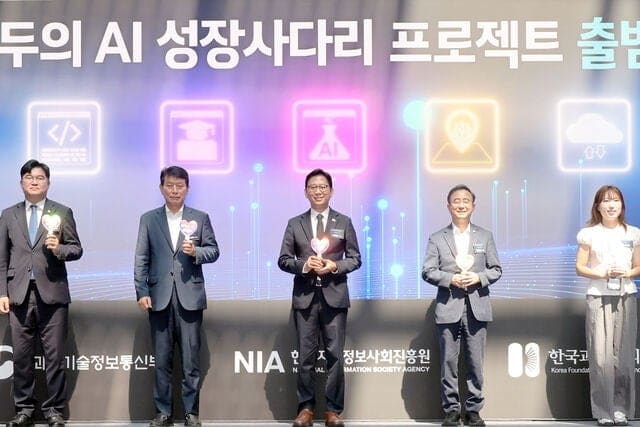
South Korea's Ministry of Science and ICT has chosen three major technology players to deliver government-backed artificial intelligence services that will be free and unlimited for all citizens. SK Telecom, Kakao, and KT were selected from a pool of six bidders to lead the "AI for Everyone" initiative, which seeks to democratize access to domestically developed AI technology.
The announcement came Friday as Seoul accelerates efforts to build a robust national AI ecosystem that can compete with global platforms while serving the practical needs of its population. Each consortium will develop general-purpose AI chatbots and agents designed to handle both public administration tasks and everyday queries.
Expanding the Domestic AI Landscape
The selection represents a strategic push to strengthen homegrown AI capabilities in a region where competition for technological leadership continues to intensify. By backing three separate consortiums rather than a single winner, the government aims to foster diversity in approach and application while reducing dependence on foreign AI platforms.
SK Telecom, the country's largest wireless carrier, brings deep infrastructure expertise and consumer reach. Kakao, the operator behind the nation's dominant messaging platform, commands user data and behavioral insights from millions of daily interactions. KT, another telecommunications heavyweight, has been investing heavily in AI-driven services across enterprise and consumer segments.
The three companies will receive government funding to support development, though specific allocation figures were not disclosed in the initial announcement. The initiative is part of a broader national strategy to position South Korea as a leader in artificial intelligence development and deployment across Asia.
Public Access and Practical Applications
The AI services will be offered at no cost to users, with no restrictions on usage volume. This contrasts with commercial AI platforms that typically impose rate limits or subscription fees for advanced features. The chatbots and agents are intended to assist with a wide range of functions, from navigating government services and filling out forms to answering general knowledge questions and providing personalized recommendations.
The focus on public and everyday tasks suggests an emphasis on utility over novelty. Rather than competing directly with cutting-edge research models, these systems will prioritize reliability, ease of use, and integration with existing government and commercial infrastructure. The approach reflects a pragmatic view of AI as a public utility rather than purely a commercial product.
Regional Implications
South Korea's move comes as governments across Asia recalibrate their strategies around AI development. While China has invested heavily in large language models and generative AI, and Singapore has positioned itself as a neutral AI hub, Seoul's approach emphasizes public access and domestic ecosystem building.
The decision to involve multiple private-sector players in a government-backed initiative mirrors strategies seen in Japan and Taiwan, where public-private partnerships have become the preferred model for scaling emerging technologies. By distributing responsibility across three consortiums, South Korea hedges against single points of failure while encouraging competitive innovation.
The initiative also signals Seoul's intent to reduce reliance on foreign AI platforms, particularly those from the United States and China. As geopolitical tensions shape technology supply chains, nations with advanced digital infrastructure are increasingly prioritizing self-sufficiency in critical technologies, and AI ranks high on that list.
What Comes Next
The three consortiums will now move into the development and deployment phase. While the Ministry of Science and ICT has not released a detailed timeline, the selection of established players with existing infrastructure suggests a relatively rapid rollout is feasible. Each consortium will likely tailor its offering to its core strengths, whether that means deep integration with mobile services, messaging platforms, or enterprise systems.
Public reception will depend on how well these AI services perform in real-world conditions and whether they can match the polish and responsiveness of global competitors. The success of the "AI for Everyone" initiative will be measured not just in adoption numbers, but in whether it genuinely expands access to AI capabilities for citizens who might otherwise lack the resources or technical literacy to engage with commercial platforms.
As deployment begins, the project will serve as a test case for whether government-backed AI can achieve both broad reach and high quality, a balance that remains elusive in many markets.
RELATED STORIES
Samsung Display Restarts Asan OLED Campus as Foldable Phones Stage Recovery
Cheng Wei-Lun · 4 min
Nexon Commits $179M to Gaming IP Fund Targeting Asian Developers
Cheng Wei-Lun · 3 min
SK Hynix Eyes Deeper Collaboration With Japan's Chip Sector
Cheng Wei-Lun · 4 min
Samsung Workers Plan Protest Over Pay Gap Between Chip and Device Units
Jun-ho Seo · 3 min
Spot something wrong? Email editor@briefasia.com. We log every correction publicly.