Asia · Trade
Trump Administration Imposes Polysilicon Trade Measures to Counter China Dependence
New price floors and tariffs target solar and semiconductor supply chains as Washington accelerates strategic decoupling from Asian suppliers
KEY TAKEAWAYS
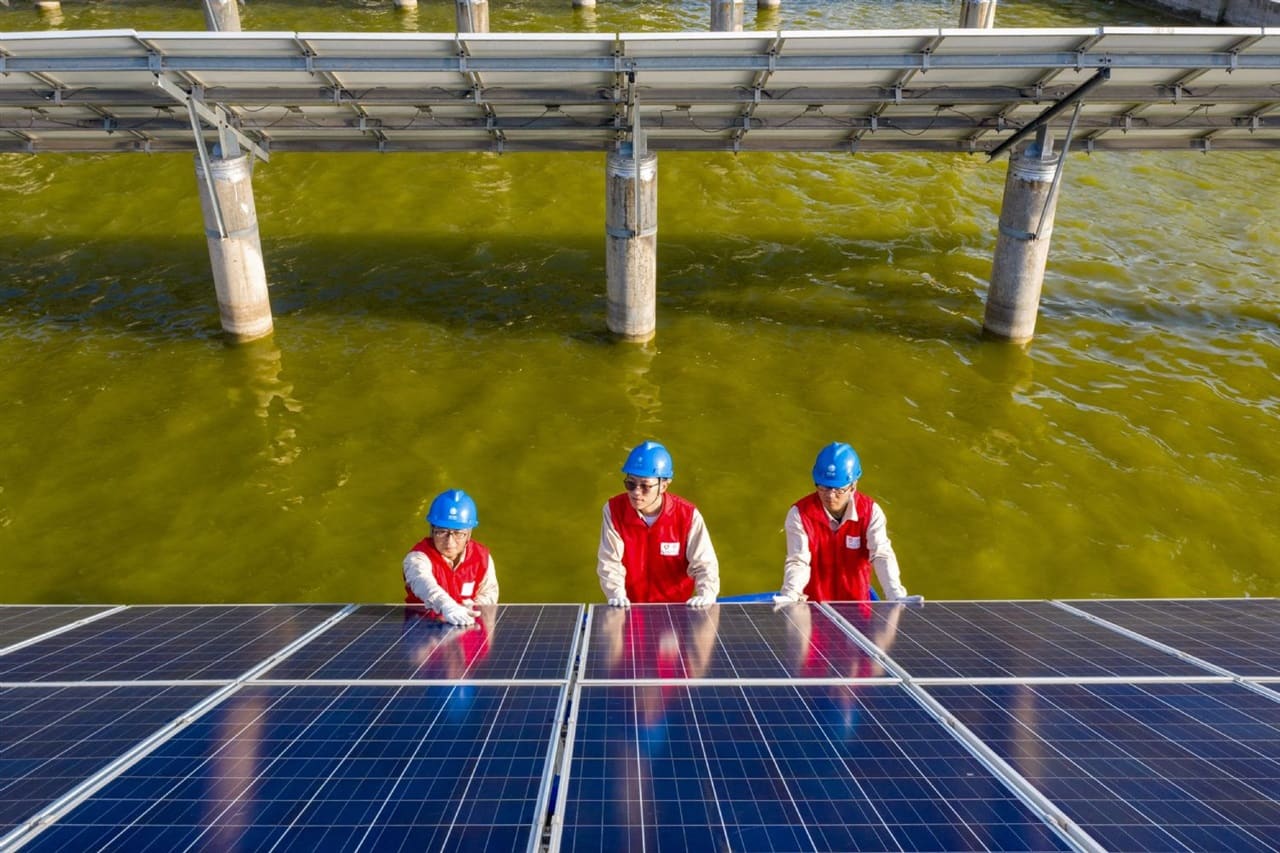
- ·President Trump invoked national security to impose price floors and tariffs on polysilicon imports, a material critical to solar panels and semiconductor wafers where China controls roughly 80 percent of global refining capacity.
- ·The measures aim to stimulate domestic production and reduce reliance on foreign suppliers, but reviving US polysilicon capacity requires at least USD 1 billion per plant and two to three years of construction.
- ·South Korean and Japanese producers are lobbying for exemptions, while Southeast Asian solar assemblers may face procurement pressures if US buyers prioritize domestically sourced or allied-country polysilicon.
A National Security Trigger
President Donald Trump declared that polysilicon imports pose a threat to US national security, signing a proclamation that introduces price floors and tariffs on the material and related products. The move is designed to stimulate domestic production of a substance critical to both solar panels and semiconductor wafers, two industries where American supply chains remain heavily dependent on foreign sources.
Polysilicon, refined from metallurgical-grade silicon, serves as the foundation for photovoltaic cells and the wafers that power chips in everything from smartphones to data centers. China controls roughly 80 percent of global polysilicon refining capacity, a dominance that has kept prices low but left the United States vulnerable to supply disruptions and geopolitical leverage.
The proclamation did not specify the exact tariff rates or floor prices, but industry observers expect the measures to mirror previous trade actions that combined ad valorem duties with minimum import values. Such mechanisms are intended to make foreign polysilicon more expensive than domestically produced alternatives, even when overseas producers attempt to undercut American manufacturers on cost.
Semiconductors and Solar in the Crosshairs
The order arrives as Washington pursues parallel efforts to reshore advanced manufacturing. The CHIPS and Science Act, signed in 2022, allocated USD 52 billion to semiconductor fabrication and research, but bottlenecks in upstream materials like polysilicon have slowed progress. Several US fabs under construction require reliable polysilicon feedstock, and reliance on Chinese suppliers has raised concerns among defense and intelligence officials who view the dependency as a strategic liability.
Solar manufacturing presents a similar challenge. American solar installations have surged over the past decade, yet nearly all panels sold domestically are assembled abroad, predominantly in Southeast Asia using Chinese polysilicon. Previous tariffs on finished panels and cells succeeded in reducing direct Chinese imports but did little to alter the underlying supply chain. By targeting polysilicon itself, the administration aims to force a deeper restructuring.
The proclamation explicitly links the trade measures to national security, a designation that grants the president broad authority under Section 232 of the Trade Expansion Act of 1962. This statute has been invoked in recent years for steel, aluminum, and automotive imports, often drawing retaliation from affected trading partners.
Regional Reactions and Supply Chain Shifts
The new measures will reverberate across Asia, where polysilicon production is concentrated in China's Xinjiang region and among a handful of producers in South Korea and Japan. Xinjiang-based facilities benefit from low electricity costs and integrated supply chains, but they have faced scrutiny over labor practices, prompting some US and European buyers to seek alternative sources.
South Korean firms, including OCI and Hanwha Solutions, have ramped up capacity in response to earlier trade tensions, positioning themselves as non-Chinese suppliers to Western markets. Japan's Tokuyama Corporation, a smaller player, has similarly explored partnerships with American solar and semiconductor companies. Whether these producers will be exempt from the new tariffs or subjected to lower rates remains unclear, but industry groups in Seoul and Tokyo have already begun lobbying for carve-outs.
Southeast Asian nations, which host assembly plants for solar modules, may see shifts in investment patterns. If US buyers prioritize polysilicon sourced domestically or from allied countries, manufacturers in Vietnam, Thailand, and Malaysia could face pressure to adjust their procurement or risk losing access to the American market.
China's Ministry of Commerce has not yet issued a formal response, but state media outlets have characterized the move as protectionist and warned of potential countermeasures. Previous US tariffs on Chinese goods have prompted retaliatory duties on agricultural products, rare earth export restrictions, and informal bans on technology purchases from American firms.
Domestic Capacity and the Path Forward
Reviving US polysilicon production will require significant capital and time. Hemlock Semiconductor, once the world's largest producer, scaled back operations in Michigan after Chinese competition drove prices below breakeven levels. REC Silicon, another American manufacturer, shut its Washington State facility in 2019 for similar reasons. Both companies have expressed interest in restarting production if trade policy and subsidies make it economically viable.
The Inflation Reduction Act, passed in 2022, offers tax credits for solar manufacturers that meet domestic content requirements, creating an additional incentive for polysilicon investment. Several announcements of new or expanded facilities have followed, though none have reached full-scale production. Industry analysts estimate that building a competitive polysilicon plant requires at least USD 1 billion in upfront investment and two to three years of construction.
For semiconductors, the calculus is more complex. While polysilicon is a necessary input, wafer fabrication involves additional refining and crystallization steps, many of which also occur overseas. The new trade measures may accelerate investment in these intermediate stages, but they do not address other chokepoints, such as lithography equipment and advanced packaging, where Asian and European firms hold commanding leads.
The broader question is whether tariffs and price floors can genuinely restore competitiveness or simply raise costs for downstream industries. Solar developers and chip manufacturers have warned that higher polysilicon prices could slow deployment and increase expenses, offsetting some of the intended benefits. Balancing supply chain resilience with cost efficiency remains the central tension in Washington's industrial policy, and the polysilicon proclamation is the latest test of that strategy.
RELATED STORIES
Washington's Polysilicon Tariffs Set to Squeeze Korean Solar Producers
Cheng Wei-Lun · 3 min

Manila Eyes Nickel Processing to Escape China's Price Control
Priyanka V. Rao · 4 min
Shein Retreats From Vietnam Warehouse Bet as China Manufacturing Proves Irreplaceable
Cheng Wei-Lun · 4 min
Shein Scales Back Vietnam Expansion, Reinforces China Manufacturing Base
Cheng Wei-Lun · 3 min
Spot something wrong? Email editor@briefasia.com. We log every correction publicly.