Sustainability · Energy
TNB's UK Renewable Portfolio Reaches 908MW Across 94 Projects
Malaysia's state utility doubles its British and Irish wind and solar capacity in five years, with another 360MW in pipeline as group targets 49% renewable mix by 2030
KEY TAKEAWAYS
- ·Tenaga Nasional's Vantage RE subsidiary operates 908 megawatts of wind and solar capacity across 94 projects in the UK and Ireland, more than double its 2021 starting base of 434 megawatts.
- ·The portfolio secures 60 per cent of revenue under long-term contracts and avoids 477,000 tonnes of carbon dioxide equivalent emissions annually, with 360 megawatts of wind and battery storage projects in pipeline.
- ·TNB targets 49 per cent renewable share in its generation mix by 2030, up from 23 per cent currently, with international assets providing operational know-how for domestic grid integration and battery dispatch.
Growing Footprint in European Markets
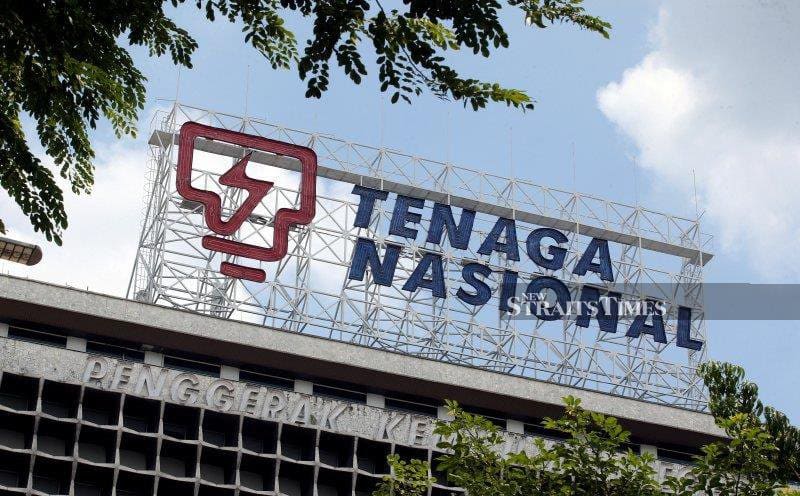
Tenaga Nasional Bhd's renewable energy operations in the United Kingdom and Ireland have grown to 908 megawatts spread across 94 wind and solar installations, according to Vantage RE. The subsidiary, established in 2021, has expanded capacity from an initial 434MW base, positioning the Malaysian state utility's international arm as a testbed for technical capabilities that will feed back into domestic energy transition plans.
The UK portfolio currently accounts for roughly two per cent of TNB's group-level earnings before interest, tax, depreciation and amortisation. Yet its strategic weight exceeds that financial contribution. TNB aims to lift the renewable share of its generation mix from 23 per cent today to 49 per cent by decade's end, a trajectory that requires not only gigawatts of new domestic solar and hydropower but also operational know-how in grid integration, battery storage and offshore regulatory environments.
Vantage RE secures about 60 per cent of its revenue under long-term power purchase agreements, insulating cash flow from merchant price volatility. The business avoids an estimated 477,000 tonnes of carbon dioxide equivalent emissions each year, a figure that translates into tangible compliance value under the UK's carbon pricing regime and provides a hedge against tightening European Union emissions standards.
Pipeline and Technology Choices
Management has identified 360MW of near-term projects awaiting final investment decisions. The pipeline breaks down into 115MW of onshore wind and 245MW of battery energy storage systems, all of which have secured land rights and grid connection approvals. If commissioned on schedule, total capacity would reach 1.2 gigawatts by the end of 2030, representing 12 per cent of TNB's projected renewable energy book and six per cent of overall generation capacity.
Two assets illustrate the operating profile. The 28.5MW Whiteside Hill wind farm near Glasgow recorded a 42 per cent capacity factor, well above the global onshore wind average of 25 to 35 per cent. Strong and consistent Atlantic wind resources in western Scotland drive that performance. The facility generates enough electricity to supply approximately 25,000 homes and displaces around 15,400 tonnes of carbon dioxide equivalent annually.
In Warwickshire, the 35MWp Eastfields solar farm came online in July 2025 using single-axis tracking. The trackers follow the sun's arc across the sky, lifting electricity output by 10 to 20 per cent compared with fixed-tilt arrays. That technology choice reflects a calculated trade-off. Tracking hardware adds upfront capital cost and introduces moving parts that require maintenance, but the incremental generation revenue justifies the expense in markets with high power prices and generous renewable subsidies. Eastfields powers roughly 14,000 homes and cuts emissions by about 17,400 tonnes of carbon dioxide equivalent per year.
Domestic Build-Out and Valuation
The international portfolio remains a small fraction of TNB's overall asset base. Analysts forecast the utility's renewable energy capacity will climb 139 per cent to 11 gigawatts by 2030, with the bulk of that growth coming from Malaysian solar, biomass and large hydropower projects. Domestic ventures benefit from government-backed feed-in tariffs, lower land acquisition costs and shorter permitting timelines than European jurisdictions impose.
Still, the UK and Irish experience offers lessons in merchant risk management, community engagement for onshore wind development and battery dispatch optimisation. Engineers rotate between Vantage RE and TNB's Malaysian operations, transferring grid code compliance practices and turbine maintenance protocols. That knowledge exchange becomes especially valuable as Malaysia integrates higher shares of intermittent renewables into a grid historically dominated by coal and gas baseload plants.
RHB Research values TNB's international renewable energy business at 1.6 billion ringgit, equivalent to about two per cent of the group's implied market capitalisation. The research house maintains a buy recommendation with a target price of 16.50 ringgit, citing TNB's position as the primary beneficiary of Malaysia's National Energy Transition Roadmap and a regulated business model that anchors earnings predictability.
The utility is scheduled to report second-quarter 2026 results on August 27. Analysts expect sequential improvement driven by a lower effective tax rate, though delays in capital expenditure approvals and potential tax adjustments remain downside risks to near-term guidance.
Regional Context
Southeast Asian state utilities face a common challenge: replacing aging coal capacity while meeting rising electricity demand from data centres, electric vehicle charging infrastructure and industrial reshoring. TNB's approach involves a mix of domestic solar build-out, hydropower rehabilitation and selective offshore acquisitions that provide operational scale and regulatory diversification.
Singapore's sovereign wealth funds have pursued a similar strategy, acquiring wind portfolios in Europe and Australia to learn grid management techniques applicable to the city-state's limited land area. Thailand's EGAT and Indonesia's PLN are likewise exploring international joint ventures, though both remain more reliant on domestic coal-to-gas switching and imported liquefied natural gas to meet decarbonisation pledges.
The UK market offers a mature regulatory framework, transparent grid connection queues and a deep pool of engineering talent. Those attributes make it an attractive training ground for utilities from capital-rich but experience-lean markets. Vantage RE's expansion suggests TNB views the cost of offshore learning as justified by the technical and commercial insights it brings home.
RELATED STORIES

Laos Hydropower Faces Solar and Wind Competition as Regional Grid Expands
Tran Quoc Bao · 4 min
Malaysia Breaks Ground on 500km Transmission Backbone to Unlock Renewable Capacity
Priyanka V. Rao · 3 min

Five ASEAN Members Back Regional Oil Stockpile as Study Nears Completion
Tran Quoc Bao · 3 min
Malaysia's Rare Earth Deposits Draw Foreign Interest Ahead of China Export Controls
Priyanka V. Rao · 3 min
Spot something wrong? Email editor@briefasia.com. We log every correction publicly.