Sustainability · Energy
Malaysia Breaks Ground on 500km Transmission Backbone to Unlock Renewable Capacity
Tenaga Nasional begins construction of the country's longest high-voltage grid corridor, linking five states and targeting 2030 completion to meet rising demand from data centers and green energy projects.
KEY TAKEAWAYS
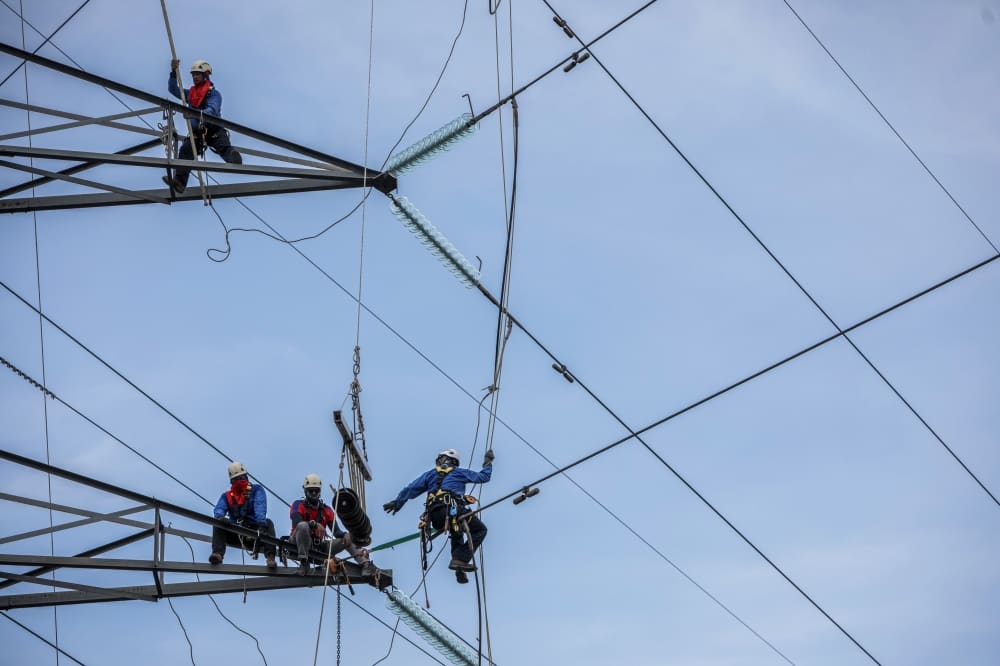
- ·Tenaga Nasional has started construction on a 500-kilovolt, 500-kilometer transmission line across Peninsular Malaysia, scheduled for completion in 2030.
- ·The backbone will link five eastern states and is designed to integrate renewable generation while supporting AI-driven data-center demand.
- ·TNB is investing RM43 billion from 2025 to 2027 in grid modernization, with the new corridor forming the centerpiece of its capacity expansion.
A Strategic Corridor Takes Shape
Tenaga Nasional (TNB) has commenced work on a 500-kilovolt transmission backbone that will become Malaysia's longest high-voltage corridor when completed in 2030. The utility launched construction at the Kampung Awah substation site in Pahang's Maran district on August 28, marking the first major node in a grid expansion designed to carry bulk power across five states along the peninsula's eastern seaboard.
The 500-kilometer line will link Kelantan, Terengganu, Pahang, Negeri Sembilan, and Johor, forming a spine that runs from Paka in the northeast through Kampung Awah and Bahau South before terminating at Kulai East near Singapore. According to TNB, the infrastructure will more than double transmission capacity on the corridor and enable the utility to move renewable generation from wind and solar farms in the Eastern Region to demand centers in the industrial south.
Pahang Chief Minister Wan Rosdy Wan Ismail officiated the site launch. The Kampung Awah substation is positioned midway along the route and will function as a key interconnection point, reinforcing inter-regional transfers and improving grid resilience. TNB President Shamsul Ahmad attended the ceremony and underscored the project's role in Malaysia's National Energy Transition Roadmap (NETR), a government framework targeting net-zero emissions by 2050.
Grid Readiness for AI and Data Centers
Malaysia has seen a surge in data-center investment over the past eighteen months, driven by hyperscale operators seeking alternatives to saturated markets in Singapore. The new transmission backbone is explicitly designed to accommodate the baseload and reliability requirements of artificial-intelligence workloads, which demand uninterrupted power and low latency. TNB noted that the 500-kilovolt system will provide the headroom needed to serve high-value digital infrastructure while maintaining stability for existing industrial and residential customers.
The Kampung Awah node will enable integration of both existing thermal plants and future renewable installations. By raising voltage from the current 275-kilovolt standard, the utility reduces line losses over long distances and frees up lower-voltage circuits for local distribution. The project also supports Malaysia's ambition to increase renewable penetration beyond the current single-digit share of grid supply, a goal that requires flexible transmission to balance intermittent wind and solar output.
RM43 Billion Modernization Push
The transmission backbone forms part of a broader capital program. Between 2025 and 2027, TNB will deploy RM43 billion across grid development and modernization initiatives, focusing on reliability upgrades, substation automation, and capacity expansion. The utility has identified transmission bottlenecks as a critical constraint on renewable deployment, particularly in the Eastern Region where land availability and wind resources make large-scale projects viable.
Construction of the Kampung Awah substation will create demand for engineering, procurement, and construction services across Pahang. Local suppliers are expected to participate in civil works, steelwork fabrication, and equipment installation, with operations and maintenance contracts to follow once the facility enters service. Wan Rosdy highlighted the economic spillover, noting that improved grid connectivity would make Pahang more attractive to green-technology manufacturers seeking competitive electricity rates and reliable supply.
Regional Implications
The project positions Malaysia as a potential regional energy hub, capable of exporting surplus renewable generation to neighboring markets via cross-border interconnections. TNB already operates high-voltage links with Thailand and is exploring tie-lines with Indonesia and the Philippines under the ASEAN Power Grid initiative. A robust domestic backbone is a prerequisite for participation in multilateral power trading, which could unlock revenue from Thailand's growing solar capacity and Laos's hydroelectric surplus.
Completion of the 500-kilovolt system by 2030 will also align with the timelines of several large-scale renewable projects in the pipeline. Malaysia has awarded concessions for offshore wind farms in Terengganu and floating solar installations in reservoirs across Pahang. These projects depend on transmission infrastructure to deliver power to demand centers, and delays in grid readiness have historically stalled renewable deployment. The new backbone addresses that constraint directly.
TNB's investment underscores the central role of transmission in energy transition. While generation capacity often dominates policy discussions, the ability to move electrons from source to load determines whether renewable targets translate into actual decarbonization. For Malaysia, the 500-kilometer corridor represents a tangible step toward a grid that can absorb variable renewables, support digital-economy growth, and maintain the reliability that industrial customers require.
RELATED STORIES
Southeast Asian Firms Race to Raise Green Debt as Region Falls Behind on Renewables
Priyanka V. Rao · 3 min
Proton Eyes 200,000 Units in 2026, Aiming for Best Sales Year Since 2011
Priyanka V. Rao · 3 min
Malaysian Rubber Prices Climb on China Restocking and Supply Risks
Priyanka V. Rao · 3 min
Malaysia's Petronas Reports Steady Earnings Amid Energy Security Push
Priyanka V. Rao · 2 min
Spot something wrong? Email editor@briefasia.com. We log every correction publicly.