Asia · Trade
Thailand Partners With Shanghai Firms to Break Into China's Gem Market
A new trade agreement positions Thai gemstone and jewelry exporters to tap demand in one of the world's largest luxury markets through streamlined standards and logistics.
KEY TAKEAWAYS
- ·Thailand's Gem and Jewellery Institute signed a memorandum of understanding with Shanghai Jing'an Real Estate Group Import and Export Co. and China Gems & Jade Exchange to help Thai exporters access the Chinese gemstone and jewelry market.
- ·The agreement provides Thai businesses with technical expertise, quality certification, and market access support, while Chinese partners offer guidance on import regulations, bonded warehouse services, and logistics.
- ·The partnership is part of the SMART JEWELER program, which aims to enhance competitiveness through brand development, design innovation, and international business networks targeting China's growing colored gemstone demand.
A New Gateway for Thai Gems
Thailand's Gem and Jewellery Institute has formalized a partnership with Shanghai Jing'an Real Estate Group Import and Export Co. and the China Gems & Jade Exchange, opening a structured channel for Thai gemstone and jewelry exporters to enter the Chinese market. The memorandum of understanding centers on industry standards alignment, market access facilitation, and competitive positioning for Thai producers, according to the Gem and Jewellery Institute of Thailand.
The agreement arrives as Thailand seeks to diversify export destinations for its gemstone sector, which has long relied on traditional Western buyers. China represents both scale and growth potential: its luxury goods market has expanded steadily over the past decade, and domestic appetite for colored gemstones and fine jewelry continues to rise alongside income levels in tier-one and tier-two cities.
What Each Side Brings
Under the arrangement, the Gem and Jewellery Institute will deliver technical expertise, product standardization protocols, and quality certification services to Thai businesses preparing to ship into China. It will also broker introductions between Thai exporters and prospective Chinese buyers, distributors, and retailers.
The Shanghai partners, meanwhile, will guide Thai firms through China's import regulations and customs procedures, offer bonded warehouse services to reduce inventory risk, handle logistics coordination, and organize product exhibitions that connect Thai suppliers with mainland buyers. The division of labor reflects a pragmatic approach: Thailand supplies gemstone-cutting skill and design capability, while the Chinese side manages regulatory complexity and last-mile distribution.
The SMART JEWELER Push
The partnership sits within a broader initiative called SMART JEWELER by GIT, a program designed to sharpen the competitive edge of Thailand's gem and jewelry industry. That program emphasizes brand development, design innovation, consumer trend analysis, and the construction of international business networks. The China agreement is its first major cross-border component.
Thailand has historically been a hub for gemstone cutting and jewelry manufacturing in Southeast Asia, with clusters in Bangkok and Chanthaburi Province. The country imports rough stones from sources including Myanmar, Mozambique, and Madagascar, then cuts, polishes, and sets them for export. Finished goods have traditionally flowed to the United States, Europe, and Japan. The new Shanghai partnership signals a strategic pivot toward the region's largest consumer base.
Market Access and Certification
One persistent barrier for Thai exporters has been certification and traceability requirements in foreign markets. Chinese consumers, particularly in the high-value segment, increasingly demand proof of origin, treatment disclosure, and third-party grading. The Gem and Jewellery Institute's role in standardizing documentation and certification processes aims to address that friction point.
Bonded warehouses, which the Chinese partners will provide, allow Thai exporters to store inventory on the mainland without paying duties upfront. Goods clear customs only when sold, reducing working capital requirements and enabling faster delivery to buyers. For an industry where product mix and consumer preferences shift seasonally, that flexibility matters.
Bilateral Trade Dynamics
Thailand and China already maintain significant trade volume across electronics, agricultural goods, and automotive parts. Gemstones and jewelry, however, have remained a smaller category. The new agreement is part of a broader effort by Thai trade agencies to lift value-added exports and reduce reliance on commodity shipments.
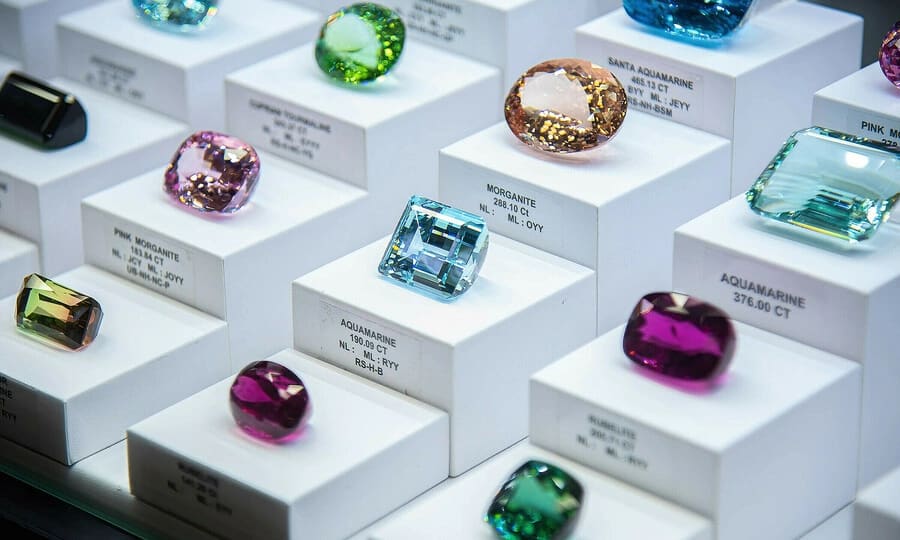
China's domestic jewelry market has seen a shift toward colored gemstones in recent years, moving beyond the traditional dominance of jade and diamonds. Rubies, sapphires, and emeralds have gained traction among younger buyers, a demographic that Thai exporters are well positioned to serve given the country's expertise in those stone types.
What Comes Next
Implementation will unfold in phases. Initial efforts will focus on regulatory alignment and the establishment of logistics infrastructure, followed by pilot exhibitions in Shanghai and other Chinese cities. Thai businesses participating in the SMART JEWELER program will receive priority access to market entry support.
The success of the partnership will hinge on execution: whether Thai exporters can meet China's quality and documentation standards at scale, and whether the Shanghai partners can deliver the buyer networks and distribution access they have promised. For Thailand's gemstone sector, the agreement represents a calculated bet that proximity, expertise, and formalized cooperation can unlock a market that has, until now, remained largely out of reach.
RELATED STORIES

Thailand Urged to Tie EV Investment to Local Supply Chain Development
Priyanka V. Rao · 3 min

China's EV Makers Ship One Out of Every Three Cars Overseas as Domestic Demand Cools
Cheng Wei-Lun · 3 min
Thailand and New Zealand Set $8 Billion Trade Target Under New Partnership
Priyanka V. Rao · 3 min

Mitsubishi Motors Brings Back Pajero SUV With Thailand Launch
Cheng Wei-Lun · 3 min
Spot something wrong? Email editor@briefasia.com. We log every correction publicly.