Sustainability · Nature
Thai Industrialists Flag Water Stress as Data Center Boom Accelerates
Federation of Thai Industries survey reveals resource constraints overshadow optimism about digital infrastructure expansion
KEY TAKEAWAYS
- ·68.8% of 160 Thai industry executives surveyed by the Federation of Thai Industries identified water scarcity as their top concern tied to data center expansion.
- ·61.3% of respondents cited rising electricity demand and regulatory gaps as material risks to energy security and technology adoption.
- ·48.8% believe Thailand can become a regional data center hub if it addresses resource constraints and policy limitations.
Resource Competition Emerges as Top Risk
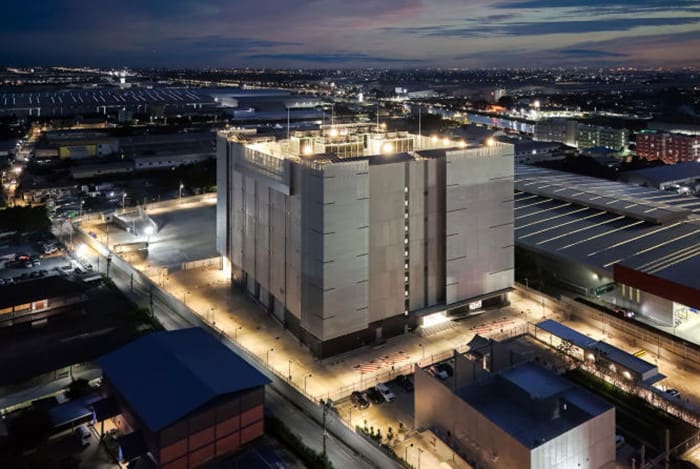
Thailand's industrial establishment is raising alarms over water availability as data center investment accelerates across the kingdom. In a survey of 160 executives, the Federation of Thai Industries found that 68.8% identified insufficient water supply as their leading concern tied to the sector's rapid expansion, according to deputy chairman Montri Mahaplerkpong.
The anxiety reflects a fundamental tension in Southeast Asia's digital infrastructure race. Data centers require continuous cooling to prevent server failure, translating into sustained demand for both electricity and water in facilities that operate around the clock. As Thailand courts hyperscale operators and cloud providers, its manufacturing base is calculating the cost of sharing finite resources.
"We fear rising water demand could spark competition between industries and communities for limited supplies in the future," Montri told the survey respondents, underscoring a conflict that has already surfaced in water-stressed markets from Singapore to Northern Virginia.
Energy Security and Regulatory Gaps
Power supply emerged as a parallel concern. The FTI survey found 61.3% of executives worried about rising electricity demand, with an identical share expressing unease over whether regulatory frameworks can keep pace with digital technology deployment.
The federation warned that without active management of electricity supply and demand, Thailand's energy security would face material risk. The concern is grounded in capacity realities. Data centers can draw tens of megawatts per facility, equivalent to the load of a mid-sized industrial park, and Thailand's grid is already navigating the retirement of aging thermal plants and an uneven transition to renewables.
Regulatory uncertainty compounds the infrastructure challenge. Thailand's data protection framework remains a work in progress, and executives flagged the gap between policy development and the velocity of technology adoption as a structural vulnerability.
Modest Local Capture, Broad Optimism
Dependence on foreign technology and talent registered as a lesser but notable concern, drawing 51.2% of survey responses. The figure reflects a recognition that Thailand's participation in the data center value chain tilts heavily toward land and power provision, with design, hardware, and specialized operations largely sourced externally.
Yet optimism persists. Nearly half of respondents, 48.1%, believe data center investment will play a significant role in developing Thai industries, and only 5% dismissed the sector as offering little economic advantage. A further 48.8% see potential for Thailand to become a regional hub, provided the country addresses its resource and regulatory constraints.
The Regional Stakes
Thailand is competing in a crowded field. Malaysia, Indonesia, and Vietnam are all courting hyperscale investment with tax incentives and streamlined permitting, while Singapore has lifted a moratorium on new facilities under strict efficiency criteria. The kingdom's advantages include political stability, an established industrial base, and geographic centrality, but those assets are offset by infrastructure bottlenecks and policy gaps that rivals are moving faster to close.
The FTI survey suggests that Thai industry sees the data center wave as both opportunity and stress test. The question is whether infrastructure planning and resource allocation can move at the speed of capital deployment, or whether the boom will deepen the scarcity it depends on resolving.
RELATED STORIES

Electric Vehicle Prices Fall Below Hybrids in Global Markets
Cheng Wei-Lun · 5 min

Thailand Raises LPG Subsidy to Shield Households as Fuel Fund Deficit Widens
Priyanka V. Rao · 3 min
Climate Target Body Opens Door to Southeast Asian Producers on Land-Use Rules
Priyanka V. Rao · 2 min

Southeast Asia Holds 42 Million Hectares of Forest in Commercial Concessions
Priyanka V. Rao · 3 min
Spot something wrong? Email editor@briefasia.com. We log every correction publicly.