Asia · Politics
Thailand Raises LPG Subsidy to Shield Households as Fuel Fund Deficit Widens
Bangkok increases cooking gas support to 9.86 baht per kilogram, freezing retail prices through October while the state Oil Fuel Fund carries a 71.8 billion baht shortfall
KEY TAKEAWAYS
- ·Thailand's Energy Ministry increased LPG subsidies from 7.22 to 9.86 baht per kilogram, freezing retail prices at 423 baht per 15-kilogram cylinder through October 31.
- ·The state Oil Fuel Fund now carries a deficit of 71.8 billion baht as it absorbs the gap between global prices and subsidized domestic rates.
- ·Geopolitical uncertainty around the Strait of Hormuz has driven recent volatility in global energy markets, prompting the ministry to deploy price controls to protect household budgets.
Subsidy Increase Targets Price Stability
Thailand's Energy Ministry has raised the subsidy for liquefied petroleum gas by more than a third, lifting support from 7.22 baht to 9.86 baht per kilogram in a bid to hold domestic cooking gas prices steady. The intervention keeps the retail price of a standard 15-kilogram cylinder at 423 baht through the end of October, a three-month freeze designed to prevent ripple effects across food and essential goods markets.
The move underscores the balancing act facing policymakers across Southeast Asia, where governments must weigh household affordability against the fiscal health of state energy funds. Thailand's Oil Fuel Fund, the mechanism through which the subsidy flows, now carries a deficit of 71.8 billion baht as of early August. That shortfall has grown steadily as global crude and LPG prices swing on geopolitical uncertainty, particularly around the Strait of Hormuz, the chokepoint for roughly a fifth of the world's oil supply.
Geopolitical Turbulence Drives Volatility
Veerapat Kiatfuengfoo, deputy energy permanent secretary and ministry spokesman, pointed to conflicting signals from Washington and Tehran as the primary driver of recent price swings. Uncertainty over whether the Strait of Hormuz remains open to tanker traffic has injected fresh volatility into benchmarks for crude and refined products alike. The ministry is monitoring developments closely and deploying the Oil Fuel Fund to smooth both retail and ex-refinery prices, according to Veerapat.
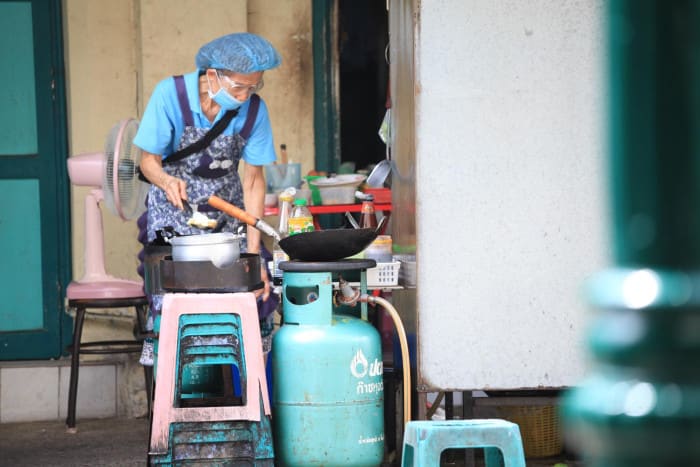
The subsidy increase aims to insulate Thai households from these external shocks. Cooking gas is a staple energy source for millions of families and small eateries, and any jump in cylinder prices tends to cascade quickly into the cost of prepared meals and street food, a cornerstone of daily life in Bangkok and provincial cities. By capping LPG prices for the next three months, officials hope to protect purchasing power at a time when inflationary pressures remain a political flashpoint.
Fiscal Pressure Mounts on State Fund
Yet the policy comes at a cost. The Oil Fuel Fund operates as a buffer, absorbing the difference between world market prices and the subsidized rates Thai consumers pay. When global prices climb, the fund must cover the gap, and the current deficit of 71.8 billion baht signals the scale of that burden. The fund has historically swung between surplus and deficit depending on commodity cycles, but the recent stretch of elevated prices has left it deep in the red.
Veerapat acknowledged the mounting fiscal strain and said the ministry is working to manage the situation without allowing energy costs to undermine household budgets. He also called on the public to conserve energy and use it more efficiently, a message that reflects the limited room for maneuver as the deficit grows. The ministry has not detailed specific plans to replenish the fund, though options typically include adjusting fuel taxes, tapping general budget allocations, or allowing gradual price increases once the freeze expires.
Regional Context and Policy Trade-Offs
Thailand's approach mirrors strategies elsewhere in the region. Indonesia, Malaysia, and the Philippines have all deployed fuel subsidies or price controls at various points to cushion consumers from global shocks, often at significant fiscal expense. The trade-off is familiar: immediate relief for households versus long-term sustainability of state finances. For Thailand, the challenge is compounded by the size of the existing deficit and the unpredictable trajectory of global energy markets.
The three-month cap on LPG prices provides a window for officials to assess whether the current turbulence subsides or whether more durable measures will be needed. If prices remain elevated into the fourth quarter, the ministry will face difficult choices between extending the subsidy, allowing prices to rise, or seeking additional budget support. For now, the focus remains on stability, with the Oil Fuel Fund serving as the shock absorber for a market still rattled by geopolitical brinkmanship thousands of kilometers away.
RELATED STORIES

Thailand Faces Two Decades in Middle-Income Trap Without Workforce Upgrade
Priyanka V. Rao · 3 min
Thailand Faces Twin Labour Pressures as Manufacturing Slows
Siti Nuraini · 4 min

Thailand Unveils Excise Tax Cuts to Boost Local Auto Parts Sourcing
Siti Nuraini · 3 min

Thailand Launches Premium Rice Push at Manila Trade Show
Siti Nuraini · 3 min
Spot something wrong? Email editor@briefasia.com. We log every correction publicly.