Sustainability · Mobility
Tesla Captures Largest Share of Germany's Renewed EV Subsidy Program
Analysis of subsidy allocation data reveals American automaker as top beneficiary, while Chinese manufacturers strengthen European market position
KEY TAKEAWAYS
- ·Tesla has captured the largest share of Germany's renewed electric vehicle subsidy program, ahead of both domestic and other foreign manufacturers.
- ·Chinese-manufactured EV models are gaining significant ground in subsidy claims, raising questions about whether public funds are strengthening non-European competitors.
- ·Germany's subsidy framework remains in effect through fiscal year 2027, with potential future criteria around battery sourcing and assembly location under consideration.
Subsidy Distribution Patterns
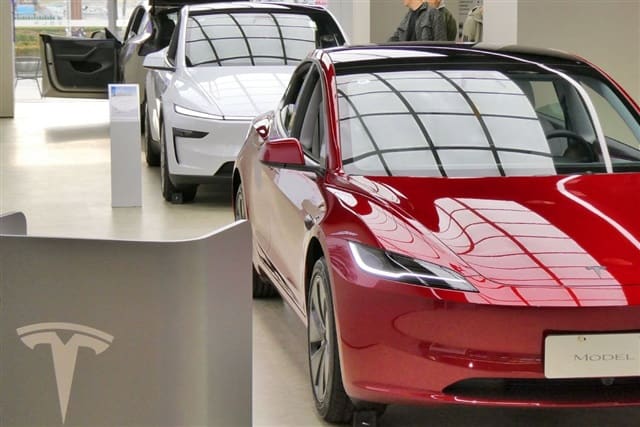
Tesla has captured the largest portion of Germany's renewed electric vehicle subsidy program, according to recent allocation data. The American automaker's dominance in subsidy claims comes as Berlin reinstated financial incentives designed to accelerate the transition away from internal combustion engines across Europe's largest economy.
The subsidy framework, which provides direct purchase incentives for battery-electric vehicles, has generated significant uptake since its reintroduction earlier this year. Tesla's strong performance in capturing these funds reflects both its established dealer network across Germany and the pricing structure of its Model 3 and Model Y vehicles, which fall within the program's eligibility thresholds.
Chinese Manufacturers Gain Ground
Alongside Tesla's leading position, vehicles manufactured in China have registered notable growth in subsidy claims. This trend has sparked debate within European automotive circles about whether public funds intended to support the domestic transition to electric mobility are inadvertently strengthening competitors from outside the bloc.
Chinese brands including BYD, NIO, and others have expanded their presence in Germany over the past eighteen months, leveraging competitive pricing and increasingly sophisticated vehicle technology. Several models from these manufacturers qualify for the full subsidy amount, making them attractive options for cost-conscious buyers navigating Germany's high vehicle ownership costs.
The subsidy program does not restrict eligibility based on manufacturer origin or production location, focusing instead on emissions standards and vehicle list prices. This neutral approach aligns with European Union trade regulations but has drawn scrutiny from domestic automakers who argue that the playing field remains uneven due to differing labor costs and state support structures in China.
Market Implications
Germany's subsidy renewal comes at a critical juncture for the European automotive sector. Legacy manufacturers including Volkswagen, BMW, and Mercedes-Benz are in the midst of costly platform transitions, retooling factories and supply chains to support battery-electric production at scale. The speed at which foreign competitors capture subsidy-supported sales directly affects the return on these multi-billion-euro investments.
Industry observers note that subsidy programs create temporary demand spikes that can distort longer-term market dynamics. Buyers accelerate purchase decisions to capture incentives before they expire, creating volatility in quarterly sales figures and complicating inventory management for dealers.
The geographic distribution of subsidy claims also varies significantly across German states. Urban centers with existing charging infrastructure see higher uptake rates, while rural areas lag despite equivalent financial incentives. This pattern suggests that subsidy programs alone cannot overcome infrastructure gaps that continue to limit electric vehicle adoption in less densely populated regions.
Policy Considerations
The current subsidy structure is scheduled to remain in effect through the end of fiscal year 2027, with total allocated funding reaching several billion euros. Government officials have indicated that future iterations may include additional criteria related to battery sourcing or final assembly location, though no formal proposals have advanced through the legislative process.
Trade tensions between Brussels and Beijing over electric vehicle imports add another layer of complexity. The European Commission opened an investigation into Chinese EV subsidies last year, examining whether state support provided to manufacturers constitutes unfair trade practices. Any resulting tariffs or countermeasures could reshape the competitive landscape that Germany's current subsidy program is helping to define.
For now, the data reflects a market in transition, where established players like Tesla maintain structural advantages in brand recognition and distribution networks, while newer entrants leverage cost competitiveness and aggressive expansion strategies. How Germany and other European nations calibrate their incentive programs in response to these dynamics will shape the region's automotive future for years to come.
RELATED STORIES
Chinese Automakers Eye Up to 30% of European Market by 2035
Cheng Wei-Lun · 3 min
Opel's China Partnership and Job Cuts Expose Europe's Auto Decline
Cheng Wei-Lun · 3 min
Chinese Rivals Deploy Domestic Scale to Challenge Musk's Business Lines
Cheng Wei-Lun · 4 min
China Opens Weekly Arctic Shipping Service to Europe, Halving Transit Times
Cheng Wei-Lun · 3 min
Spot something wrong? Email editor@briefasia.com. We log every correction publicly.