Technology · AI
Chinese Rivals Deploy Domestic Scale to Challenge Musk's Business Lines
From electric vehicles to robotics and neural tech, a wave of mainland competitors is leveraging integrated supply chains and rapid manufacturing to close the gap on Tesla, SpaceX, and Neuralink.
KEY TAKEAWAYS
- ·Chinese companies are entering every sector Musk has pioneered, using domestic scale and integrated supply chains to compress development cycles and control costs.
- ·BYD surpassed Tesla in global EV sales in late 2023, while rocket firms like Landspace and Deep Blue Aerospace are replicating SpaceX's reusable-launch technology with state backing.
- ·Humanoid-robot makers and brain-interface startups are leveraging China's component manufacturing base and regulatory support to close the gap on Optimus and Neuralink.
From Admiration to Competition
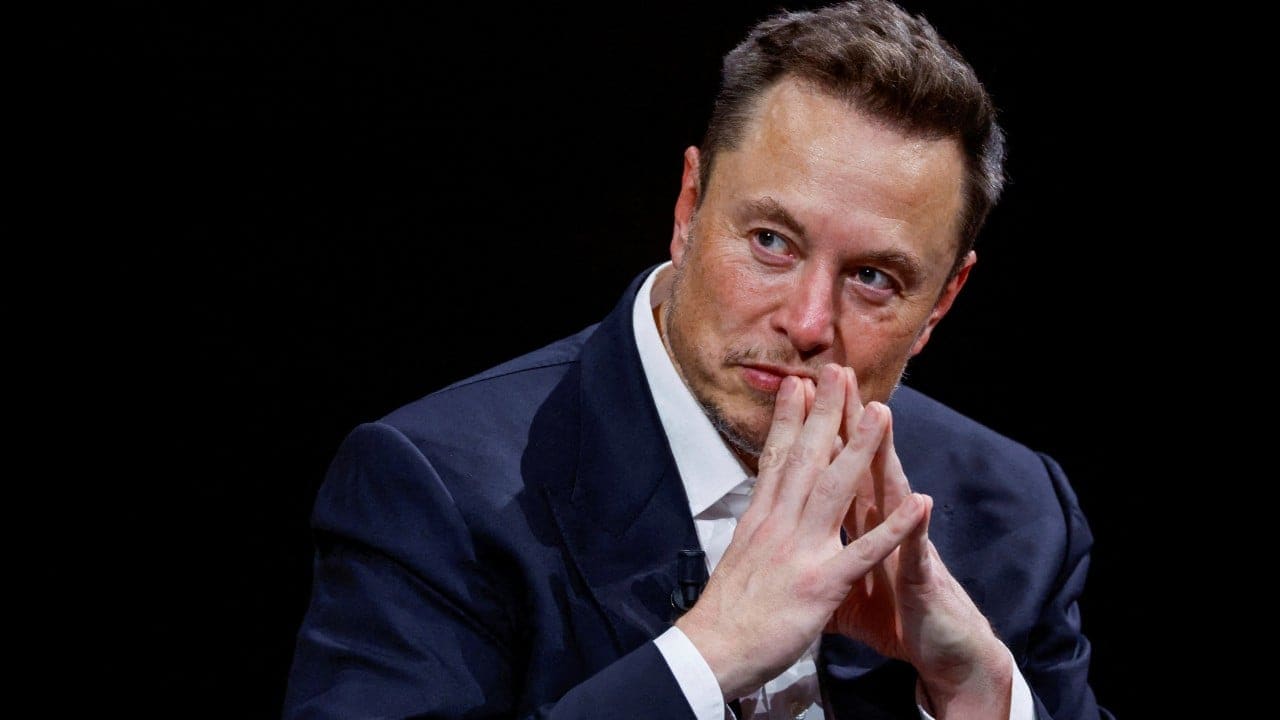
Elon Musk once enjoyed near-celebrity status in China, a market that proved critical to Tesla's growth and a proving ground for manufacturing efficiency. That admiration has not disappeared, but it now coexists with a more complex reality: a cohort of Chinese companies is systematically entering every sector Musk has staked out, from battery-electric vehicles and reusable rockets to humanoid robots and brain-computer interfaces.
These challengers share a playbook. They build scale at home first, tapping a consumer base that remains the world's largest for electric vehicles and one of the most receptive to automation and advanced technology. They exploit tightly integrated domestic supply chains that can deliver components faster and often cheaper than Western rivals. And they iterate quickly, compressing development cycles that in other markets might stretch across years.
Electric Vehicles: The Most Visible Front
The automotive arena illustrates the pattern most clearly. Tesla opened its Shanghai Gigafactory in 2019 and turned China into its largest production hub and export base. Within five years, homegrown manufacturers had not only matched Tesla's volume in the domestic market but begun to outpace it in certain segments.
BYD, which produces both plug-in hybrids and pure battery-electric models, surpassed Tesla in global EV sales in the final quarter of 2023. NIO, XPeng, and Li Auto have each carved niches by bundling advanced driver-assistance systems, battery-swap infrastructure, or extended-range powertrains that address Chinese buyers' range anxiety. Geely-backed Zeekr and state-affiliated brands such as Avatr and Aion have added further pressure, fragmenting a market that once seemed destined for Tesla's dominance.
Price competition has intensified. Several Chinese brands have launched models in the 150,000 to 250,000 renminbi bracket, undercutting the locally built Tesla Model 3 and Model Y. Manufacturing speed plays a role: new models can move from concept to production in 18 months, half the traditional cycle, thanks to modular platforms and suppliers co-located in industrial parks around Shanghai, Guangzhou, and Hefei.
Rockets and Satellites: A Newer Theater
SpaceX's reusable rocket technology and Starlink satellite constellation have inspired a parallel effort in China. Several private-sector launch companies, including Landspace, iSpace, Galactic Energy, and Deep Blue Aerospace, are developing methane-fueled rockets designed for vertical landing and rapid reuse. State-owned entities are also accelerating their own reusable programs.
Landspace completed a successful orbital flight of its Zhuque-2 methane rocket in 2023, marking the first such achievement outside the United States. Deep Blue Aerospace has conducted high-altitude hop tests that mirror SpaceX's early Grasshopper trials. Meanwhile, state-backed plans call for a megaconstellation of low-Earth-orbit communication satellites numbering in the thousands, a direct analog to Starlink.
Regulatory support has been explicit. The central government opened the space sector to private capital in 2014 and has since provided land, testing facilities, and streamlined licensing for launch sites in Hainan and Inner Mongolia. The goal is both commercial and strategic: reduce reliance on foreign satellite services and build an independent positioning and communication network.
Humanoid Robots: From Labs to Factories
Tesla unveiled its Optimus humanoid prototype in 2022, setting a target of eventual mass production to address labor shortages. Chinese robotics firms responded within months. Fourier Intelligence, UBTech Robotics, Xiaomi, and a unit of Nio have all demonstrated bipedal machines intended for industrial or service roles.
UBTech's Walker robot has been deployed in pilot programs at factories and exhibition centers. Fourier's GR-1, standing 165 centimeters tall with 40 degrees of freedom, is aimed at logistics and eldercare. Xiaomi's CyberOne, while still a research platform, signals the consumer-electronics giant's intent to enter the category at scale.
Manufacturing capability again provides an edge. China produces the majority of the world's servo motors, harmonic reducers, and lithium batteries, all critical components for humanoid robots. Vertical integration allows these firms to control costs and iterate hardware faster than competitors assembling global supply chains from scratch.
Brain-Computer Interfaces: The Frontier
Neuralink's first human implant, announced in early 2024, captured global attention. Within months, Chinese research institutions and startups disclosed their own progress. NeuroXess, a Shenzhen-based firm, reported successful animal trials of a wireless implant. The Chinese Academy of Sciences has published work on minimally invasive electrode arrays, and several hospitals in Beijing and Shanghai are conducting clinical studies on patients with spinal-cord injuries.
Regulatory pathways in China can be opaque, but the government has designated brain-computer interfaces as a priority under its national science and technology plan. Funding has flowed to university labs and private ventures alike, with the aim of applications ranging from prosthetic control to cognitive rehabilitation.
The Broader Implication
The pattern extends beyond individual product categories. Chinese firms are not simply replicating Musk's ventures; they are adapting them to local conditions, regulatory frameworks, and cost structures. Scale allows for aggressive pricing. Proximity to suppliers enables faster iteration. And a domestic market that rewards early adoption provides a laboratory for refinement before any eventual push into Southeast Asia, the Middle East, or Europe.
For Musk, the challenge is strategic. China remains indispensable to Tesla's manufacturing footprint and a critical revenue source. Yet the same ecosystem that enabled Tesla's Shanghai success now fuels a generation of competitors who have studied his methods, absorbed his suppliers, and set out to beat him at scale. The admiration has not vanished, but it now comes with a sharper edge.
RELATED STORIES
CRRC Eyes Former Kai Tak Airport Site for Autonomous Bus Trial
Cheng Wei-Lun · 3 min
China Invites Science Elites to Annual Leadership Retreat as Research Push Accelerates
Cheng Wei-Lun · 3 min
Huawei Poised to Dominate China's AI Chip Market as Domestic Share Hits 90%
Cheng Wei-Lun · 3 min

HongShan Backs Chongqing Motorcycle Startup Eyeing World Championship Racing
Cheng Wei-Lun · 3 min
Spot something wrong? Email editor@briefasia.com. We log every correction publicly.