Technology · AI
Huawei Poised to Dominate China's AI Chip Market as Domestic Share Hits 90%
Local suppliers expected to control nearly nine-tenths of high-end AI chip sales in 2026, squeezing Nvidia and AMD to marginal positions
KEY TAKEAWAYS
- ·China's high-end AI chip market is projected to reach nearly 90% domestic share in 2026, with Huawei leading and foreign vendors including Nvidia and AMD holding roughly 10%.
- ·The shift follows years of U.S. export controls that pushed Chinese cloud providers and AI labs to source locally, accelerating investment in domestic chip design and software ecosystems.
- ·Huawei's Ascend processors now compete directly with Nvidia's data center GPUs in China, supported by a maturing software stack that reduces dependence on CUDA and other U.S. tools.
Domestic Suppliers Take Command
China's high-end AI chip market is on track to become overwhelmingly domestic in 2026, with local suppliers projected to capture close to 90% of sales. The shift leaves foreign vendors including Nvidia and AMD holding approximately 10% of the market, marking a dramatic reversal in a sector that U.S. firms once dominated.
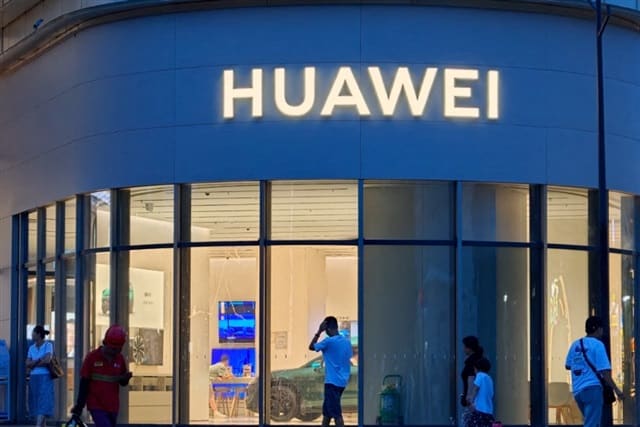
Huawei is emerging as the primary beneficiary of this transition. The Shenzhen-based technology giant has accelerated its semiconductor capabilities in response to export restrictions that cut off access to cutting-edge American chips. Its Ascend series of AI accelerators now competes directly with Nvidia's data center GPUs in performance and ecosystem support, according to industry assessments.
The anticipated market split reflects both the maturation of Chinese chip design and the impact of sustained U.S. export controls. Washington has progressively tightened licensing requirements for advanced semiconductor exports to China since 2022, pushing Chinese cloud providers, internet platforms, and AI labs to source domestically or face supply disruptions.
Supply Chain Realignment
Chinese hyperscalers and AI research institutes have reoriented procurement strategies around local vendors. Alibaba Cloud, Baidu, Tencent, and ByteDance have all expanded purchases of Huawei Ascend processors and chips from smaller domestic players, building out training clusters that bypass U.S. components entirely.
The shift extends beyond silicon to the software stack. Huawei's CANN development environment and MindSpore framework have gained traction among Chinese developers, creating an ecosystem that mirrors the CUDA-centric world Nvidia built over two decades. While CUDA remains the global standard, Chinese firms are investing heavily in toolchains that run natively on domestic hardware.
Smaller domestic chipmakers are also capturing share. Companies including Cambricon, Biren Technology, and Moore Threads have ramped production of AI inference and training chips, targeting workloads that do not require the absolute cutting edge in process technology. These vendors often rely on mature nodes from SMIC and other Chinese foundries, sidestepping the most severe export restrictions on advanced lithography equipment.
Nvidia's Narrowing Window
Nvidia retains a foothold in China, but its position has eroded sharply. The company developed export-compliant variants of its data center GPUs, including the A800 and H800, to navigate U.S. licensing rules. Subsequent tightening of controls, however, has limited the performance of chips Nvidia can legally ship to Chinese customers, reducing their appeal relative to unrestricted domestic alternatives.
The 10% foreign market share projected for 2026 likely reflects legacy installations, niche applications where Nvidia's software advantage remains decisive, and purchases by multinational corporations operating in China that are less constrained by export rules. AMD faces similar dynamics, with its Instinct accelerators competing in a segment where local alternatives have closed the gap.
Strategic Implications
The near-total localization of China's AI chip supply carries consequences beyond commercial market share. It accelerates the bifurcation of global technology stacks, with Chinese AI models trained and deployed on hardware and software ecosystems that diverge from those used in the U.S. and allied markets. Interoperability between these ecosystems is likely to decline, complicating collaboration and increasing costs for companies operating across both spheres.
For Beijing, the shift represents progress toward self-sufficiency in a technology deemed critical to economic and national security. Chinese policymakers have prioritized semiconductor independence through subsidies, procurement mandates, and talent recruitment, and the AI chip market is a visible success story for that strategy.
For Washington, the trend underscores the limits of export controls as a tool to maintain technology leadership. While restrictions have slowed China's access to the most advanced nodes and tools, they have also catalyzed domestic investment and innovation that is now displacing U.S. products in the world's largest AI market.
The competitive landscape in 2026 suggests that Huawei, once an embattled target of sanctions, is on course to eclipse Nvidia within China's borders. Whether that dominance extends beyond China will depend on factors including geopolitical alignment, willingness of third countries to adopt Chinese AI infrastructure, and the pace at which Huawei and its peers close remaining performance gaps with leading U.S. designs.
RELATED STORIES
Novosense Swings Back to Profit on AI and Auto Chip Sales
Cheng Wei-Lun · 3 min
China Bets on Supernode Clusters to Bridge AI Chip Performance Gap
Cheng Wei-Lun · 4 min
Nvidia Mobilizes $500 Billion Financing Push for AI Data Centers
Cheng Wei-Lun · 4 min

CRRC Eyes Former Kai Tak Airport Site for Autonomous Bus Trial
Cheng Wei-Lun · 3 min
Spot something wrong? Email editor@briefasia.com. We log every correction publicly.