Technology · AI
Novosense Swings Back to Profit on AI and Auto Chip Sales
The Chinese analog semiconductor maker posted a 67% revenue jump in the first half of 2026, driven by demand from data centers and electric vehicle manufacturers
KEY TAKEAWAYS
- ·Suzhou Novosense Microelectronics returned to profitability in the first half of 2026 with revenue rising 67% year-on-year.
- ·Demand from AI server infrastructure, electric vehicle systems, and renewable energy installations drove the analog chipmaker's recovery.
- ·The turnaround reflects China's push to scale domestic semiconductor production in power management and sensor categories.
Profitability Returns After Difficult Year
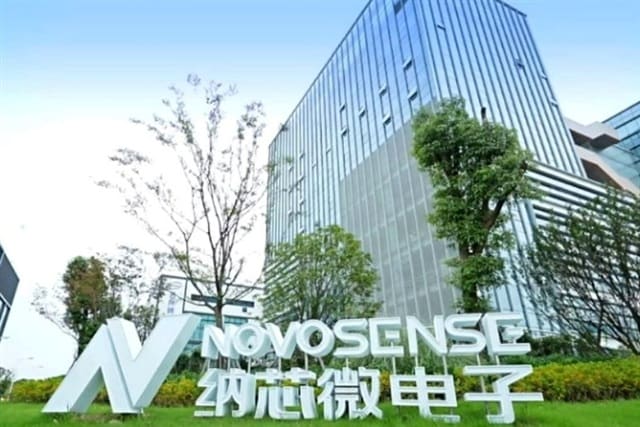
Suzhou Novosense Microelectronics has exited the red, posting a return to profit in the first six months of 2026 after a challenging period. The analog chip specialist reported revenue growth of nearly 67% year-on-year, according to company disclosures.
The turnaround reflects stronger order books across multiple end markets. AI computing infrastructure, automotive electronics, server power management systems, and renewable energy installations are all pulling volume through Novosense's production lines.
Analog semiconductors remain critical building blocks in these applications. They handle signal conversion, power regulation, and sensor interface tasks that digital chips cannot perform alone. As data centers scale up GPU clusters and automakers electrify vehicle platforms, the demand for precision analog components has intensified.
AI Infrastructure Drives Chip Volumes
Data center operators expanding capacity for generative AI workloads have become a meaningful revenue driver. Server power supplies require high-efficiency analog controllers to manage the thermal and electrical loads of dense compute racks. Novosense supplies components into this segment, benefiting from the ongoing buildout of GPU-based training and inference infrastructure across Asia.
China's domestic AI server market has grown rapidly over the past eighteen months, even as US export controls restrict access to certain advanced processors. Local cloud providers and internet platforms continue to invest in compute capacity, creating sustained demand for domestically produced analog chips that manage power delivery and thermal monitoring.
Automotive Electronics Strengthen Order Pipeline
The automotive segment has also contributed to the revenue rebound. Electric vehicles and advanced driver assistance systems rely heavily on analog sensors and power management chips. Novosense has positioned itself in this supply chain, providing components for battery management systems, motor control units, and in-cabin electronics.
China remains the world's largest EV market by unit sales, and domestic automakers are ramping production to meet both local and export demand. This has translated into higher chip volumes for suppliers embedded in the ecosystem. Novosense's product portfolio aligns with the shift toward electrification, and the company has expanded its automotive-qualified component offerings over the past two years.
Renewable Energy Systems Add Diversification
Renewable energy installations represent another growth vector. Solar inverters and energy storage systems require analog chips for grid interface, battery charging, and power conversion functions. As China and other Asian markets accelerate renewable capacity additions, component suppliers serving this sector have seen order activity pick up.
Novosense has developed products tailored to these applications, including high-voltage isolation and current-sensing solutions. The company's ability to serve multiple end markets provides revenue diversification and reduces reliance on any single segment.
Regional Context and Supply Chain Positioning
The performance underscores broader trends in China's semiconductor industry. Domestic chipmakers have been working to capture share in analog, power, and sensor categories where technology barriers are lower than in advanced logic manufacturing. Government policy support and local customer preference have helped companies like Novosense scale production and improve profitability.
Analog chips generally do not face the same export control scrutiny as cutting-edge logic or memory products. This has allowed Chinese suppliers to compete more freely in global markets and serve international customers alongside domestic accounts.
The first-half results suggest that Novosense has successfully navigated the inventory correction that weighed on semiconductor markets in 2024 and early 2025. With AI infrastructure spending still robust and automotive electrification accelerating, the company appears positioned to sustain revenue growth through the remainder of the year.
Investors and industry watchers will be monitoring whether Novosense can maintain profitability as competition intensifies and pricing pressures emerge in more commoditized analog segments. The company's ability to innovate in higher-margin product lines and deepen customer relationships will determine its trajectory over the next twelve to eighteen months.
RELATED STORIES

Alibaba Cloud Slashes AI Data Center Deployment to 100 Days
Cheng Wei-Lun · 4 min
Lenovo Accelerates Toward $100 Billion Revenue on AI Momentum
Cheng Wei-Lun · 3 min

CXMT Reports 90% Yield on DDR5 Production as Chinese Chipmaker Eyes PC Market
Cheng Wei-Lun · 4 min
Chinese AI Startups Shift From Leasing to Owning Data Centers
Cheng Wei-Lun · 3 min
Spot something wrong? Email editor@briefasia.com. We log every correction publicly.