Technology · Dev
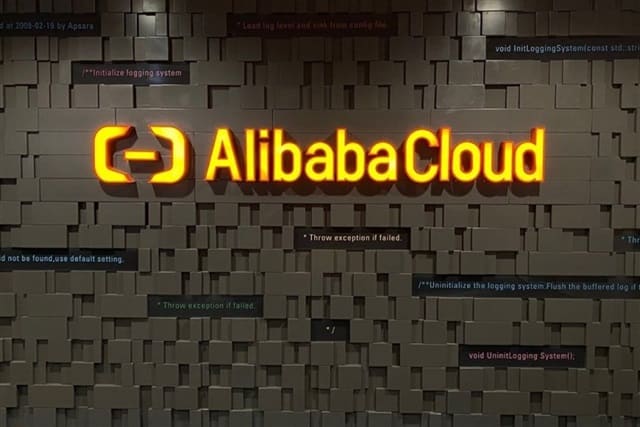
Alibaba Cloud Slashes AI Data Center Deployment to 100 Days
New modular architecture cuts construction costs by over 10% while boosting computing density amid Asia's infrastructure race
KEY TAKEAWAYS
- ·Alibaba Cloud cut large AI data center delivery to 100 days using CUBE 5.0 modular architecture, reducing construction costs by over 10 percent.
- ·The prefabricated system increases computing density per square meter, critical in land-scarce Asian markets like Singapore and Hong Kong.
- ·Alibaba Cloud tripled global modular capacity to compete for AI workloads as Southeast Asian governments offer incentives for infrastructure investment.
Speed and Scale in Modular Design
Alibaba Cloud has reduced the timeline for deploying large-scale AI data centers to 100 days using its CUBE 5.0 modular architecture, according to the company. The new system also lowers construction expenses by more than 10 percent while raising computing density, a critical metric as enterprises across Asia expand machine learning and inference workloads.
The announcement positions Alibaba Cloud to compete more aggressively with hyperscalers in Singapore, Tokyo, and Seoul, where land costs and power constraints have made speed-to-market and capital efficiency decisive factors. Traditional data center construction in the region typically spans 18 to 24 months from site preparation to commissioning, creating bottlenecks for customers deploying large language models and recommendation engines.
Modular Architecture and Cost Structure
CUBE 5.0 relies on prefabricated modules that integrate power distribution, cooling, and rack infrastructure in factory-controlled environments before shipping to site. This approach reduces on-site labor requirements and compresses the critical path for mechanical and electrical installation, which often accounts for 40 to 50 percent of total project duration in conventional builds.
The cost reduction stems from standardized components, bulk procurement, and shorter financing periods. Alibaba Cloud has not disclosed the absolute capital expenditure per megawatt, but industry benchmarks in eastern China suggest modular designs can lower upfront investment by 8 to 15 percent compared with custom-engineered facilities of equivalent scale.
Higher computing density translates to more GPU or AI accelerator capacity per square meter of floor space. In land-scarce markets such as Hong Kong and Singapore, this metric directly affects the economics of inference services and training clusters, where operators pay premium rates for colocation or lease space.
Regional Implications
Alibaba Cloud's move comes as Southeast Asian governments court data center investment to support digital economy targets. Indonesia, Vietnam, and Malaysia have introduced tax incentives and streamlined permitting for facilities that meet efficiency and renewable energy thresholds. Faster deployment cycles allow cloud providers to capture early-mover advantages in markets where AI adoption is climbing at double-digit rates.
The modular approach also supports expansion into secondary cities with less mature construction ecosystems. Alibaba Cloud operates facilities in Hangzhou, Ulanqab, and Nantong, where local contractors may lack experience with hyperscale specifications. Prefabrication shifts quality control upstream and reduces dependency on specialized subcontractors.
Competitors have pursued similar strategies. Microsoft announced a modular data center pilot in northern Europe in 2024, and Tencent Cloud deployed containerized units in Guizhou province to accelerate timelines. The trend reflects broader capital discipline as cloud providers balance growth ambitions with return-on-invested-capital targets amid slower enterprise IT spending.
Capacity and Workload Mix
Alibaba Cloud has tripled its global modular capacity, though it did not specify the absolute number of facilities or total megawatts under management. The expansion aligns with the company's push into AI-as-a-service offerings, including fine-tuning platforms for Qwen large language models and inference APIs for e-commerce and logistics customers.
Energy efficiency remains a constraint. AI workloads generate higher heat loads than traditional web or database applications, requiring advanced cooling systems that can add 15 to 20 percent to operating expenses. CUBE 5.0 incorporates liquid cooling options for high-density racks, a feature that becomes economically viable at scale but remains costly for smaller deployments.
The 100-day delivery window assumes site readiness, including grid interconnection and environmental permits. In practice, securing power allocations in tier-one Chinese cities can take six to nine months, and renewable energy mandates in Europe add another layer of complexity. Alibaba Cloud's timeline advantage applies primarily to the construction phase rather than the full project lifecycle.
Competitive Dynamics
The ability to deploy AI infrastructure quickly carries strategic weight as enterprises negotiate multi-year cloud contracts. Customers running latency-sensitive applications, such as autonomous vehicle simulation or real-time translation, prioritize proximity to end users and fast provisioning of incremental capacity.
Alibaba Cloud's emphasis on cost reduction also targets price-sensitive segments in emerging Asia, where public cloud adoption trails developed markets. Lower capital intensity can support more aggressive pricing for compute instances, a lever the company has used in previous campaigns to win market share from AWS and Google Cloud in China.
The modular architecture does introduce trade-offs. Standardization limits customization for specialized workloads, such as high-frequency trading or genomics research, that require bespoke cooling or network topologies. Alibaba Cloud will need to balance the efficiency gains of prefabrication with the flexibility demanded by hyperscale customers deploying proprietary silicon or network fabrics.
As AI infrastructure spending accelerates across Asia, the race to deploy capacity faster and cheaper will shape competitive positioning among regional cloud providers. Alibaba Cloud's 100-day target sets a new benchmark, but execution will depend on supply chain resilience, energy availability, and the ability to maintain quality standards at volume.
RELATED STORIES
Chinese AI Startups Shift From Leasing to Owning Data Centers
Cheng Wei-Lun · 3 min
Novosense Swings Back to Profit on AI and Auto Chip Sales
Cheng Wei-Lun · 3 min
Lenovo Accelerates Toward $100 Billion Revenue on AI Momentum
Cheng Wei-Lun · 3 min
Tencent Accelerates AI Infrastructure Build Despite Short-Term Profit Pressure
Cheng Wei-Lun · 3 min
Spot something wrong? Email editor@briefasia.com. We log every correction publicly.