Technology · Dev
CXMT Reports 90% Yield on DDR5 Production as Chinese Chipmaker Eyes PC Market
China's leading memory manufacturer claims breakthrough manufacturing efficiency on 17-nanometer DDR5 chips as major PC vendors begin limited adoption
KEY TAKEAWAYS
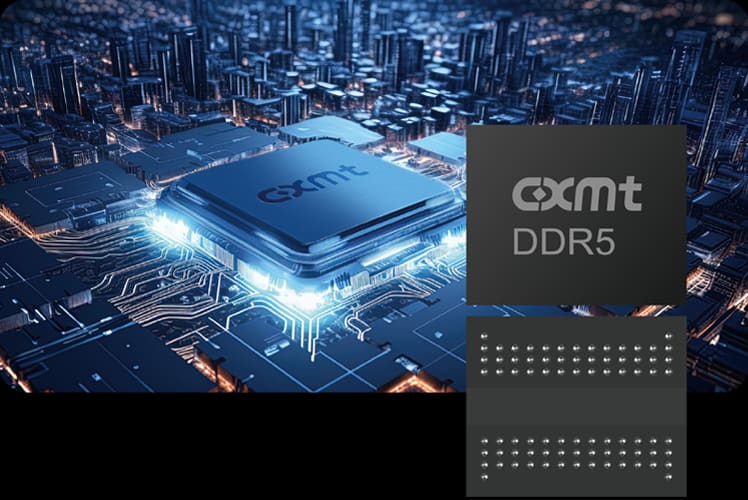
- ·CXMT has achieved over 90 percent manufacturing yield on its 17-nanometer DDR5 chips, crossing the threshold for cost-effective mass production.
- ·Major PC manufacturers have begun integrating CXMT memory into select product lines, marking the first sustained commercial use of Chinese DDR5 in branded systems.
- ·The development pressures Samsung, SK hynix, and Micron on pricing and gives PC makers a credible third source for commodity memory components.
Manufacturing Milestone
ChangXin Memory Technologies (CXMT) has reached a manufacturing yield exceeding 90 percent on its 17-nanometer-class DDR5 memory chips, according to the company. The threshold represents a technical inflection point in memory production economics, where per-unit costs drop sharply and commercial viability improves.
The Hefei-based chipmaker's progress arrives as the PC memory market undergoes a technology transition. DDR5 adoption accelerated through 2025 and into 2026, driven by Intel and AMD platform requirements and falling price premiums over DDR4. CXMT's ability to manufacture at yields comparable to established producers suggests China's domestic memory industry has absorbed years of process refinement faster than many analysts expected.
Yield rates directly determine profitability in semiconductor manufacturing. At 90 percent, nine out of ten chips leaving the fabrication line meet specification, a figure that allows producers to price aggressively while maintaining margin. Industry participants typically consider 85 percent the minimum for sustainable mass production; anything above 90 percent signals mature process control.
PC Vendor Adoption Begins
Several major PC manufacturers have started integrating CXMT DDR5 modules into select product lines, though volumes remain constrained. The deployments mark the first sustained use of Chinese-made DDR5 in branded consumer systems, a shift with implications for supply chain diversification across Asia.
The initial rollouts focus on mid-tier and budget segments, where price sensitivity outweighs brand preference for memory components. CXMT's pricing strategy undercuts established suppliers by double-digit percentages, according to component distributors in Shenzhen and Taipei. That discount, combined with improved yield economics, has opened doors with procurement teams under pressure to reduce bill-of-materials costs.
Samsung Electronics, SK hynix, and Micron Technology have dominated the PC DRAM market for over a decade, with combined market share consistently above 90 percent. CXMT's entry, even at single-digit share, introduces a new variable into pricing negotiations and capacity planning. The Korean producers have already begun adjusting contract terms in response to Chinese competition in commodity memory segments.
Process Technology and Scale
CXMT's 17-nanometer node sits roughly one generation behind the 14-nanometer and 12-nanometer processes now ramping at Samsung and SK hynix. The gap matters less in DDR5 than in higher-margin server DRAM, where performance per watt and density command premiums. For mainstream PC applications, the older node delivers adequate speed and capacity at lower capital intensity.
The company operates two fabrication facilities in Hefei with combined monthly wafer capacity estimated near 100,000 sheets. Expansion plans filed with Anhui provincial authorities outline a third fab targeting 150,000 wafers per month by late 2027, though equipment procurement timelines remain subject to export control variables.
Manufacturing yield improvements typically follow an S-curve: slow initial gains, rapid improvement through the middle phase, then diminishing returns as physical limits approach. CXMT's reported leap to 90 percent suggests the company has exited the learning phase and entered the optimization zone, where incremental gains come from statistical process control rather than fundamental redesign.
Regional Implications
The development carries weight beyond CXMT's balance sheet. Beijing has prioritized memory chip self-sufficiency since 2014, channeling subsidies and policy support into domestic production. CXMT, alongside YMTC in NAND flash, represents the leading edge of that effort. Commercial success at scale would validate the strategy and embolden further investment.
For Asia's established memory hubs - Samsung's Pyeongtaek complex, SK hynix's Icheon operations, Micron's facilities in Singapore and Taiwan - the Chinese challenge forces a recalibration. Incremental share loss in commodity segments may prove acceptable if incumbents can defend high-margin server and mobile DRAM. But the calculus depends on how quickly CXMT climbs the technology ladder and whether yield advantages translate into sustainable cost leadership.
PC makers, meanwhile, gain negotiating leverage. A credible third source for DDR5 allows procurement teams to pressure incumbents on price and allocation, particularly during upcycles when supply tightens. The dynamic has already played out in NAND flash, where Chinese production contributed to oversupply and margin compression in 2025.
What Comes Next
CXMT's immediate task involves converting yield gains into volume shipments while maintaining quality standards under field conditions. Early adoption by PC vendors provides real-world validation, but scale requires consistent output across quarters and the ability to respond to demand surges without yield degradation.
The company has not disclosed plans for next-generation DDR5 at tighter process nodes, though industry roadmaps point toward 14-nanometer and below as necessary for higher-speed bins and lower power envelopes. Closing the node gap with Samsung and SK hynix will determine whether CXMT remains a budget alternative or emerges as a full-spectrum competitor.
Export controls on advanced lithography equipment remain a wildcard. CXMT's existing fabs rely on deep ultraviolet scanners exempt from current restrictions, but future nodes may require tools subject to multilateral limits. How Beijing navigates those constraints - through indigenous equipment development, alternative process architectures, or diplomatic channels - will shape the trajectory of China's memory ambitions across the next decade.
RELATED STORIES

AI Chip Shortage Squeezes China's Insta360 Harder Than US Tariffs
Cheng Wei-Lun · 2 min

Honor Unveils Robot Phone as First Move in AI Hardware Pivot
Cheng Wei-Lun · 2 min
Tencent Accelerates AI Infrastructure Build Despite Short-Term Profit Pressure
Cheng Wei-Lun · 3 min
Tencent's Q2 Net Profit Misses Forecast Amid Heavy AI Investment
Cheng Wei-Lun · 3 min
Spot something wrong? Email editor@briefasia.com. We log every correction publicly.