Technology · Products
AI Chip Shortage Squeezes China's Insta360 Harder Than US Tariffs
Surging demand from AI companies has created component supply crunch for action camera maker expanding in American market
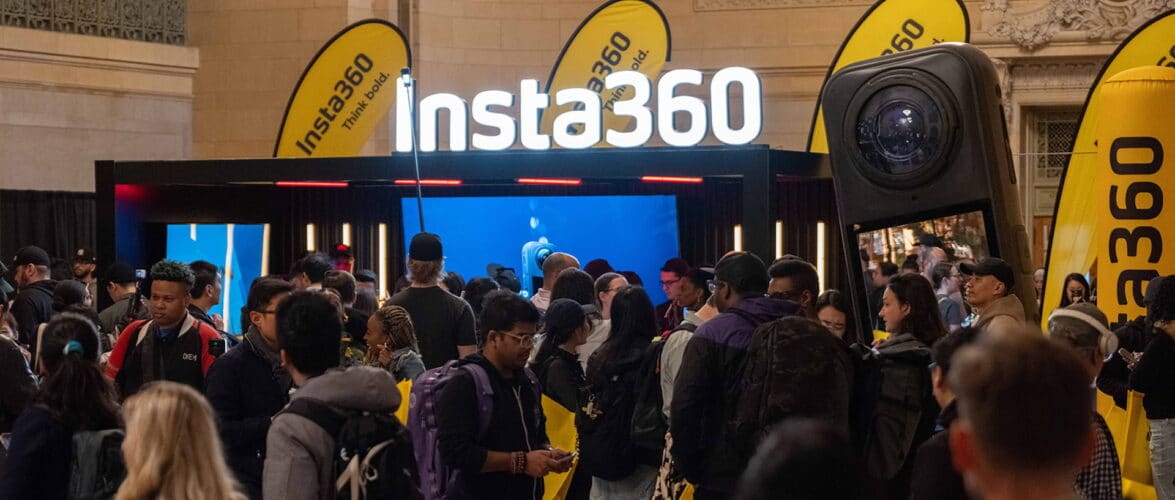
KEY TAKEAWAYS
- ·Insta360 co-founder Max Richter said AI-driven chip costs and supply constraints reached a critical level last year, exceeding the impact of US tariffs on the company's operations.
- ·AI companies' demand for semiconductors has squeezed component availability for consumer electronics makers, forcing longer lead times and higher costs for camera and drone manufacturers.
- ·The shortage reflects a broader Asia supply chain tilt toward high-margin AI orders, pressuring hardware brands without the purchasing power of hyperscalers.
The AI Tax on Hardware
Chinese action camera manufacturer Insta360 is grappling with an unexpected competitor for critical components: the artificial intelligence industry. Co-founder Max Richter told Nikkei Asia that skyrocketing chip costs driven by AI demand have become a more pressing challenge than navigating US tariffs, even as the company pursues aggressive expansion in the American market.
The component crunch reached what Richter characterized as a "critical" threshold last year. AI companies, flush with investment capital and racing to build data centers and training infrastructure, have absorbed semiconductor supply chains at a pace that has left consumer electronics makers scrambling for alternatives.
Supply Chain Collision
Insta360's predicament illustrates a broader collision between two technology sectors with vastly different buying power. AI firms building large language models and computer vision systems command premium pricing for the same chip families that power cameras, drones, and other consumer devices. Foundries and component suppliers have naturally tilted production toward higher-margin AI orders.
The shortage has forced hardware companies like Insta360 to navigate longer lead times, higher unit costs, and periodic allocation constraints. For a brand built on delivering feature-rich cameras at competitive price points, the margin pressure is acute. The company's 360-degree cameras and gimbal-stabilized models rely on image processors, memory, and sensor components that overlap with AI inference chips and edge computing modules.
Tariffs Take a Back Seat
Richter's comments underscore a shift in the risk calculus for Chinese tech exporters. US tariffs on Chinese goods have dominated headlines and corporate earnings calls for years, prompting supply chain reconfigurations and entity list concerns. Yet Insta360 finds the AI-driven component squeeze more disruptive to day-to-day operations.
The company has maintained its US market push despite trade friction, banking on strong brand recognition among content creators, extreme sports enthusiasts, and professional videographers. Insta360's cameras have carved out a niche in action and immersive video, competing with GoPro and DJI. That positioning has kept demand steady, but fulfilling orders has become harder when chip allocation is uncertain.
Regional Ripple Effects
The AI boom's impact on component availability is not confined to China. Across Asia, electronics manufacturers in Taiwan, South Korea, Japan, and Southeast Asia report similar pressure. Taiwanese chipmakers TSMC and MediaTek have prioritized AI accelerator production, while memory makers SK hynix and Samsung have shifted capacity toward high-bandwidth memory for AI servers.
For smaller hardware players without the purchasing volume of Apple or Samsung, the result is a de facto subsidy to AI: higher costs and constrained supply. Insta360's experience is a microcosm of that dynamic, where a consumer brand's product roadmap hinges on winning allocation battles against deep-pocketed hyperscalers.
Path Forward
Insta360 has not disclosed specific mitigation strategies, but industry patterns suggest a few levers: locking in long-term supply agreements, redesigning products around more readily available chips, or raising prices to preserve margins. Each option carries trade-offs. Long-term contracts reduce flexibility; redesigns delay launches; price hikes risk losing market share to rivals with better component access.
The company's ability to navigate this squeeze will test its operational agility. As AI continues to reshape semiconductor demand, hardware makers face a prolonged period of elevated costs and supply uncertainty. For Insta360, the AI headache may outlast the tariff one.
RELATED STORIES
Amkor Explores Options for China Operations Amid Regional Shift
Cheng Wei-Lun · 3 min
Tencent's Q2 Net Profit Misses Forecast Amid Heavy AI Investment
Cheng Wei-Lun · 3 min
China's Electric Vehicle Market Enters Seventh Month of Decline
Cheng Wei-Lun · 3 min
China's Long March 7A Rocket Destroyed 85 Seconds After Launch
Cheng Wei-Lun · 2 min
Spot something wrong? Email editor@briefasia.com. We log every correction publicly.