Asia · Politics
US Treasury Secretary and Japanese PM Diverge on BOJ Policy Amid Currency Intervention
Bessent and Takaichi's conflicting signals on Bank of Japan independence threaten to complicate coordinated yen stabilization efforts
KEY TAKEAWAYS
- ·US Treasury Secretary Scott Bessent and Japanese Prime Minister Sanae Takaichi have diverged publicly on Bank of Japan independence during joint yen stabilization efforts.
- ·Currency traders have responded to the policy split with increased volatility and wider trading bands for the yen in recent weeks.
- ·Upcoming G7 meetings will test whether the disagreement represents temporary friction or signals a fundamental shift in US-Japan currency coordination.
Diverging Voices on Central Bank Independence
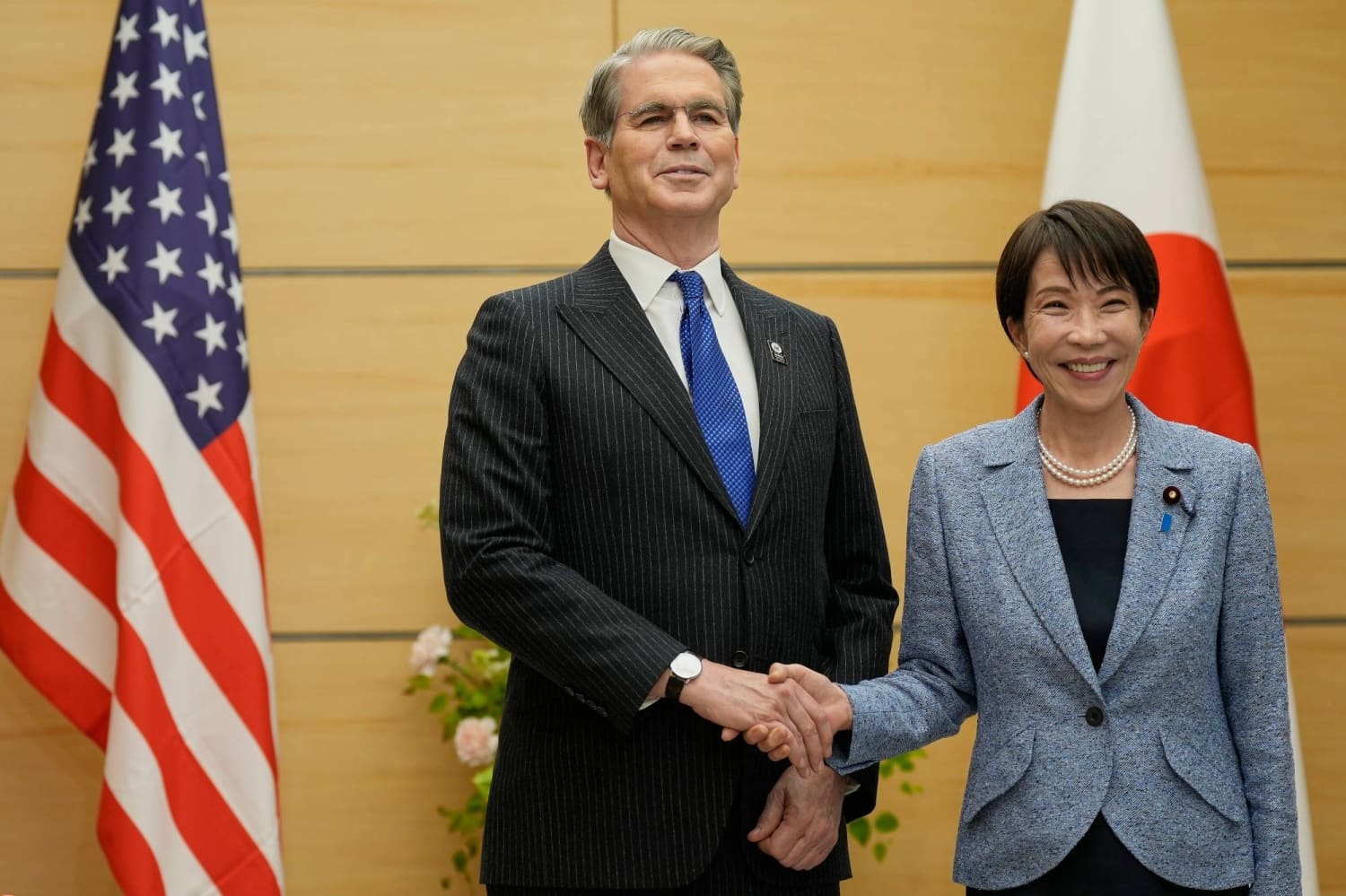
A growing policy divide between Washington and Tokyo threatens to undermine recent efforts to stabilize the yen, as US Treasury Secretary Scott Bessent and Japanese Prime Minister Sanae Takaichi signal conflicting approaches to the Bank of Japan's role in currency markets.
The split centers on how much influence political leaders should exert over monetary policy decisions, a tension that has intensified as both governments attempt to manage exchange rate volatility. The disagreement emerged publicly following coordinated interventions earlier this year, when officials from both nations worked to support the yen after it weakened beyond key technical thresholds.
Bessent has consistently emphasized the importance of central bank independence, arguing that market confidence depends on monetary authorities operating free from direct political pressure. His stance aligns with longstanding US Treasury doctrine that views autonomous central banks as essential to financial stability and credible inflation management.
Takaichi, by contrast, has advocated for closer coordination between the government and the Bank of Japan, particularly on matters affecting currency valuation and export competitiveness. Since taking office, she has pushed for a more assertive approach to yen management, reflecting domestic political pressure from manufacturing sectors facing margin compression due to exchange rate swings.
Market Implications of the Policy Rift
Currency traders have taken note of the divergence, with several Tokyo-based analysts suggesting that mixed signals from the two capitals reduce the deterrent effect of threatened interventions. When markets perceive disagreement among major economies about the appropriate policy framework, speculative positions tend to grow more aggressive.
The yen has oscillated within a wider band in recent weeks compared to the period immediately following the joint stabilization effort. Foreign exchange desks at major banks report increased volatility in Tokyo trading hours, a pattern often associated with uncertainty about official policy coordination.
The Bank of Japan itself has maintained its traditional posture of operational independence, with Governor statements reiterating that monetary policy decisions respond to economic data rather than political directives. Yet the public nature of the Bessent-Takaichi disagreement places the central bank in an uncomfortable position, potentially constraining its flexibility in future policy adjustments.
Historical Context for US-Japan Currency Coordination
The current tension recalls earlier episodes when differences between American and Japanese officials complicated exchange rate management. During the Plaza Accord era of the 1980s and subsequent coordination efforts in the 1990s, success depended heavily on unified messaging and shared frameworks for intervention triggers.
More recent history offers cautionary lessons as well. In 2022, when the yen depreciated sharply against the dollar, Japanese authorities conducted unilateral interventions that achieved only temporary effects, in part because US officials offered limited public support for the operations. Market participants quickly tested the resolve of a single government acting alone.
Effective currency intervention typically requires not just financial resources but also credible commitment signals. When major economies present a united front on exchange rate policy, markets assign higher probability to sustained action, making the initial intervention itself more effective and reducing the need for follow-up operations.
Political Pressures Driving the Divide
Domestic political considerations help explain why Takaichi has adopted a more interventionist stance. Japanese manufacturers, particularly in the automotive and machinery sectors, have lobbied for government action to prevent excessive yen appreciation that would erode their pricing advantages in export markets. At the same time, import-dependent industries and consumers face rising costs when the yen weakens, creating competing pressures.
Bessent faces a different set of constraints. US monetary policy operates under a dual mandate focused on employment and price stability, with exchange rates treated as secondary concerns that emerge from underlying economic fundamentals. Treasury officials historically resist language that could be interpreted as currency manipulation or inappropriate political interference in Federal Reserve decisions.
The structural differences between American and Japanese economic priorities make perfect alignment difficult under any circumstances. Japan's export-led growth model and aging demographics create distinct pressures compared to the more domestically oriented US economy. These underlying asymmetries surface during periods of currency stress, when short-term tactical needs diverge from long-term strategic frameworks.
What Comes Next
Financial market participants will watch upcoming G7 meetings and bilateral discussions for signs of whether the Bessent-Takaichi split represents a temporary divergence or a more fundamental shift in US-Japan economic coordination. Any joint statement language on currency policy will receive intense scrutiny for evidence of compromise or continued disagreement.
The Bank of Japan's next policy decision will also carry heightened significance. If the central bank adjusts rates or intervention strategies in ways that appear responsive to political signals from either capital, market confidence in its independence could erode further. Conversely, a firm assertion of autonomy might clarify the policy landscape but risk alienating political leaders in Tokyo.
For now, currency traders are pricing in wider bands of uncertainty, a development that benefits neither government's stated objectives. Both Washington and Tokyo have expressed preference for stable, predictable exchange rates that support trade and investment flows. Achieving that stability will require bridging the current policy divide or accepting reduced effectiveness in future intervention efforts.
RELATED STORIES
Japan and US Stage Joint Intervention as Yen Slides Past ¥155
Aiko Nakamura · 3 min

Tokyo's Currency Intervention Reveals Deeper Policy Failures
Anand Sundaram · 5 min

Renminbi Faces Upward Pressure After US-Japan Yen Intervention
Cheng Wei-Lun · 3 min

Bessent's Yen Support Pledge Faces Reality of Constrained U.S. Intervention Tools
Cheng Wei-Lun · 4 min
Spot something wrong? Email editor@briefasia.com. We log every correction publicly.