Asia · Trade
Chinese Automakers Eye Up to 30% of European Market by 2035
Tariff decisions and local manufacturing rules will determine whether Chinese brands reach a quarter or nearly a third of EU sales within a decade
KEY TAKEAWAYS
- ·Chinese carmakers could increase their European market share from 10% today to between 15% and 30% by 2035, depending on regulatory decisions.
- ·Under current EU rules, Chinese brands would reach 30% market share, while extending EV tariffs to plug-in hybrids would cap penetration at 25%.
- ·The most restrictive scenario, limiting Chinese share to 15%, would require Brussels to impose stricter made-in-EU manufacturing requirements.
Projections Point to Substantial Gains
Chinese automotive manufacturers are positioned to capture between 15 and 30 percent of the European market by 2035, according to Citi analysts. The range reflects divergent regulatory scenarios, each carrying different implications for how deeply Chinese brands penetrate a region that has historically been dominated by legacy German, French, and Italian marques.
Today, Chinese carmakers hold roughly 10 percent of European sales. The projected increase would represent a doubling or tripling of market share within a decade, a trajectory that would reshape competitive dynamics across the continent.
Three Scenarios Driven by Policy
Citi's base case assumes 30 percent market penetration under current European Union rules. In that scenario, Chinese manufacturers continue to benefit from relatively open access, building on the momentum established by brands such as BYD, Geely, and MG.
A second scenario models the impact of extending existing tariffs on Chinese electric vehicles to plug-in hybrids. Under that framework, Chinese market share would reach 25 percent by 2035. The tariff extension would slow but not halt the advance, as Chinese producers adjust product mix and pursue local assembly to mitigate duty impacts.
The most restrictive outcome, capping Chinese share at 15 percent, would require Brussels to tighten rules of origin and impose stricter made-in-EU requirements. Such measures would force Chinese brands to either establish deeper manufacturing footprints within the bloc or accept constrained volume growth.
The Stakes for Brussels and Beijing
Europe's automotive sector employs millions and anchors industrial ecosystems in Germany, France, Spain, and Italy. Rising Chinese market share raises questions about production capacity utilization, employment, and the viability of smaller European brands already squeezed by the transition to electric powertrains.
For Chinese manufacturers, Europe represents a high-value market with sophisticated consumers and premium pricing potential. Success there validates technology, elevates brand equity, and offsets slower growth at home as China's domestic auto market matures.
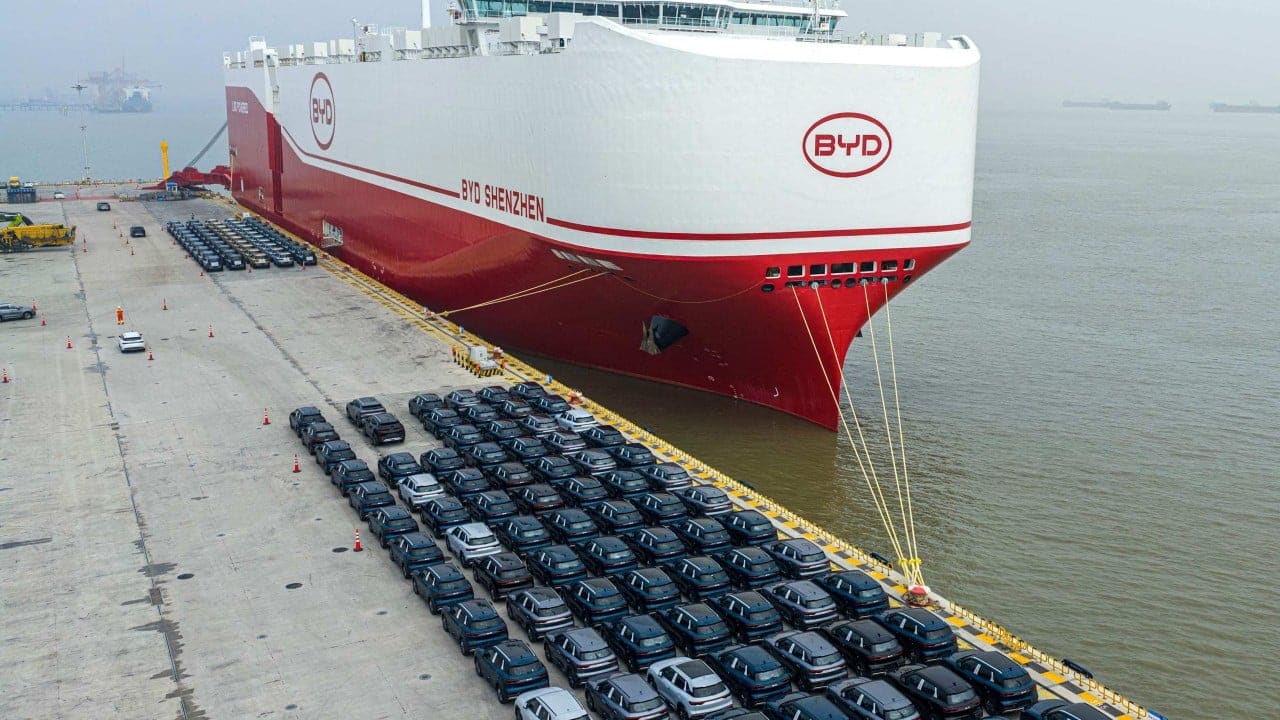
The interplay between tariff policy and local production requirements will determine which scenario materializes. Chinese automakers have already begun investing in European assembly plants, a hedge against trade barriers and a signal of long-term commitment. BYD is building a facility in Hungary, while others are exploring partnerships with existing European manufacturers to secure local content credentials.
Competitive Pressure Mounts
European legacy automakers face a two-front challenge: accelerating their own electric vehicle programs while defending share against Chinese entrants that often offer comparable technology at lower price points. Volkswagen, Stellantis, and Renault have announced billions in EV investment, but execution timelines remain tight.
Chinese brands benefit from integrated supply chains, particularly in batteries, and from domestic scale that allows aggressive pricing in export markets. They also carry fewer legacy costs, having built their operations around electric and hybrid platforms from the outset rather than transitioning from internal combustion.
The next eighteen months will be pivotal. The European Commission is reviewing its tariff framework and considering adjustments to rules of origin. Those decisions will either open the door wider for Chinese manufacturers or impose friction that slows their advance.
For investors and executives watching the sector, the Citi analysis underscores a fundamental shift: Chinese automakers are no longer peripheral players in Europe. They are central to the market's evolution, and the policy choices made in Brussels will shape not only their trajectory but the competitive landscape for the next decade.
RELATED STORIES
Opel's China Partnership and Job Cuts Expose Europe's Auto Decline
Cheng Wei-Lun · 3 min
BYD and Chinese EV Makers Challenge Japanese Dominance in Australia
Cheng Wei-Lun · 3 min
China Opens Weekly Arctic Shipping Service to Europe, Halving Transit Times
Cheng Wei-Lun · 3 min
China Routed Solar Exports Through 32,000 Kilometers to Dodge US Tariffs
Cheng Wei-Lun · 4 min
Spot something wrong? Email editor@briefasia.com. We log every correction publicly.