Asia · Trade
Sudan's Red Sea Coast Emerges as New Shipping Risk for Asian Exporters
Iranian drone deals and smuggling networks on Africa's side of the corridor threaten fragile Suez recovery plans
KEY TAKEAWAYS
- ·Sudan's military government has traded coastal access for Iranian weapons including a USD 70 million drone contract, with documented smuggling routes linking Port Sudan to Houthi-controlled Yemen since 2023.
- ·The threat sits north of Bab al-Mandab along shipping lanes Asian carriers consider safe, within range of Iranian-supplied systems, jeopardizing plans to resume Suez transits that carry 22 percent of global container trade.
- ·UN monitoring excludes Sudan's coastline under a 2005 Darfur-only mandate, and the Security Council left the arms trafficking expert position unfilled in 2025 after China and Pakistan blocked the nominee.
A Coastal Government With Assets to Trade
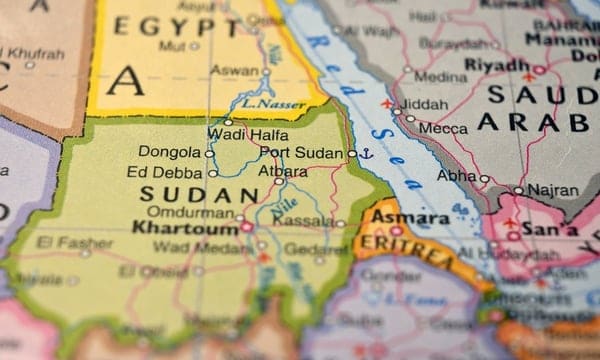
Sudan's military authorities have controlled Port Sudan since losing Khartoum in 2023, transforming the Red Sea coastline into both lifeline and bargaining chip. The government depends on foreign weapons to sustain its position in a civil conflict now entering its fifth year, and 700 kilometers of African shoreline has become the primary asset available for negotiation with suppliers.
Container operators began trial runs back through Suez in February 2026, betting that security conditions would hold. That calculus focused almost entirely on Yemen's western coast. The African side of the same waterway received far less scrutiny, even as evidence mounted that Port Sudan had become a hub for Iranian military hardware and cross-strait smuggling operations.
The US Department of Justice filed charges in April 2026 against an Iranian national operating in Los Angeles, alleging a USD 70 million contract for Mohajer-6 drones delivered from Iran's defense ministry to Sudan's armed forces. Prosecutors described letters of intent to the Islamic Revolutionary Guard Corps covering bomb fuses, with payments channeled through an Oman-registered shell entity. Sudan and Iran restored diplomatic ties in October 2023, formalizing a relationship that had been building through battlefield necessity.
Traffic Moves Both Directions
Weapons are not the only cargo crossing the water. United Nations investigators tracking Yemen documented smuggling routes linking Sudanese and Yemeni territory as far back as 2023, with the Houthis identified as the dominant force coordinating regional flows as naval patrols intensified in the Arabian Sea.
A UN Panel of Experts report from October 2025 flagged connections between Port Sudan and Al Salif in Yemen's Hodeidah governorate, used for moving both arms and personnel. Yemen's coast guard intercepted multiple shipments originating from Sudan during 2025, according to data cited by researchers at the Italian Institute for International Political Studies. The institute noted that signs of operational coordination are accumulating faster than hard proof, but the trajectory is clear.
What Tehran expects in exchange remains opaque. The Wall Street Journal reported in March 2024 that Iran had requested permanent naval basing rights on Sudan's coast and been turned down; both governments denied the account. In December 2025 the same outlet reported that Khartoum had offered Russia a 25-year arrangement for up to 300 personnel and four warships at Port Sudan, prompting a formal warning from Washington.
The recurring theme matters more than any individual deal. Governments under siege trade access when cash runs out.
Geography Puts Asian Trade in the Crosshairs
Port Sudan sits north of the Bab al-Mandab strait, along the stretch that shipping lines currently consider beyond the Yemeni threat envelope. The main commercial lane at that latitude runs roughly 150 kilometers offshore, well within range of Iranian-supplied missile and drone systems already in regional circulation.
A threat emerging from Sudan's coast would not require Port Sudan itself to become a launch site. The near-term risk centers on resupply, berthing and transfer operations that could enable attacks staged from elsewhere. Yemen demonstrated how logistics infrastructure converts into strike capability over time.
Insurance underwriters price entire corridors, not individual coastlines. A Red Sea route with instability on both shores offers little incentive for coverage, regardless of which government controls which port.
Around 22 percent of global container trade by sea transited the Suez Canal in 2023, according to UN Trade and Development. The majority connected East and South Asian exporters to European buyers. By May 2025, Suez transits had fallen roughly 70 percent below 2023 levels, forcing diversions around the Cape of Good Hope that added 10 to 15 days per voyage. Chinese, Indian, Japanese and South Korean shippers absorbed the largest share of the delay costs. Singapore, Port Klang and Colombo felt the ripple effects across their hub networks.
Monitoring Tools Stuck in 2005
The UN Security Council's arms embargo on Sudan, established under Resolution 1591, applies only to Darfur. The mandate was written in 2005 for a landlocked conflict in the country's west. Twenty-one years later, the Panel of Experts tasked with monitoring compliance still reports on a geographic scope that excludes the coastline where the most consequential arms shipments now arrive.
Separate UN panels examine opposite sides of the Red Sea under different mandates with no coordination requirement, leaving the Port Sudan to Al Salif route in a jurisdictional gap. Even existing mechanisms have stalled. Under Resolution 2772 in 2025, the Security Council extended the Sudan Panel but failed to agree on personnel appointments. Algeria objected to the nominee covering armed groups; China and Pakistan blocked the arms specialist. The panel went unstaffed, missing its August interim report and quarterly updates.
The vacancy covering arms trafficking was the hardest position to fill.
Commercial Surveillance Already Exists
Satellite radar and automatic identification system gap analysis operate commercially along Sudan and Eritrea's coasts. Port state control inspections and cargo manifest reviews at transhipment hubs can raise the cost of suspect routes without requiring interdiction at sea. The Los Angeles prosecution succeeded by tracing financial flows through shell companies, international banking channels and informal value transfer networks into a single evidentiary package.
The UN monitors Yemen's shore because vessels were attacked from there. It does not monitor Sudan's shore because no commercial ships have been struck from that side yet. The logic guarantees that every monitoring response arrives one crisis behind the threat.
Asian economies carry disproportionate exposure to Red Sea corridor risk. The states with the most to lose economically remain the furthest from the conflict diplomatically. Whether the decade ends with one contested shore or two is being determined now, while most of the exposed parties have chosen not to engage the question.
RELATED STORIES
Middle East Crude Premiums Hit Two-Month High Amid Red Sea Attacks
Cheng Wei-Lun · 3 min
San Miguel's Ramon Ang Takes Quarter Stake in Lopez Holding Company
Priyanka V. Rao · 5 min

Vietnam Pours Capital Into Laos as Vientiane Seeks Relief From Beijing Debt
Priyanka V. Rao · 4 min
ASEAN Targets Fourth-Largest Economy Spot as Internal Trade Lags Behind
Priyanka V. Rao · 3 min
Spot something wrong? Email editor@briefasia.com. We log every correction publicly.