Asia · Trade
ASEAN Targets Fourth-Largest Economy Spot as Internal Trade Lags Behind
Regional bloc aims to strengthen intra-member commerce, currently below 25 percent, to meet ambitious 2030 growth projections
KEY TAKEAWAYS
- ·ASEAN targets fourth-largest global economy status by 2030, but internal trade among member states remains below 25 percent of total trade activity.
- ·Malaysia's Foreign Minister emphasized that free movement of goods frameworks and mechanisms are in place to facilitate cross-border commerce within the bloc.
- ·The Philippines is advancing initiatives from Malaysia's 2025 chairmanship, with Malaysia serving as steward of the ASEAN 2045 Vision to strengthen regional economic foundations.
Economic Integration Remains a Challenge
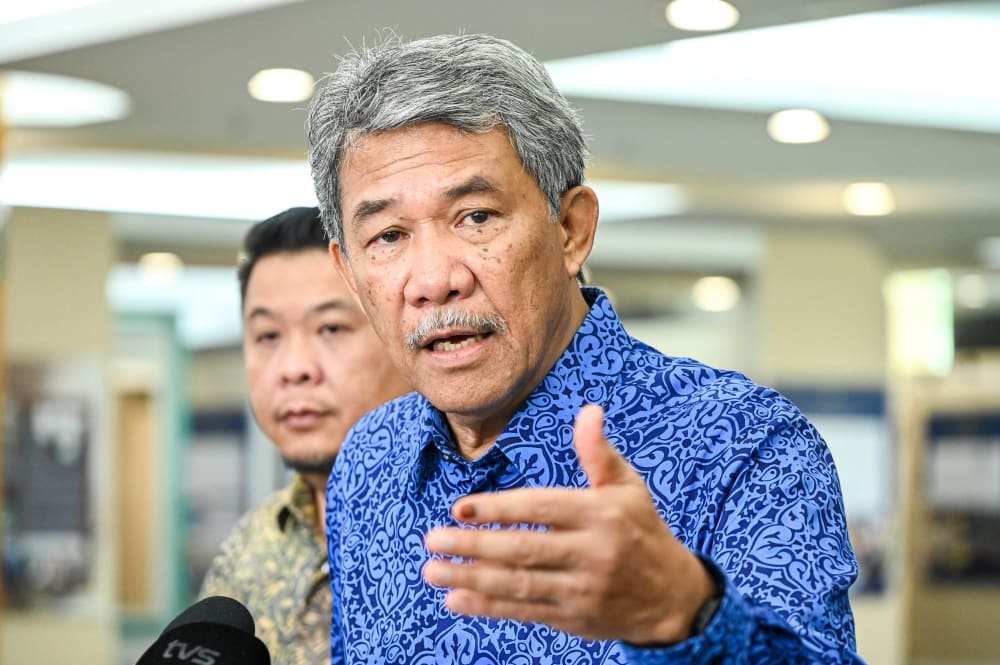
Southeast Asia's regional grouping is eyeing a significant leap in global economic rankings, but internal commerce patterns reveal a fundamental weakness. Trade among ASEAN's ten member states accounts for less than 25 percent of total trade activity, according to Malaysian Foreign Minister Datuk Seri Mohamad Hasan, speaking at the 59th ASEAN Day celebration in Putrajaya on Monday.
The figure underscores a persistent challenge for a bloc that has spent decades working toward economic integration. While ASEAN's combined GDP already positions it as a substantial economic force, the relatively modest share of intra-regional trade suggests member nations continue to look outward to China, the United States, and other major economies rather than building deeper commercial ties with immediate neighbors.
Mohamad noted that ASEAN has shifted its focus from purely political coordination to economic cooperation. The bloc's ambition to rank as the fourth-largest economy globally by 2030 depends on whether member states can translate existing frameworks into tangible increases in cross-border commerce.
Mechanisms in Place, Execution Required
ASEAN has established multiple instruments designed to facilitate trade among its members. Chief among these is the free movement of goods framework, intended to reduce friction at borders and streamline customs procedures across the region. The ASEAN Economic Community blueprint, first launched in 2015 and updated periodically, outlines commitments to tariff reduction, regulatory harmonization, and mutual recognition arrangements.
Yet the sub-25 percent intra-regional trade share indicates that these mechanisms have not yet delivered the level of integration seen in other regional blocs. The European Union, by comparison, sees roughly 60 percent of member-state trade conducted within the bloc. Even NAFTA, before its renegotiation into USMCA, recorded intra-regional trade shares above 40 percent.
Malaysia held the ASEAN chairmanship in 2025 and introduced a series of initiatives now being carried forward by the Philippines, which assumed the rotating chair in 2026. The Kuala Lumpur Declaration, adopted during Malaysia's tenure, laid out priorities for deepening economic cooperation and addressing supply chain resilience across the region.
Long-Term Vision and Regional Stewardship
Mohamad highlighted Malaysia's role as what he termed the "Permanent Shepherd" of the ASEAN 2045 Vision, a long-term strategic framework intended to guide the bloc's development over the next two decades. The vision emphasizes not only economic growth but also digital transformation, sustainability, and inclusive development across member states with widely varying income levels and industrial capabilities.
The challenge for ASEAN lies in balancing the interests of its most developed economies, such as Singapore and Brunei, with those of frontier markets like Laos and Cambodia. Divergent regulatory standards, infrastructure gaps, and uneven digital adoption create friction that formal agreements alone cannot eliminate.
Still, the 2030 target represents an accelerated timeline. Achieving fourth-place status in global economic rankings within four years would require sustained GDP growth across the region, continued foreign direct investment inflows, and measurable progress in boosting internal commerce. The latter remains the variable most directly within ASEAN's control.
What Needs to Change
Raising intra-ASEAN trade from its current level will require more than policy declarations. Practical obstacles including non-tariff barriers, inconsistent enforcement of trade rules, and underdeveloped logistics networks continue to impede the flow of goods. Small and medium enterprises, which form the backbone of many ASEAN economies, often lack the resources to navigate complex cross-border procedures.
Digital trade infrastructure also remains uneven. While Singapore operates as a global fintech and logistics hub, other member states are still building out the digital customs and payment systems necessary for seamless e-commerce across borders.
The next few years will test whether ASEAN's institutional frameworks can translate into the kind of economic integration that would justify its fourth-place ambition. For now, the gap between aspiration and the reality of intra-regional commerce remains wide.
RELATED STORIES
ASEAN's Crisis Response Model Under Pressure as Regional Tensions Mount
Siti Nuraini · 3 min

Indonesia Car Sales Jump 34% as Electric Vehicles Reshape Southeast Asia's Auto Market
Siti Nuraini · 3 min
Southeast Asian Workers Embrace AI Tools Faster Than Global Peers
Priyanka V. Rao · 3 min

Chinese Drone Exports Surge in Southeast Asia as Civilian Demand Offsets US Market Decline
Cheng Wei-Lun · 3 min
Spot something wrong? Email editor@briefasia.com. We log every correction publicly.