Technology · Dev
South Korea Posts Record Early-August Export Surge on Memory Chip Demand
Outbound shipments climbed 45.3 percent year-on-year in the first ten days of August, driven by semiconductor strength and narrowing trade balance.
KEY TAKEAWAYS
- ·South Korea's exports rose 45.3 percent year-on-year to $21.3 billion in the first ten days of August, the highest ever for the period, driven by memory chip demand.
- ·Imports climbed 23.1 percent to $19.5 billion, producing a $1.8 billion trade surplus and signaling improved terms of trade.
- ·Full-month data due in September will clarify whether the surge reflects durable demand or front-loaded shipments ahead of seasonal slowdowns.
Semiconductor Momentum Drives Record Shipments
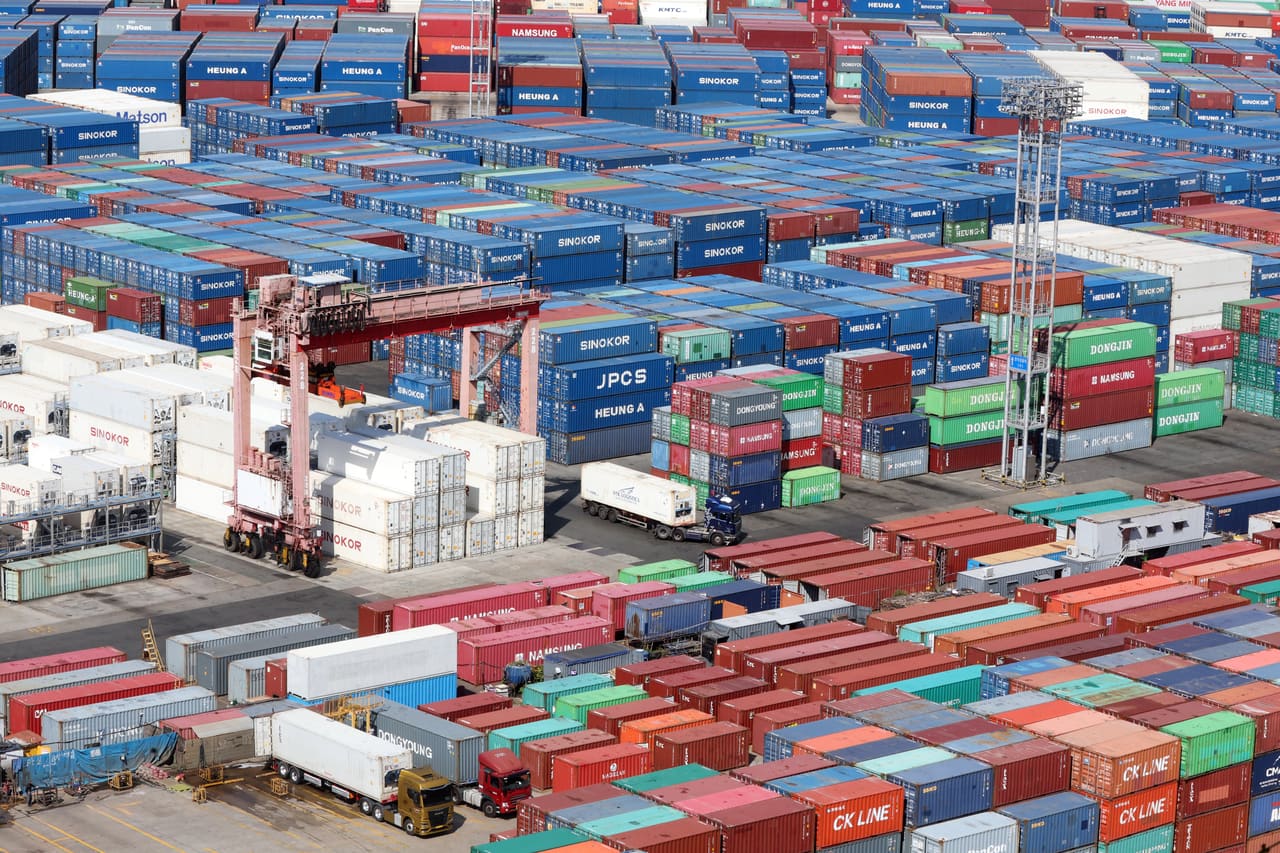
South Korea recorded its strongest early-August export performance on record, with outbound shipments climbing 45.3 percent year-on-year to $21.3 billion during the first ten days of the month, according to data from the Korea Customs Service. The figure marks a significant acceleration from the $14.6 billion registered in the same period last year.
The surge reflects sustained global appetite for memory chips, which remain South Korea's largest export category and a bellwether for the country's trade health. Semiconductor manufacturers in the country have benefited from elevated demand tied to data center expansion, artificial intelligence infrastructure buildouts, and inventory restocking across consumer electronics supply chains.
Imports during the same window rose 23.1 percent to $19.5 billion, resulting in a trade surplus of $1.8 billion for the period. The gap between export and import growth rates suggests improving terms of trade, a dynamic closely watched by policymakers in Seoul as they calibrate monetary and fiscal responses to global economic conditions.
Regional Context and Competitive Pressures
The performance underscores South Korea's continued dominance in advanced memory production, even as regional competitors ramp up capacity. Taiwan and China have both announced multi-billion-dollar investments in semiconductor fabs over the past year, intensifying competition for market share in DRAM and NAND flash segments.
South Korean chipmakers, led by industry giants Samsung Electronics and SK hynix, have maintained technological leads in high-bandwidth memory and extreme ultraviolet lithography processes. These advantages have proven critical as hyperscale cloud providers and AI accelerator manufacturers prioritize performance and power efficiency in procurement decisions.
Export momentum also reflects broader stabilization in global electronics demand after two years of cyclical downturn. Inventory corrections that weighed on chip prices through late 2024 and early 2025 have largely concluded, allowing pricing power to return to suppliers with differentiated product portfolios.
Implications for Full-Month and Quarterly Trends
Early-month trade data often serve as leading indicators for full-period results, though volatility in shipping schedules and holiday effects can distort short-window snapshots. August has historically been a softer month for Korean exports due to summer shutdowns in European manufacturing and vacation-related slowdowns in North America.
The outsized gain in the first ten days suggests either front-loaded shipments ahead of anticipated logistics constraints or a more durable uptick in demand than many analysts had forecast entering the third quarter. Full-month figures, expected in early September, will clarify whether the momentum is sustained or concentrated in a narrow window.
Trade watchers will also parse sector-level breakdowns to assess whether strength is confined to semiconductors or spreading to other major export categories, including petrochemicals, automobiles, and machinery. Diversification of export growth would signal broader industrial resilience and reduce vulnerability to semiconductor cycle swings.
Policy and Market Implications
For South Korean economic planners, robust export growth offers fiscal breathing room as domestic consumption remains sluggish amid elevated household debt levels and weak real wage growth. The government has emphasized export-oriented industrial policy as a hedge against internal demand weakness, a strategy that appears to be paying near-term dividends.
Equity markets have responded positively to the data, with shares of major semiconductor and logistics firms gaining in early trading. Currency markets showed muted reaction, with the won trading within recent ranges against the dollar, suggesting investors had already priced in strong export performance based on earlier company guidance and order book disclosures.
The trade surplus, while modest in absolute terms for a ten-day window, marks a reversal from deficit positions recorded in several months during 2024 and early 2025, when energy import costs surged and chip demand cratered. Sustained surpluses would improve South Korea's current account balance and reduce external financing pressures.
Looking ahead, the trajectory of memory chip pricing will be the critical variable. Spot prices for benchmark DRAM and NAND products have stabilized in recent weeks after a rally earlier in the year, and any renewed softness could quickly erode export value growth even if unit shipment volumes hold steady. Industry executives have signaled cautious optimism for the second half of 2026, contingent on continued AI-related infrastructure spending and stable macroeconomic conditions in key end markets.
RELATED STORIES
Seoul Warns Against Redistributing Chip Profits as China Investment Accelerates
Jun-ho Seo · 2 min
Korean Builders Race to Secure Power Equipment for AI Data Centers
Jun-ho Seo · 3 min
Samsung Closes Yield Gap in Memory Race with SK Hynix
Cheng Wei-Lun · 3 min
Seoul Court Upholds Prison Term for Ex-SK Hynix Engineer in Chip Leak Case
Cheng Wei-Lun · 3 min
Spot something wrong? Email editor@briefasia.com. We log every correction publicly.