Technology · Dev
Samsung Closes Yield Gap in Memory Race with SK Hynix
The South Korean giant has brought HBM4 production yields near 80%, signaling a shift in competitive dynamics from technology development to manufacturing scale and supply reliability.
KEY TAKEAWAYS
- ·Samsung Electronics has achieved production yields near 80% for its sixth-generation high-bandwidth memory, a sharp improvement from early mass production stages.
- ·The milestone shifts competition with SK Hynix from technology leadership to manufacturing capacity and supply reliability as demand for AI infrastructure memory remains supply-constrained.
- ·With yield rates stabilizing, fabrication capacity and delivery timelines now determine market share in the HBM segment, where both South Korean suppliers control the majority of global supply.
Manufacturing Milestone in Seoul
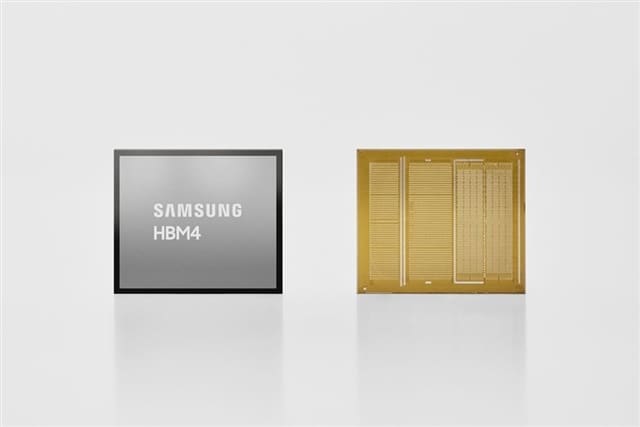
Samsung Electronics has brought production yields for its sixth-generation high-bandwidth memory to approximately 80%, a manufacturing achievement that narrows the operational gap with SK Hynix and reframes the competitive landscape around capacity rather than pure technology leadership.
The yield improvement represents a steep climb from the initial stages of mass production. In semiconductor manufacturing, yield measures the percentage of usable chips produced from each wafer, a metric that directly determines profitability and supply consistency. For advanced memory products like HBM4, where die stacking and thermal management push fabrication limits, yield rates in this range typically emerge only after months of process refinement.
High-bandwidth memory sits at the center of the AI infrastructure buildout across Asia and North America. These specialized chips stack multiple DRAM layers vertically and connect them with thousands of microscopic channels, delivering the data throughput required by graphics processors and AI accelerators. HBM4, the latest iteration, doubles bandwidth compared to the previous generation while reducing power consumption, specifications that matter for data center operators managing electricity costs and thermal loads at scale.
The Asia Memory Duopoly
Samsung and SK Hynix together control the majority of the global HBM market, with South Korea functioning as the de facto manufacturing hub for this category. SK Hynix has held a lead in securing design wins with major AI chip customers, but Samsung's yield progress suggests the company is positioning to compete on volume commitments rather than solely on specification sheets.
Production yield becomes critical when customers such as hyperscalers and cloud providers negotiate supply agreements. A manufacturer operating at 80% yield can commit to larger order volumes with greater confidence in delivery timelines, a factor that influences contract negotiations and long-term partnerships. For Samsung, reaching this threshold means the company can credibly pitch itself as a stable second source or primary supplier, depending on customer diversification strategies.
The shift in competitive emphasis from technology demonstration to manufacturing execution reflects a broader pattern in the semiconductor industry. As process nodes and product architectures converge among leading players, the ability to ramp production quickly and maintain quality consistency often determines market share more than being first to announce a new generation.
Capacity and the Next Bottleneck
With yield rates stabilizing, the next constraint becomes fabrication capacity. Both Samsung and SK Hynix are expanding HBM production lines, but equipment lead times and cleanroom construction schedules mean capacity additions lag demand by quarters or years. Memory customers have publicly discussed supply tightness for advanced packaging and HBM in earnings calls, a signal that the market remains supply-constrained despite multiple suppliers.
Samsung operates memory fabrication facilities in Pyeongtaek and Hwaseong, with ongoing investments in additional cleanroom space and advanced packaging infrastructure. The company has allocated capital expenditure toward expanding its role in the AI supply chain, a strategic priority as traditional memory markets such as smartphones and PCs grow more slowly.
For the broader Asia technology ecosystem, Samsung's yield progress reinforces South Korea's position in the memory supply chain while also highlighting the concentration risk inherent in a two-supplier market. Diversification efforts by customers and newer entrants remain limited, leaving the HBM market dependent on execution by the two Gyeonggi Province giants.
The yield milestone does not resolve all of Samsung's challenges in the memory segment. The company still faces competition on product roadmaps, customer relationships, and the pace of next-generation development. But crossing the 80% threshold transforms the conversation from "can Samsung produce HBM4 reliably?" to "how much can Samsung deliver, and when?" That shift matters in a market where supply commitments are increasingly as valuable as technical specifications.
RELATED STORIES
Seoul Court Upholds Prison Term for Ex-SK Hynix Engineer in Chip Leak Case
Cheng Wei-Lun · 3 min
SK Hynix Eyes Stake Sale in $3 Billion China Packaging Facility
Cheng Wei-Lun · 2 min
SK Hynix Drawn Into US Patent Dispute Over HBM and 3D NAND
Cheng Wei-Lun · 3 min
SK Hynix Reviews Future of China Packaging Facility Amid $3 Billion Valuation Talk
Cheng Wei-Lun · 2 min
Spot something wrong? Email editor@briefasia.com. We log every correction publicly.