Technology · Policy
SK Hynix Drawn Into US Patent Dispute Over HBM and 3D NAND
MonolithIC 3D has triggered a second ITC investigation targeting the Korean chipmaker's advanced memory products, adding federal court claims to the battle
KEY TAKEAWAYS
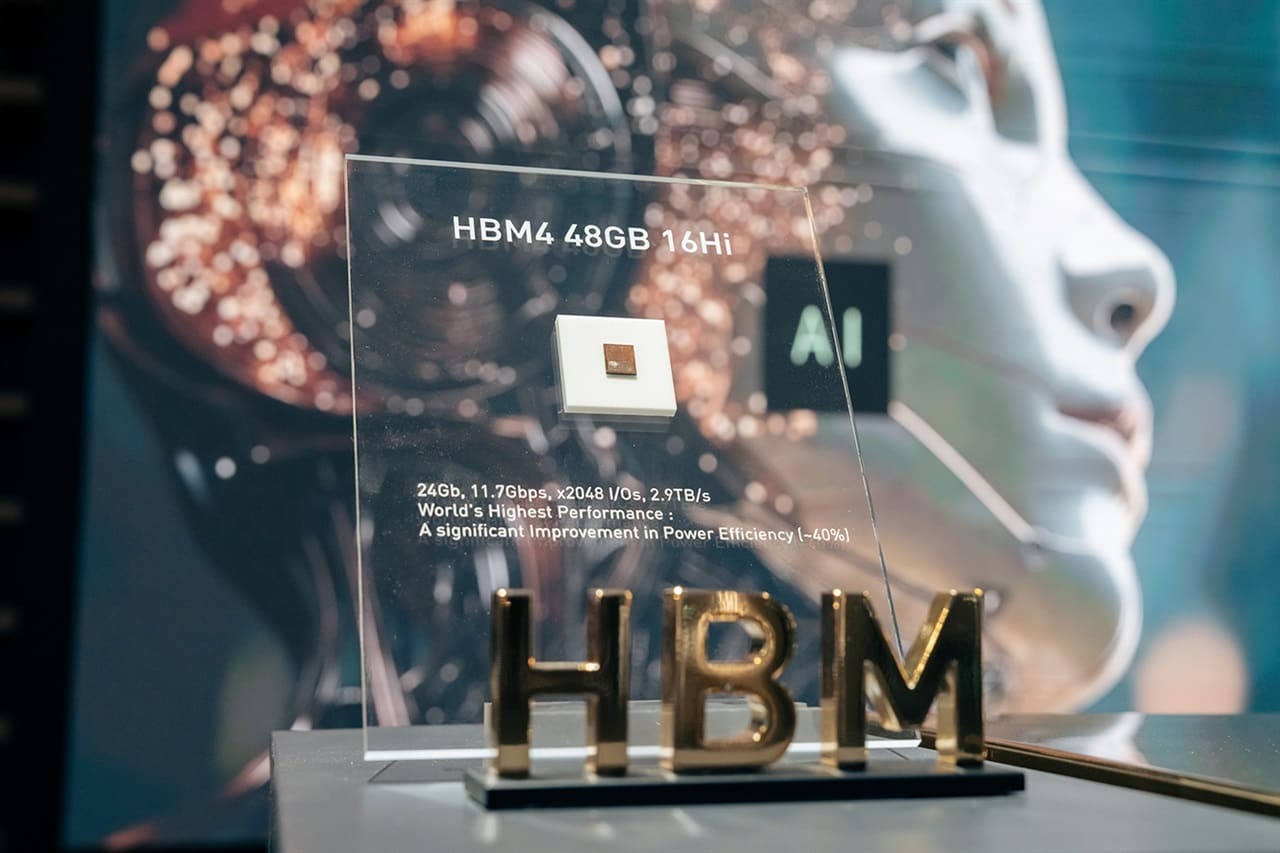
- ·MonolithIC 3D has filed a second ITC investigation against SK Hynix, targeting high-bandwidth memory and 3D NAND products alongside parallel federal court litigation.
- ·An ITC exclusion order could bar SK Hynix memory imports into the US, disrupting supply to AI accelerator clients and data center customers.
- ·SK Hynix leads global HBM shipments with over half of first-quarter 2026 volume, making any trade restriction strategically significant for AI infrastructure buildouts.
The Case Expands
SK Hynix is now contending with a second patent investigation by the US International Trade Commission, this time covering its high-bandwidth memory and 3D NAND products. MonolithIC 3D, a US-based patent holder, has filed the complaint alongside parallel litigation in federal court, widening the legal front against one of Asia's largest memory chip manufacturers.
The timing puts pressure on SK Hynix as it ramps HBM production to meet surging demand from AI accelerator clients. HBM has become the company's highest-margin product line, with supply constraints persisting through the first half of 2026. Any disruption to US shipments, even temporary, would ripple through data center buildouts across North America and complicate supply agreements with hyperscale customers.
MonolithIC 3D specializes in three-dimensional semiconductor integration patents. The firm does not manufacture chips but licenses intellectual property related to stacking and interconnect technologies, areas central to both HBM and 3D NAND architectures. The company has previously targeted other memory makers, though details of those disputes remain under seal.
What the ITC Path Means
The USITC route is distinct from standard patent litigation. If the commission finds infringement, it can issue an exclusion order barring imports of the disputed products into the United States. That remedy is faster than federal court injunctions and does not require proving damages, making it a preferred tool for patent holders seeking leverage.
SK Hynix ships a substantial portion of its HBM output to US-based AI chip designers and cloud providers. An exclusion order would force the company to either redesign products, negotiate a license, or route supply through third parties, all of which carry cost and delay. The federal court case running in parallel allows MonolithIC 3D to pursue monetary damages, a remedy unavailable at the ITC.
The company has not yet disclosed the specific patents at issue or the technical claims underlying the complaint. Industry observers note that 3D memory architectures involve hundreds of process and design patents, many overlapping across manufacturers. Determining infringement often hinges on细微 structural details visible only through electron microscopy and process documentation.
Competitive Context in Memory
SK Hynix holds the leading position in HBM, shipping more than half of global volume in the first quarter of 2026, according to market trackers. Its HBM3E products are qualified with Nvidia, AMD, and several hyperscale customers building proprietary AI accelerators. Samsung and Micron are the primary competitors, with both ramping capacity and pursuing qualification timelines that extend into early 2027.
In 3D NAND, SK Hynix ranks third globally by revenue, behind Samsung and Kioxia. The company recently began volume production of 321-layer NAND, targeting enterprise SSD and data center applications. Margins in NAND remain compressed compared to DRAM and HBM, but the segment is strategic for customer bundling and long-term supply agreements.
Patent disputes are common in the memory industry, where process innovations are incremental and closely guarded. Cross-licensing agreements among the major manufacturers cover much of the overlapping intellectual property, but non-practicing entities like MonolithIC 3D operate outside those frameworks, creating friction when they assert rights.
What Comes Next
The ITC investigation will proceed on an accelerated schedule, with an initial determination expected within 12 to 15 months. SK Hynix will have the opportunity to challenge the validity of the patents, argue non-infringement, or demonstrate that its products do not practice the claimed inventions. Settlement negotiations typically occur in parallel, though neither party has indicated willingness to resolve the matter outside litigation.
The federal court case will move more slowly, with discovery and claim construction likely extending into 2027. If MonolithIC 3D prevails on damages, the financial exposure could reach into the hundreds of millions of dollars, depending on the volume of accused products and the royalty rate a court deems reasonable.
For SK Hynix, the dispute adds a layer of risk to its US market strategy at a time when geopolitical considerations already complicate semiconductor trade. The company has been expanding its presence in the United States, announcing plans for an advanced packaging facility in Indiana that will support HBM and AI chip integration. Any exclusion order would undermine the rationale for that investment and force a reassessment of supply chain routing.
The outcome will also be watched by other Asian memory makers navigating the US patent landscape. As China-based firms like CXMT and ChangXin ramp DRAM capacity and attempt to enter HBM, the precedent set in cases like this will shape how aggressively non-practicing entities pursue enforcement and how much leverage they can extract from manufacturing-focused companies.
RELATED STORIES
SK Hynix Reviews Future of China Packaging Facility Amid $3 Billion Valuation Talk
Cheng Wei-Lun · 2 min
Seoul Court Upholds Prison Term for Ex-SK Hynix Engineer in Chip Leak Case
Cheng Wei-Lun · 3 min
SK Hynix Eyes Stake Sale in $3 Billion China Packaging Facility
Cheng Wei-Lun · 2 min
Samsung Settles Netlist Patent Fight With $897 Million Deal
Cheng Wei-Lun · 3 min
Spot something wrong? Email editor@briefasia.com. We log every correction publicly.