Asia · Politics
South Korea Creates Fiscal Buffer Fund to Manage Semiconductor Tax Surge
New Future Response Fund will redirect chip industry windfalls into strategic investments and cushion revenue volatility as Seoul overhauls education financing
KEY TAKEAWAYS
- ·South Korea will establish the Future Response Fund to capture semiconductor tax windfalls and deploy them into youth programs, emerging industries, regional development, and education while building reserves against downturns.
- ·The government is conducting the first comprehensive reform of local education funding in over fifty years to realign resource allocation with demographic shifts and infrastructure needs.
- ·The fiscal mechanism aims to smooth volatility from the semiconductor cycle, which has driven sharp swings in corporate tax receipts as memory chip prices fluctuate through boom-bust patterns.
A Strategic Reserve for Boom-Time Revenues
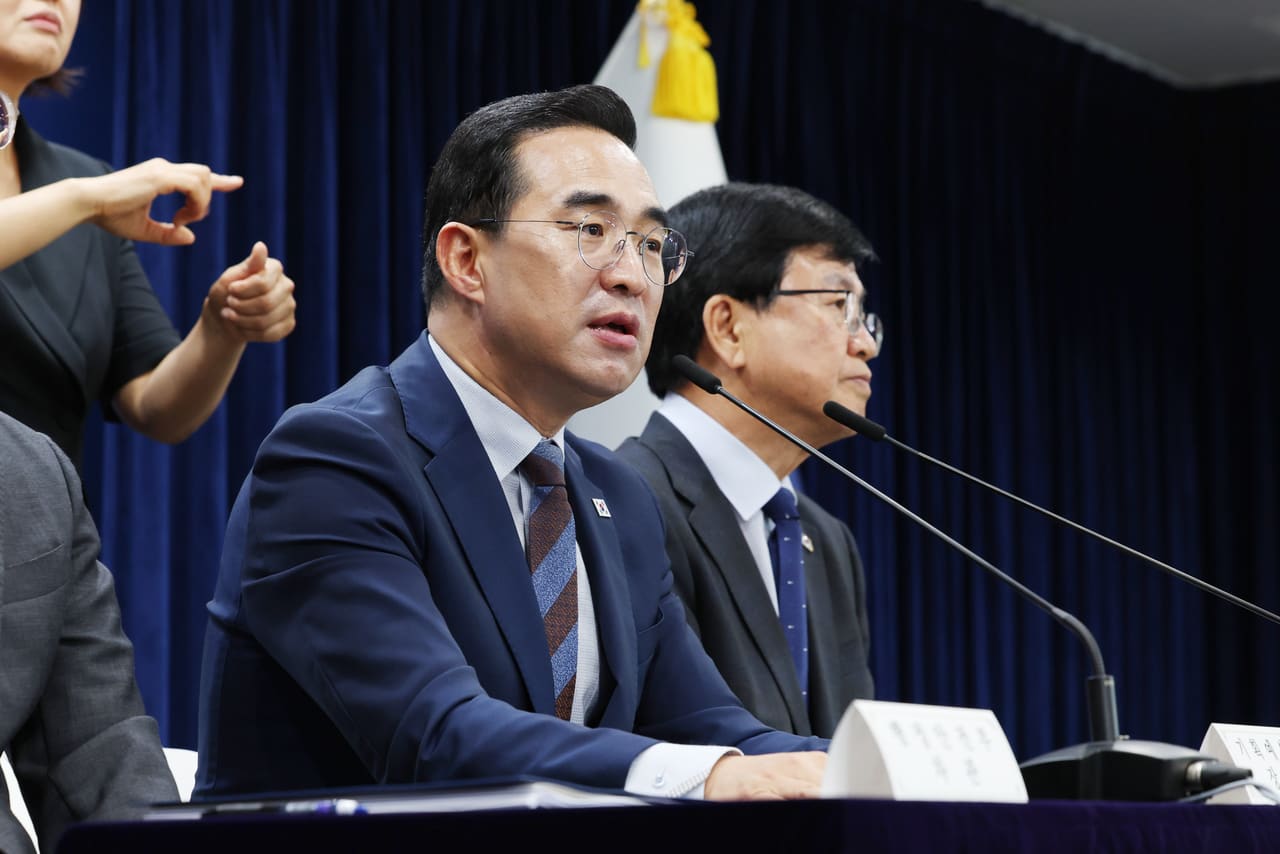
South Korea has introduced a fiscal mechanism designed to manage the windfall from its semiconductor industry's expansion while building resilience against cyclical downturns. The government announced Friday the creation of the Future Response Fund, a structure that will capture tax proceeds from the chip sector's growth and deploy them across priority areas including youth programs, emerging industries, regional infrastructure, and human capital development.
The fund operates on a dual mandate. During periods of strong revenue growth, particularly from the semiconductor sector that has become central to South Korea's export economy, proceeds will flow into targeted investments rather than general spending. When tax collections weaken, accumulated reserves can be drawn down to stabilize public finances without triggering immediate budget cuts.
The approach reflects a shift in fiscal strategy for a country whose economic fortunes have become increasingly tied to the volatile semiconductor cycle. South Korea is home to Samsung Electronics and SK hynix, two of the world's largest memory chip makers, whose performance can swing dramatically based on global demand patterns and inventory cycles.
Rewriting the Education Funding Model
Alongside the fiscal buffer, Seoul is undertaking the first comprehensive reform of local education financing in more than five decades. The existing framework, which has remained largely unchanged since the 1970s, allocates central government transfers to regional education authorities based on formulas that no longer align with demographic realities or educational needs.
The overhaul aims to redirect resources toward regions facing enrollment declines and schools requiring modernization, while ensuring that areas with growing student populations receive adequate support. Details of the new allocation methodology have not been fully disclosed, but officials indicated the changes will phase in over multiple budget cycles to avoid disruption.
The timing of the education reform alongside the Future Response Fund signals an intention to use semiconductor-driven revenues to address structural challenges that have persisted through decades of rapid economic development. South Korea's education system, while internationally competitive in test scores, faces infrastructure gaps and regional disparities that have widened as urbanization concentrates populations in the Seoul metropolitan area.
Managing Volatility in a Chip-Dependent Economy
The semiconductor industry's contribution to South Korea's tax base has grown substantially over the past decade, but that revenue stream is inherently unstable. Memory chip prices, which drive profitability for Korean manufacturers, have historically moved through sharp boom-bust cycles tied to supply-demand imbalances and inventory adjustments across the global electronics supply chain.
During the 2021-2022 boom, when pandemic-era demand for consumer electronics and data center expansion drove chip prices to record levels, corporate tax receipts surged. The subsequent downturn in 2023, when oversupply triggered steep price declines, demonstrated the fiscal risk of depending on a single cyclical industry.
The Future Response Fund is structured to smooth that volatility by accumulating reserves during upswings rather than committing all revenue to recurring expenditures. This counter-cyclical approach borrows from sovereign wealth fund models used in resource-rich economies, adapted for a technology-driven export sector.
Investment Priorities and Regional Balance
The fund's investment mandate spans four broad categories. Youth initiatives will include workforce training and support for early-career professionals navigating a competitive labor market. New growth engines refer to emerging sectors such as biotechnology, artificial intelligence, and clean energy, where South Korea seeks to diversify beyond semiconductors and traditional manufacturing.
Regional development funding is intended to address the economic concentration in the Seoul-Incheon-Gyeonggi corridor, which accounts for roughly half the national population and an even larger share of high-value economic activity. Peripheral regions, particularly in the southeast and southwest, have experienced population decline and industrial stagnation as young workers migrate to the capital area.
Education and talent investments will extend beyond the school funding reform to include university research infrastructure, technical training programs, and initiatives to retain skilled workers who might otherwise emigrate in search of opportunities abroad.
Fiscal Discipline Amid Political Pressure
Establishing a reserve fund during a period of strong revenue growth requires political discipline. The temptation to increase spending or reduce taxes when budgets are flush has historically been difficult for governments to resist, particularly ahead of election cycles.
South Korea's fiscal position remains relatively strong compared to other advanced economies, with public debt below 50 percent of GDP. However, demographic pressures are mounting as the country records the world's lowest fertility rate and faces rapid population aging. Pension and healthcare obligations are projected to rise sharply over the coming decades, creating a structural fiscal challenge that counter-cyclical reserves alone cannot solve.
The Future Response Fund's success will depend on enforcement mechanisms that prevent raids on accumulated capital for short-term political purposes. International experience with similar structures has been mixed, with some countries maintaining strict withdrawal rules while others have seen reserves depleted during fiscal crises or under pressure from competing budget priorities.
The simultaneous reform of education funding and creation of a fiscal buffer suggests South Korea is attempting to address both immediate infrastructure needs and longer-term budget stability within a single policy framework. Whether the mechanism can withstand the next semiconductor downturn, or the political pressures of future budget negotiations, will become clear only as revenue cycles turn.
RELATED STORIES
South Korea's Central Bank Set to Lift 2026 Growth Forecast Above 3 Percent
Cheng Wei-Lun · 3 min
Seoul Faces Economic Pressure as US Policy Shift Strains Trade and Security Ties
Cheng Wei-Lun · 4 min
South Korea Extends Fuel Price Caps as Middle East Tensions Lift Oil Markets
Cheng Wei-Lun · 3 min
Hyundai Motor Faces First Full-Day Strike in a Decade as Wage Talks Stall
Jun-ho Seo · 2 min
Spot something wrong? Email editor@briefasia.com. We log every correction publicly.