Asia · Business
South Korea Pursues Development Role in Embraer's Next Commercial Aircraft
Seoul aims to move beyond parts supply into joint development stage with Brazilian manufacturer, though talks remain preliminary
KEY TAKEAWAYS
- ·South Korea is exploring development-stage participation in Embraer's next-generation commercial aircraft program, according to Presidential Policy Chief Kim Yong-beom.
- ·Discussions remain preliminary with no agreement on participation structure or commercial terms yet established between Seoul and the Brazilian manufacturer.
- ·The potential partnership would elevate South Korea from component supplier to co-developer, providing access to design decisions and intellectual property in commercial aviation.
Seoul Eyes Broader Aerospace Role
South Korea is exploring participation in Embraer's planned next-generation commercial aircraft program at the development stage, according to Presidential Policy Chief Kim Yong-beom. The move would represent a significant shift from the country's current position as a parts supplier to the Brazilian aircraft manufacturer.
Kim emphasized that discussions remain at an early stage. Neither the structure of South Korea's involvement nor the commercial terms have been established, he said Tuesday.
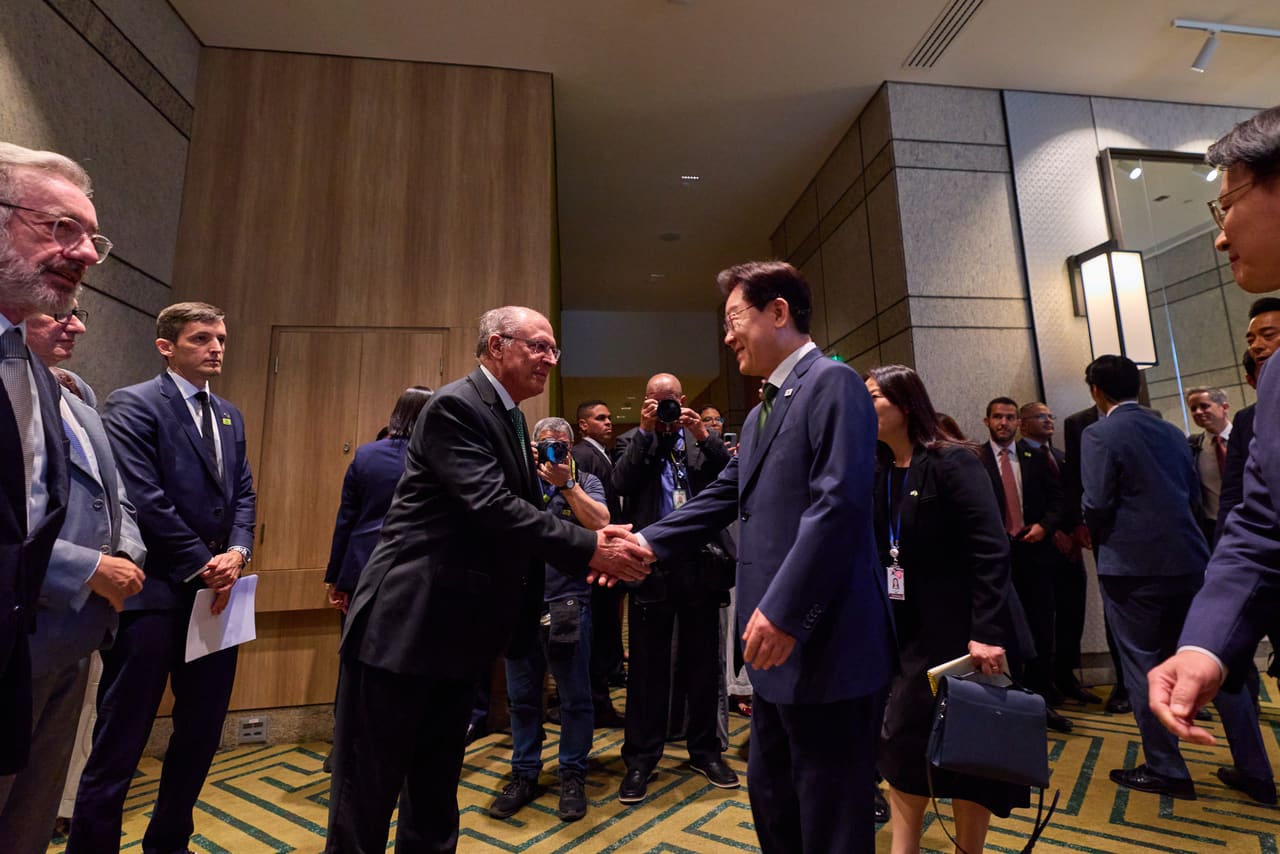
The announcement follows recent statements by President Lee Jae-myung regarding potential aerospace collaboration with Brazil. Kim's remarks provide the first official clarification of what form that partnership might take.
From Components to Co-Development
South Korea's aerospace sector has built expertise primarily through manufacturing components for global aircraft programs. Korean firms currently supply parts to major manufacturers including Boeing, Airbus, and Embraer itself.
Moving into the development phase would mark a strategic elevation. It would position Korean companies to participate in design decisions, technology integration, and intellectual property creation rather than executing pre-determined manufacturing contracts.
Embraer has publicly discussed plans for a next-generation aircraft family to succeed its current E-Jet E2 series. The Brazilian company has not announced a timeline for launch or disclosed potential development partners.
Regional Aerospace Ambitions
The overture to Embraer aligns with South Korea's broader push to deepen its aerospace capabilities. Seoul has invested heavily in domestic programs including the KF-21 fighter jet, developed with Indonesian participation, and the Korean Aerospace Industries-led LAH and KUH helicopter programs.
Commercial aviation represents a natural next frontier. South Korea possesses advanced manufacturing infrastructure, a skilled engineering workforce, and established relationships with global supply chains. What it lacks is experience in full-scale commercial aircraft development and certification.
Partnership with Embraer could provide that pathway. The Brazilian manufacturer ranks as the world's third-largest commercial aircraft producer by deliveries, behind Boeing and Airbus, and dominates the regional jet segment. Embraer's expertise in certification, particularly with aviation authorities in the Americas and Europe, would complement Korean manufacturing strength.
Commercial and Diplomatic Calculus
The timing carries both industrial and diplomatic weight. Brazil and South Korea have expanded trade ties in recent years, with bilateral commerce reaching new highs. An aerospace partnership would anchor that relationship in high-value technology sectors.
For Embraer, Korean participation could offer access to capital, manufacturing capacity, and a foothold in Asian markets where the company has historically lagged behind competitors. South Korea's proximity to major growth markets in Southeast Asia and India presents strategic advantages.
The financial structure of any collaboration remains undefined. Options could range from direct equity investment in the aircraft program to joint venture arrangements or technology licensing agreements. Kim's emphasis on the preliminary nature of talks suggests these fundamental questions remain unresolved.
What Comes Next
Kim's careful framing underscores the distance between initial exploration and binding commitment. Aircraft development programs require billions in capital, span decades, and carry substantial technical and market risk. South Korea will need to assess whether participation aligns with domestic industrial policy goals and whether projected returns justify the investment.
Embraer, meanwhile, must weigh the benefits of a Korean partnership against alternatives including going it alone, seeking other partners, or delaying the program entirely. The company faces pressure to respond to Airbus and Boeing's latest-generation narrowbody aircraft, but must balance that urgency against financial prudence.
The Korean government has not disclosed a timeline for reaching a decision. Industry observers expect any formal agreement, if reached, would take months of negotiation covering technology transfer, workshare allocation, financing structure, and market rights.
RELATED STORIES
South Korea Breaks Full-Year Export Record in September
Tran Quoc Bao · 3 min

SK Hynix Union Rejects Wage Deal in Razor-Thin Vote
Cheng Wei-Lun · 3 min

South Korea's Export Surge Powers Economic Upturn Through Third Quarter
Jun-ho Seo · 4 min

South Korea Targets $40,000 Per Capita Income as GDP Growth Accelerates
Jun-ho Seo · 4 min
Spot something wrong? Email editor@briefasia.com. We log every correction publicly.