Asia · Trade
South Korea Breaks Full-Year Export Record in September
Asia's fourth-largest economy crosses $709.4 billion in shipments year-to-date, marking the earliest annual record in recent history
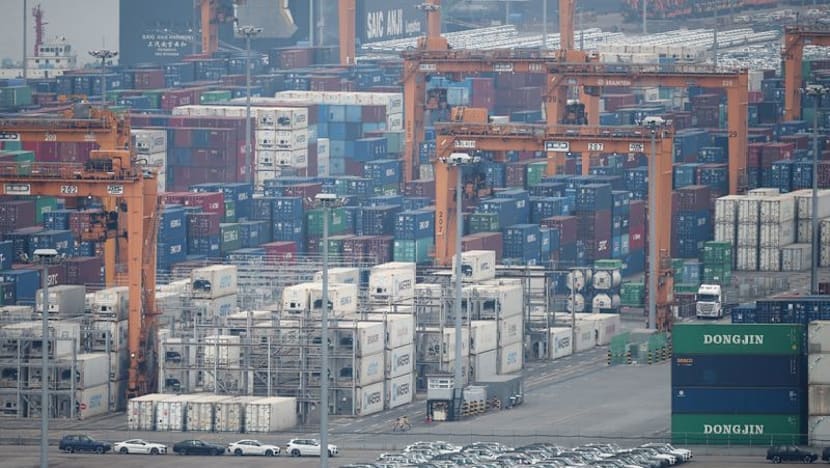
KEY TAKEAWAYS
- ·South Korea's exports hit $709.4 billion through August 2026, surpassing the previous full-year record with a quarter still to go.
- ·The milestone reflects strong demand for memory chips and automotive exports, with semiconductor makers benefiting from AI infrastructure buildouts.
- ·If the current pace holds, South Korea could reach $950 billion in annual exports, positioning it among Asia's fastest-growing major exporters.
Record Crossed with Quarter to Go
South Korea's exports reached $709.4 billion through the first eight months of 2026, eclipsing the total for all of 2025, according to data released by the customs office on Saturday. The milestone arrives with an entire quarter remaining in the calendar year, positioning Seoul for what could be the strongest trade performance in the nation's modern economic history.
The figure underscores the resilience of Asia's fourth-largest economy amid shifting global supply chains and fluctuating demand in key markets. With major trading partners including China, the United States, and the European Union, South Korea's export engine has maintained momentum despite headwinds in the semiconductor cycle and softening consumer spending in developed economies.
Semiconductor and Auto Sectors Drive Growth
The customs office data does not break out sector-level contributions, but industry observers point to two dominant drivers: memory chips and automotive exports. South Korean chipmakers have captured rising orders from data center operators and AI infrastructure builders, particularly as global tech firms diversify their supplier base beyond Taiwan.
Samsung Electronics and SK hynix, the world's largest memory chip manufacturers, have both reported stronger-than-expected demand in recent quarters. High-bandwidth memory used in AI accelerators has commanded premium pricing, offsetting weaker margins in consumer electronics.
Automotive shipments have also climbed, with Hyundai Motor Group expanding its footprint in North America and Europe through new electric vehicle models. The conglomerate opened a dedicated EV manufacturing facility in Georgia earlier this year, though vehicles produced domestically in overseas markets do not count toward Korea's export tallies. Still, knock-down kits, components, and fully assembled vehicles shipped from Ulsan and other domestic plants continue to contribute meaningfully to the total.
What the Pace Implies
Crossing the previous annual record in early September implies an average monthly export run rate above $88 billion. If that pace holds through December, South Korea could approach $950 billion in full-year shipments, a figure that would represent a year-on-year increase exceeding 30 percent.
Such growth would place Korea among the fastest-expanding major exporters in Asia, outpacing rivals like Japan and competing with Vietnam for share in electronics and machinery categories. The data also reflects Korea's ability to capture incremental demand as multinational corporations reconfigure supply chains in response to export controls and geopolitical risk.
Watching the Won and Trade Balances
Currency dynamics will be closely monitored in the months ahead. A stronger won reduces price competitiveness for Korean goods abroad, while a weaker currency can stoke domestic inflation and raise input costs for manufacturers reliant on imported energy and raw materials. The Bank of Korea has signaled a data-dependent approach to interest rates, balancing growth support against inflation management.
Trade balances with individual partners will also come under scrutiny. Washington has pressed Seoul to address bilateral imbalances, and any protectionist measures introduced ahead of the U.S. election cycle could temper shipments of steel, batteries, or vehicles. Meanwhile, China remains Korea's largest single export destination, though that relationship carries its own volatility tied to Beijing's regulatory environment and domestic consumption trends.
The customs office is expected to release detailed September trade figures in early October, offering a clearer picture of whether the record-setting trajectory can be sustained through year-end. For now, the $709.4 billion marker serves as a tangible signal that Korea's export sector has weathered recent uncertainty and positioned itself for continued expansion in the final quarter.
RELATED STORIES
SK Hynix Union Rejects Wage Deal in Razor-Thin Vote
Cheng Wei-Lun · 3 min
South Korea Creates Fiscal Buffer Fund to Manage Semiconductor Tax Surge
Cheng Wei-Lun · 4 min
Seoul Faces Economic Pressure as US Policy Shift Strains Trade and Security Ties
Cheng Wei-Lun · 4 min

SK Chemicals Targets Europe's Can-Coating Shift After BPA Ban
Cheng Wei-Lun · 2 min
Spot something wrong? Email editor@briefasia.com. We log every correction publicly.