Asia · Business
South Korea Targets $40,000 Per Capita Income as GDP Growth Accelerates
Finance Minister Koo Yun-cheol points to second-quarter figures showing the fastest nominal GDP expansion in nearly five decades as evidence of strengthening recovery
KEY TAKEAWAYS
- ·South Korea's gross national income per capita is projected to exceed $40,000 in 2026, with nominal GDP posting its fastest quarterly growth in 47 years during Q2.
- ·The milestone places South Korea among advanced economies, driven by export recovery in semiconductors and resilient domestic consumption amid stable labour conditions.
- ·Structural challenges persist, including demographic decline, elevated household debt and widening income inequality, requiring long-term policy adjustments beyond headline growth figures.
Recovery Takes Shape
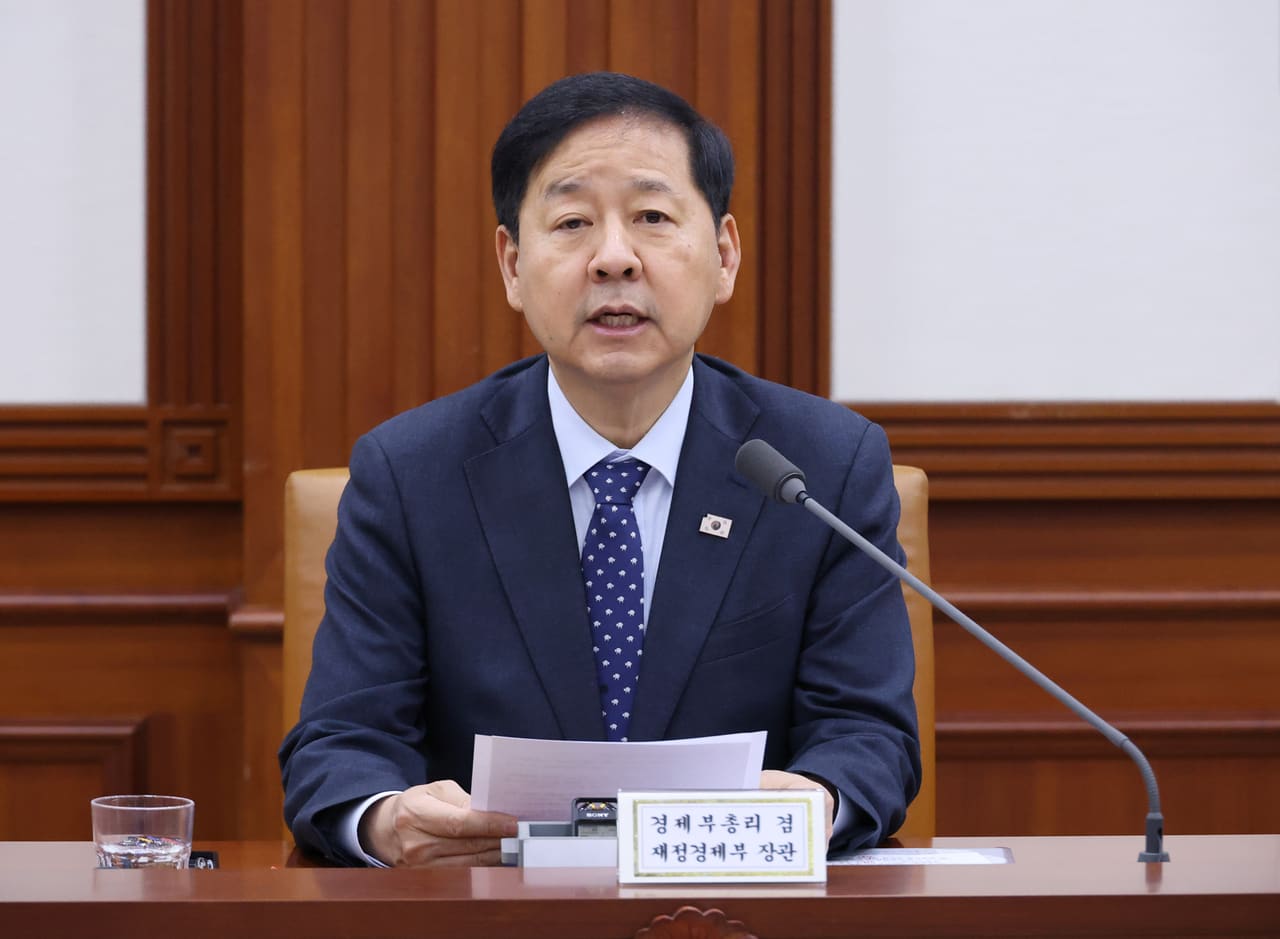
South Korea's economy is displaying firmer signs of recovery, with gross national income per capita projected to surpass $40,000 in 2026, according to Finance Minister Koo Yun-cheol. Speaking at a meeting of economy-related ministers on Thursday, Koo highlighted that nominal gross domestic product in Asia's fourth-largest economy grew at its fastest pace in 47 years during the second quarter.
The distinction matters. GDP tracks production activity within national borders, while GNI captures the total income earned by a country's residents, including returns on overseas investments and remittances. For South Korea, a nation with significant foreign asset holdings and global corporate footprints, the GNI metric offers a broader view of economic health than output figures alone.
Nominal Growth at Multi-Decade Highs
The second-quarter surge in nominal GDP marks the strongest expansion since 1979, a period when South Korea was still in the early stages of industrialisation. Nominal figures, which include both real growth and inflation, reflect the actual value of economic activity without stripping out price changes. The acceleration suggests a combination of volume growth and price effects working in tandem.
The $40,000 per capita threshold carries symbolic weight. It places South Korea firmly within the ranks of advanced economies, a trajectory built on decades of export-led growth, technological upgrading and integration into global supply chains. The country crossed $30,000 per capita in 2017, a milestone that took roughly a decade to achieve from the $20,000 mark.
What Drives the Numbers
Several factors underpin the current momentum. South Korea's export sector, anchored by semiconductors, automobiles and petrochemicals, has benefited from a rebound in global demand following supply chain disruptions earlier in the decade. Shipments of memory chips, a core export category, have recovered as data centre buildouts and consumer electronics demand stabilised.
Domestic consumption has also shown resilience. Retail sales and services activity have picked up as household confidence improved, supported by a stable labour market and easing inflation pressures. The Bank of Korea has maintained a cautious monetary stance, balancing growth support with price stability objectives.
Currency movements play a role in the per capita calculation. The won's performance against the US dollar influences the dollar-denominated GNI figure. A stronger won, all else equal, lifts the per capita income measure when converted from local currency.
Regional Context
The anticipated crossing of $40,000 per capita places South Korea ahead of most regional peers in Northeast Asia. Japan's per capita income stands above $40,000, though its economy has grappled with sluggish growth and demographic headwinds for years. China's per capita figure remains well below $20,000, despite the economy's sheer size.
Taiwan, another advanced manufacturing hub, sits near the $35,000 mark, while Singapore, a city-state with a different economic model, exceeds $80,000 per capita. South Korea's trajectory reflects its unique position as a large, diversified economy that has successfully transitioned from middle-income to high-income status within a single generation.
Structural Challenges Persist
The headline figures, while encouraging, do not erase underlying concerns. South Korea faces demographic pressure from one of the world's lowest fertility rates and a rapidly ageing population. The working-age population has been shrinking, posing long-term questions about productivity, fiscal sustainability and social welfare burdens.
Household debt remains elevated, a legacy of years of property market expansion and credit-fuelled consumption. Rising interest rates, though moderating recently, have increased debt servicing costs for borrowers. Corporate sector performance is uneven, with large conglomerates thriving while small and medium enterprises struggle with tighter margins and labour shortages.
Income inequality has widened, particularly between regular and non-regular workers, and between asset owners and those without property. The concentration of economic gains in the capital region, especially Seoul and its surrounding areas, has fuelled regional disparities.
Policy Priorities Ahead
The finance ministry's focus on sustaining recovery will likely centre on export competitiveness, industrial upgrading and fiscal prudence. Government investment in semiconductors, batteries and other strategic sectors aims to secure long-term advantages in global supply chains.
Labour market reforms, pension system adjustments and measures to support families remain contentious but necessary. The government has signalled intentions to address demographic challenges through incentives for childbearing and immigration policy adjustments, though implementation has been slow.
External risks loom. Trade tensions, particularly involving the US and China, could disrupt export flows. Energy prices, geopolitical instability and shifts in global monetary policy all pose potential headwinds. South Korea's open economy remains sensitive to external shocks, a reality that has shaped policy thinking for decades.
The $40,000 milestone, if achieved, will mark progress. But the harder task lies in sustaining growth, distributing gains more evenly and navigating demographic and structural transitions that will define the economy's trajectory in the years ahead.
RELATED STORIES
South Korea Creates Fiscal Buffer Fund to Manage Semiconductor Tax Surge
Cheng Wei-Lun · 4 min
South Korea Breaks Full-Year Export Record in September
Tran Quoc Bao · 3 min

SK Chemicals Targets Europe's Can-Coating Shift After BPA Ban
Cheng Wei-Lun · 2 min

SK Hynix Union Rejects Wage Deal in Razor-Thin Vote
Cheng Wei-Lun · 3 min
Spot something wrong? Email editor@briefasia.com. We log every correction publicly.