Technology · AI
Solomon Technology Records Highest Quarterly Profit on AI Vision Demand
The Taiwan-based specialist reported surging orders for AI vision and robotics systems in the first half of 2026, driving record second-quarter earnings.
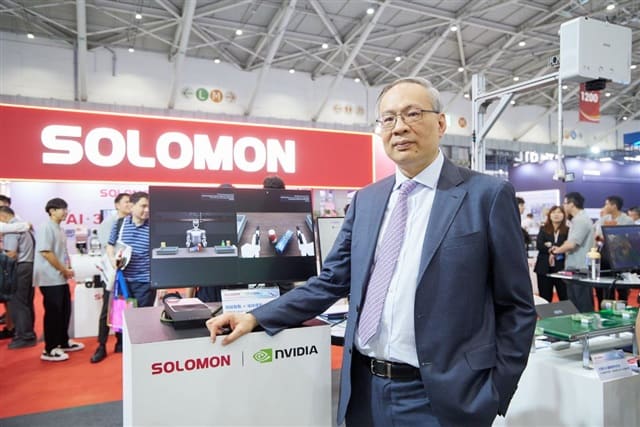
KEY TAKEAWAYS
- ·Solomon Technology posted its highest quarterly profit in Q2 2026, driven by surging orders for AI vision and robotics systems across Asian manufacturing.
- ·Chairman Cheng-Lung Chen reported accelerating order volumes since January, positioning the company for substantial growth through the remainder of 2026.
- ·The performance reflects broader regional investment in factory automation as manufacturers face labor shortages and rising precision requirements.
Record Quarter for Taiwan Vision Systems Maker
Solomon Technology Corporation posted its highest quarterly profit in company history during the second quarter of 2026, reflecting accelerating adoption of AI-powered vision systems across Asian manufacturing hubs. The Taiwan-based specialist attributed the performance to surging demand for industrial automation solutions that combine machine vision with robotic control.
Chairman Cheng-Lung Chen told investors that order volumes for AI vision and robotics integration projects have climbed sharply since January, establishing momentum that positions the company for significant expansion through the remainder of 2026. The results underscore a broader shift in regional manufacturing toward intelligent automation as labor costs rise and quality requirements tighten.
Manufacturing Automation Drives Growth
Solomon's core business centers on machine vision systems that enable robots to identify, inspect, and manipulate components in production environments. These solutions have become increasingly critical as electronics manufacturers in Taiwan, China, and Southeast Asia pursue higher precision and throughput in assembly operations.
The company's AI vision platforms allow robotic arms to adapt to variations in part positioning, surface defects, and material handling without reprogramming. This flexibility has proven particularly valuable in sectors where product lifecycles are short and production lines must reconfigure frequently, including consumer electronics, automotive components, and semiconductor packaging.
Asian manufacturers have accelerated automation investments in response to persistent labor shortages and rising wage pressures. Taiwan's manufacturing sector, in particular, faces a demographic squeeze as the working-age population declines, making productivity-enhancing technologies essential for maintaining competitiveness. Solomon's systems address this challenge by enabling existing production lines to operate with fewer human interventions while achieving tighter tolerances.
Competitive Landscape in Industrial Vision
The industrial machine vision market in Asia has grown competitive as established automation providers and specialized AI startups vie for manufacturing contracts. Solomon competes with both multinational equipment suppliers and regional players offering vision-guided robotics.
The company has differentiated itself through software platforms that integrate with multiple robot brands and production management systems, reducing the complexity of deployment for factory operators. This interoperability matters in markets where manufacturers often run mixed equipment fleets from different vendors and require vision systems that can work across platforms.
Solomon's customer base spans industries where visual inspection and precise handling are critical. Electronics assembly operations use the company's systems to place tiny components on circuit boards with sub-millimeter accuracy. Automotive suppliers deploy the technology for quality control and parts sorting. Logistics providers have begun testing vision-guided robots for warehouse operations, expanding the addressable market beyond traditional factory floors.
Regional Manufacturing Trends
The strong order flow Solomon reported aligns with broader investment patterns in Asian manufacturing. Governments across the region have introduced incentives for smart factory development, viewing advanced automation as essential for industrial upgrading. Taiwan's Ministry of Economic Affairs has earmarked funding for manufacturers adopting AI and robotics, while China's provincial governments continue to subsidize automation equipment purchases despite broader economic headwinds.
Southeast Asian nations, particularly Vietnam and Thailand, are building out electronics and automotive production capacity to serve both domestic markets and export channels. These newer manufacturing bases often install cutting-edge automation from the outset, creating opportunities for vision system providers like Solomon to capture market share before competitors establish footholds.
Japan and South Korea, with mature but high-cost manufacturing sectors, have also sustained investment in productivity-enhancing technologies. Solomon's presence in these markets reflects demand from companies seeking to extend the viability of domestic production rather than relocate operations to lower-cost regions.
Outlook and Expansion Plans
Chen's comments about sustained order momentum through 2026 suggest the company expects the current demand cycle to persist beyond a single quarter. Industrial automation purchases typically involve multi-month sales cycles and project rollouts, meaning the orders Solomon has booked will translate into revenue over subsequent quarters.
The company has not disclosed specific revenue or profit figures, but the characterization of second-quarter profit as a record indicates material year-over-year growth. Solomon's performance offers a data point on the health of capital spending in Asian manufacturing, particularly in technology-intensive sectors where vision-guided automation delivers measurable returns on investment.
As manufacturing complexity increases and labor availability tightens across Asia's industrial corridors, demand for the type of intelligent vision systems Solomon provides is likely to remain robust. The company's ability to sustain its growth trajectory will depend on execution in project delivery, continued innovation in AI algorithms, and effective navigation of an increasingly competitive market for factory automation solutions.
RELATED STORIES

Asia's AI Chip Startups Face Manufacturing Reality Check
Priyanka V. Rao · 4 min
Taiwan's Server Supply Chain Posts Mixed July Results Amid AI Build-Out
Cheng Wei-Lun · 4 min
E Ink Cuts Revenue Forecast as Memory Prices Delay E-Reader Launches
Cheng Wei-Lun · 3 min
TSMC and Sony Launch $4.69 Billion Sensor Joint Venture in Japan
Cheng Wei-Lun · 3 min
Spot something wrong? Email editor@briefasia.com. We log every correction publicly.