Finance · Banking
Singapore's Financial Sector Launches AI Cyber Taskforce to Counter Advanced Threats
A coalition of regulators, major banks, and infrastructure operators will test AI-driven defenses against increasingly automated attacks
KEY TAKEAWAYS
- ·The Monetary Authority of Singapore and the Association of Banks in Singapore launched the AI-Driven Cyber and Technology Risk Taskforce in May 2026, uniting DBS, OCBC, UOB, Singapore Exchange, NETS, and Banking Computer Services.
- ·The taskforce will share threat intelligence, run proof-of-concept trials of AI defense tools, and develop guidance for financial institutions to counter automated attacks at scale.
- ·Singapore's move reflects regulatory concern that frontier AI models enable attackers to identify vulnerabilities and launch exploits faster than traditional defenses can respond.
A Coalition Against Machine-Speed Attacks
Singapore's financial regulators have pulled together the city-state's biggest banks and payment operators into a single cyber defense unit focused on AI-enabled threats. The Monetary Authority of Singapore and the Association of Banks in Singapore announced the AI-Driven Cyber and Technology Risk Taskforce, which has been meeting since May 2026.
The roster includes DBS, OCBC, UOB, Singapore Exchange, Network for Electronic Transfers, and Banking Computer Services. The group draws cybersecurity chiefs, technology resilience leads, and AI specialists from across the sector.
Why Now
Frontier AI models have lowered the barrier for attackers. Tools that once required deep technical expertise to scan networks, identify weak points, and craft exploits can now be automated at scale. Threat actors can run reconnaissance and launch attacks faster than human defenders can typically respond.
The taskforce exists to close that gap. Members will share real-world use cases and lessons from their own deployments of AI in cybersecurity. They will run proof-of-concept trials to test whether new AI-powered tools can detect and neutralize threats before damage occurs.
The group will also produce guidance for financial institutions on controls, detection systems, and response protocols tailored to AI-driven attacks. That includes measures to identify anomalous behavior patterns that traditional signature-based defenses might miss.
Regional Context
Singapore has long positioned itself as Asia's financial hub, a status that depends on trust in the integrity and resilience of its banking infrastructure. Cyber incidents that disrupt payment rails or compromise customer data threaten that foundation.
The city-state's approach has typically been collaborative rather than purely regulatory. MAS has a track record of convening industry players to set standards and share threat intelligence, rather than issuing top-down mandates in isolation. The ACT taskforce follows that model.
Other regional financial centers are watching similar trends. Hong Kong, Tokyo, and Seoul have all ramped up cybersecurity frameworks in recent years, but Singapore's move to formalize a cross-institution AI defense unit is among the earliest in Asia.
What the Taskforce Will Do
ACT's mandate spans three areas: intelligence sharing, live testing, and guidance development. On intelligence, members will pool data on attack vectors, vulnerabilities, and emerging tactics they observe in their own environments. That collective view should give the sector earlier warning of new threat patterns.
On testing, the taskforce will conduct trials of AI tools designed to detect intrusions, predict attack paths, and automate incident response. These proofs-of-concept will run in controlled environments before any wider rollout. The goal is to validate whether the tools perform under real conditions and whether they introduce new risks of their own.
On guidance, the taskforce will draft best practices for deploying AI in cybersecurity, including governance frameworks to prevent misuse and ensure accountability. Financial institutions will be able to adapt these recommendations to their own risk profiles and technology stacks.
Voices from the Table
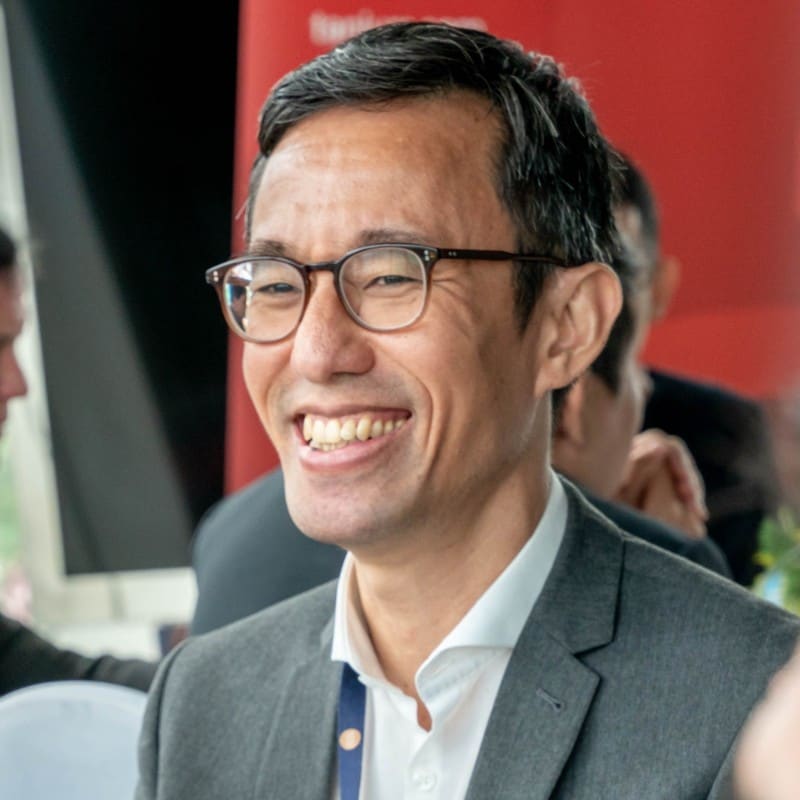
Vincent Loy, Assistant Managing Director for Technology and Chief Technology Officer at MAS, framed the effort as a response to escalating risk. Frontier AI is amplifying the severity, scale, and sophistication of cyber threats, he noted, and the financial sector must act with urgency and coordination. The taskforce will help strengthen collective defenses and keep Singapore's financial system resilient against AI-enabled risks.
Ong-Ang Ai Boon, Director at ABS, emphasized vigilance and agility. Close coordination, strong governance, and ongoing partnership with regulators and industry stakeholders will be central to maintaining cyber and technology resilience as AI and other emerging technologies evolve.
Implications for the Sector
The taskforce signals that Singapore's regulators view AI-driven cyber risk as a systemic issue, not one that individual institutions can manage in isolation. By pooling resources and expertise, the sector aims to raise the baseline level of defense across all participants.
For smaller banks and fintech firms that lack the budgets of the big three, access to shared intelligence and validated tools could level the playing field. The guidance produced by ACT may also inform regulatory expectations, shaping how MAS assesses cyber resilience in future examinations.
As AI models continue to advance, the taskforce will need to adapt quickly. What works against today's automated reconnaissance may fall short against tomorrow's multi-stage, adaptive attacks. The proof-of-concept trials will be an ongoing process, not a one-time exercise.
Singapore's financial sector is betting that collaboration at this scale can keep pace with the threat. Whether that proves sufficient will depend on how fast attackers evolve and how effectively the taskforce translates intelligence into action.
RELATED STORIES
Singapore Tightens Stablecoin Rules to Separate Regulated Tokens From Crypto Claims
Priyanka V. Rao · 2 min

Singapore and Thailand Exchanges Push for Tech IPOs Amid AI Surge
Priyanka V. Rao · 3 min

DBS Doubles Down on Asia, Ruling Out Global Expansion
Anand Sundaram · 3 min

Blackstone's AirTrunk Pursues $1.6 Billion Loan Ahead of Singapore REIT Listing
Jun-ho Seo · 3 min
Spot something wrong? Email editor@briefasia.com. We log every correction publicly.