Finance · Banking
DBS Doubles Down on Asia, Ruling Out Global Expansion
Southeast Asia's largest lender will focus on wealth management, capital markets and trade within the region as CEO Tan Su Shan charts a path distinct from Citi and HSBC.

KEY TAKEAWAYS
- ·DBS Group Holdings will concentrate expansion within Asia and will not pursue a global banking model similar to Citigroup or HSBC, CEO Tan Su Shan confirmed on 11 September.
- ·The bank has identified wealth management, capital markets and trade finance as its three primary growth vectors, leveraging Asia's expanding pool of high-net-worth individuals and maturing capital-markets infrastructure.
- ·DBS's strategy reflects a bet that regional focus will yield competitive returns as Asia experiences accelerating wealth creation, rising intra-regional trade and swift artificial intelligence adoption.
Regional Play
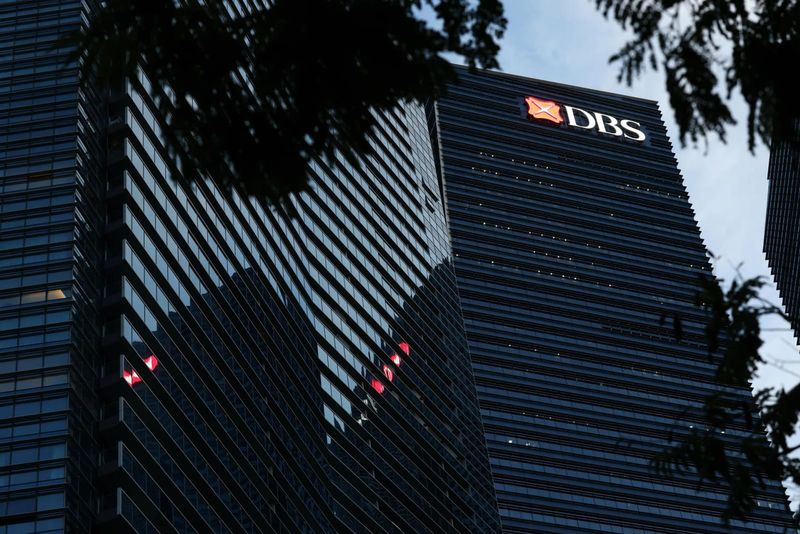
DBS Group Holdings has drawn a clear boundary around its ambitions. The Singapore-headquartered lender, Southeast Asia's largest by assets, will concentrate expansion within Asia and has no intention of replicating the global footprint of institutions such as Citigroup or HSBC, according to chief executive Tan Su Shan.
Speaking at an event organised by the Singapore Press Club on 11 September, Tan framed the decision as strategic alignment with the region's economic trajectory. "We want to be an Asian bank for Asians," she said, distancing the institution from a universal banking model that spans multiple continents.
The stance reflects a calculated bet on Asia's demographic and financial momentum. Tan pointed to expanding capital markets, accelerating wealth accumulation, growing intra-regional trade flows, and swift adoption of artificial intelligence as structural tailwinds. "Asia has a strong hand," she noted.
Three Growth Vectors
DBS has identified wealth management, capital markets and trade finance as the primary engines for the next phase of growth. Tan acknowledged that the bank has "come a long way" in building out its wealth-management capabilities, a segment that has become increasingly competitive as private banks vie for the region's expanding pool of high-net-worth individuals.
Capital markets remain another focal point. While Tan recognised the scale and liquidity advantages of US markets, she signalled confidence that Asia's capital-markets infrastructure is maturing rapidly enough to support DBS's ambitions without requiring a transatlantic presence.
Trade finance, long a strength for institutions with deep roots in Asia, continues to benefit from supply-chain reconfiguration and the growth of digital trade platforms. DBS has invested heavily in digitising trade documentation and financing workflows, positioning itself to capture volume as intra-Asian trade intensifies.
Diverging from Peers
The decision to remain regionally focused marks a departure from the path taken by some of Asia's other large banks. HSBC, though headquartered in London, has historically derived significant earnings from Asia and maintains a global network. Citigroup, despite recent divestitures in consumer banking across several Asian markets, retains a presence in institutional and wealth segments worldwide.
DBS's strategy instead mirrors that of other regionally anchored institutions that have opted for depth over breadth. By concentrating resources within a defined geography, the bank aims to capture a larger share of cross-border flows, wealth transfers and corporate financing within Asia, rather than spreading capital and management attention across distant markets.
Reading the Region
Tan's comments come as Asian economies navigate a complex landscape. Capital markets in India, Indonesia and Vietnam have attracted substantial foreign inflows over the past two years, while Hong Kong and Singapore continue to serve as wealth-management hubs despite regulatory and geopolitical shifts.
Demographic trends support the thesis. Asia is home to the fastest-growing cohort of millionaires and billionaires globally, and the intergenerational transfer of wealth is expected to accelerate over the next decade. At the same time, digital infrastructure and regulatory harmonisation efforts, particularly within ASEAN, are lowering barriers to cross-border financial services.
DBS's articulation of its geographic boundaries also reflects a pragmatic assessment of competitive dynamics. Entering or scaling in North America or Europe would require significant capital deployment, regulatory navigation and competition with entrenched players, all for uncertain returns. The risk-adjusted opportunity set, Tan suggested, is firmly within Asia.
What Comes Next
The bank's emphasis on artificial intelligence adoption hints at operational priorities. DBS has been among the more aggressive regional banks in deploying machine learning for credit decisioning, fraud detection and customer service. Tan's reference to AI as a regional advantage suggests the bank sees technology not merely as a cost-efficiency tool but as a differentiator in product delivery and risk management.
Whether DBS can maintain its lead in wealth management and capital markets will depend on execution in a crowded field. Private banks from Switzerland, the United States and elsewhere continue to expand in Singapore and Hong Kong, while local competitors in China, Japan and South Korea are investing heavily in similar capabilities.
For now, DBS has staked its future on a thesis that Asia's growth, properly captured, offers returns competitive with any global strategy. The question is whether focus translates into market share, or whether the region's complexity demands scale beyond what any single-region bank can muster.
RELATED STORIES
DBS Posts Record Quarterly Profit of S$3.08 Billion, Lifts Full-Year Outlook
Priyanka V. Rao · 2 min

Grab Pursues Majority Stake in Buy-Now-Pay-Later Platform Atome
Jun-ho Seo · 3 min

Singapore Dollar Gains Ground as Currency Diversification Pick
Tran Quoc Bao · 2 min

Addvalue Technologies Lands $5 Million in Space and Radio Contracts
Tran Quoc Bao · 3 min
Spot something wrong? Email editor@briefasia.com. We log every correction publicly.