Asia · Business
Selangor Pulls RM70 Billion in Six Months as Services and Manufacturing Drive Malaysia's Richest State
Malaysia's economic powerhouse logged investment commitments worth RM70 billion by mid-2026, with state officials eyeing an RM100 billion finish amid surging interest in logistics and industrial projects.
KEY TAKEAWAYS
- ·Selangor approved RM70 billion in investments by June 2026, with services and manufacturing accounting for the majority of capital commitments.
- ·The state government projects reaching RM80 billion within months and aims to surpass RM100 billion for the full year, following RM101 billion in 2024.
- ·Officials credit coordination between Invest Selangor and federal authorities for sustaining deal flow, with logistics infrastructure and port access anchoring the pitch to foreign manufacturers.
Services and Manufacturing Power Investment Surge
Malaysia's wealthiest state logged RM70 billion in approved investment commitments by June 2026, placing it on track to exceed RM100 billion for the full year. Two sectors account for the bulk of capital flows: services and manufacturing, according to state officials overseeing economic development.
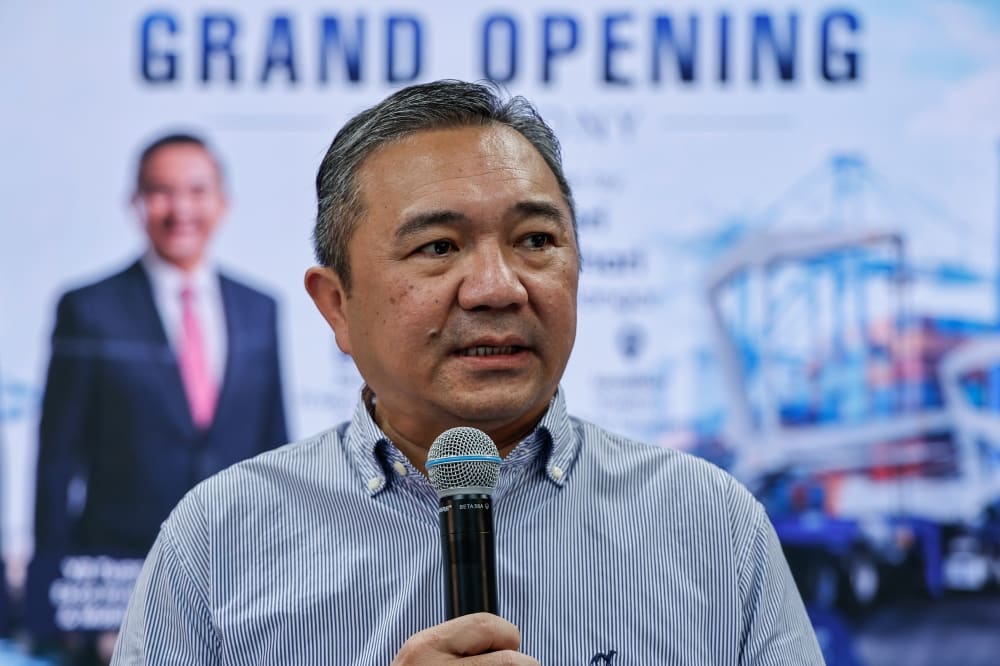
Ng Sze Han, who chairs Selangor's Investment, Trade and Mobility Committee, disclosed the half-year figure at the opening of Steelbro's factory and central workshop in Telok Gong. The New Zealand-based logistics vehicle manufacturer's facility underscores the type of industrial capital the state is attracting, particularly in sectors tied to supply-chain infrastructure.
Selangor's Menteri Besar Amirudin Shari had signalled confidence in surpassing the RM100 billion threshold earlier in September, citing what he described as encouraging momentum. The state government now projects an RM80 billion mark within the next few months, a target Ng called achievable based on current deal flow.
Last year Selangor approved RM101 billion in investment, making the RM70 billion tally by mid-2026 a slower first-half pace. Yet officials attribute the gap to longer approval cycles for larger projects rather than weakening demand. The state's pipeline remains robust, with manufacturing and services continuing to dominate inbound capital.
Interagency Push Behind Capital Inflows
The investment figures reflect coordination between the state government, its investment promotion arm Invest Selangor, and the federal Malaysian Investment Development Authority. Ng described the three-way collaboration as essential to sustaining deal momentum and ensuring approved projects reach ground-breaking.
Selangor's ability to pull capital rests on infrastructure density, port access through Port Klang, and proximity to Kuala Lumpur's financial and professional services hub. The state accounts for roughly a quarter of Malaysia's GDP and hosts the country's largest concentration of manufacturing facilities, from semiconductors to automotive components.
High-quality investments remain the priority, Ng said, a term officials use to describe projects with higher value-added output, technology transfer, or skill development components. The state has been selective in approving land allocations, favouring industries that align with national economic planning objectives around automation, green technology, and advanced manufacturing.
The Steelbro facility, which manufactures heavy-duty logistics vehicles and side-loader equipment, fits the template. Ng urged the company to deepen its engagement with local engineering talent and suppliers, a push that mirrors broader efforts to build domestic capabilities in precision manufacturing and industrial equipment.
Budget Preparation and Stakeholder Consultation
Selangor's 2027 budget, scheduled for announcement in mid-November, is under preparation following a dialogue session chaired by the Menteri Besar with university professors and industry stakeholders. The consultation aimed to gather sector-specific proposals and assess priorities across education, infrastructure, and industrial development.
State budgets in Malaysia typically focus on land development, transport networks, and social services, but Selangor's fiscal capacity allows for more ambitious capital expenditure. The 2027 budget is expected to allocate resources toward logistics infrastructure, skills training centres, and incentives for high-tech manufacturing.
Ng said the budget would be tailored to accelerate the state's transition up the manufacturing value chain, moving beyond assembly and low-margin production toward engineering design, precision tooling, and research-intensive sectors. The state has been vocal about wanting to position itself as a regional hub for advanced manufacturing, competing with centres in Thailand, Vietnam, and Indonesia.
Logistics as a Strategic Anchor
Ng identified logistics as a strategic pillar for Selangor's economic ambitions, describing the state as Malaysia's gateway to global trade. Port Klang, the country's busiest port, handled 13.9 million twenty-foot equivalent units in 2025, making it one of Southeast Asia's top container terminals.
The state government has prioritised logistics-linked manufacturing, particularly industries that benefit from rapid turnaround times and multimodal transport access. Steelbro's decision to establish a central workshop and production line in Telok Gong reflects the calculus foreign manufacturers make when evaluating Malaysia against regional peers.
Selangor's logistics infrastructure extends beyond ports. The state is home to major inland freight terminals, a dense highway network, and direct rail links to Thailand and Singapore. These assets position it as a distribution node for companies serving Southeast Asian markets, particularly as supply chains diversify beyond China.
The state's emphasis on moving up the value chain in manufacturing and engineering signals a recognition that cost competitiveness alone will not sustain long-term investment. Automation, skilled labour, and intellectual property development are now central to Selangor's pitch to multinational corporations and domestic conglomerates alike.
Regional Context and Competition
Selangor's investment performance must be read against regional dynamics. Vietnam attracted USD 15.8 billion in foreign direct investment in the first half of 2026, driven by electronics and textiles. Thailand logged USD 11.2 billion, with automotive and petrochemicals leading inflows. Indonesia, meanwhile, has been courting battery and electric vehicle manufacturers as part of its downstream minerals strategy.
Malaysia as a whole recorded RM160 billion in approved investments in 2025, with Selangor accounting for more than 60 per cent of the national total. The state's dominance reflects historical advantages but also raises questions about regional imbalances within Malaysia, where less-developed states struggle to attract comparable capital.
Selangor's ability to sustain investment flows will depend on maintaining infrastructure quality, regulatory efficiency, and talent pipelines. The state has invested heavily in technical and vocational education, partnering with German and Japanese institutions to replicate dual-training models. These programmes aim to produce the mid-level engineers and technicians that advanced manufacturing requires.
The RM100 billion target, if achieved, would mark a strong recovery from the pandemic-era lows of 2020 and 2021, when investment approvals fell to RM40 billion and RM55 billion respectively. The rebound underscores Selangor's resilience but also highlights the concentration of risk in a narrow set of sectors and geographies.
RELATED STORIES
Penang Captures 34% of Malaysia's Manufacturing Investment in First Half
Anand Sundaram · 2 min
Five ASEAN Members Back Regional Oil Stockpile as Study Nears Completion
Tran Quoc Bao · 3 min
Malaysia's July Trade Surge Points to Strengthening Regional Demand
Priyanka V. Rao · 3 min
Southeast Asian Firms Overlook Digital Pact Worth USD 2 Trillion
Lim Hui Ying · 4 min
Spot something wrong? Email editor@briefasia.com. We log every correction publicly.