Finance · Markets
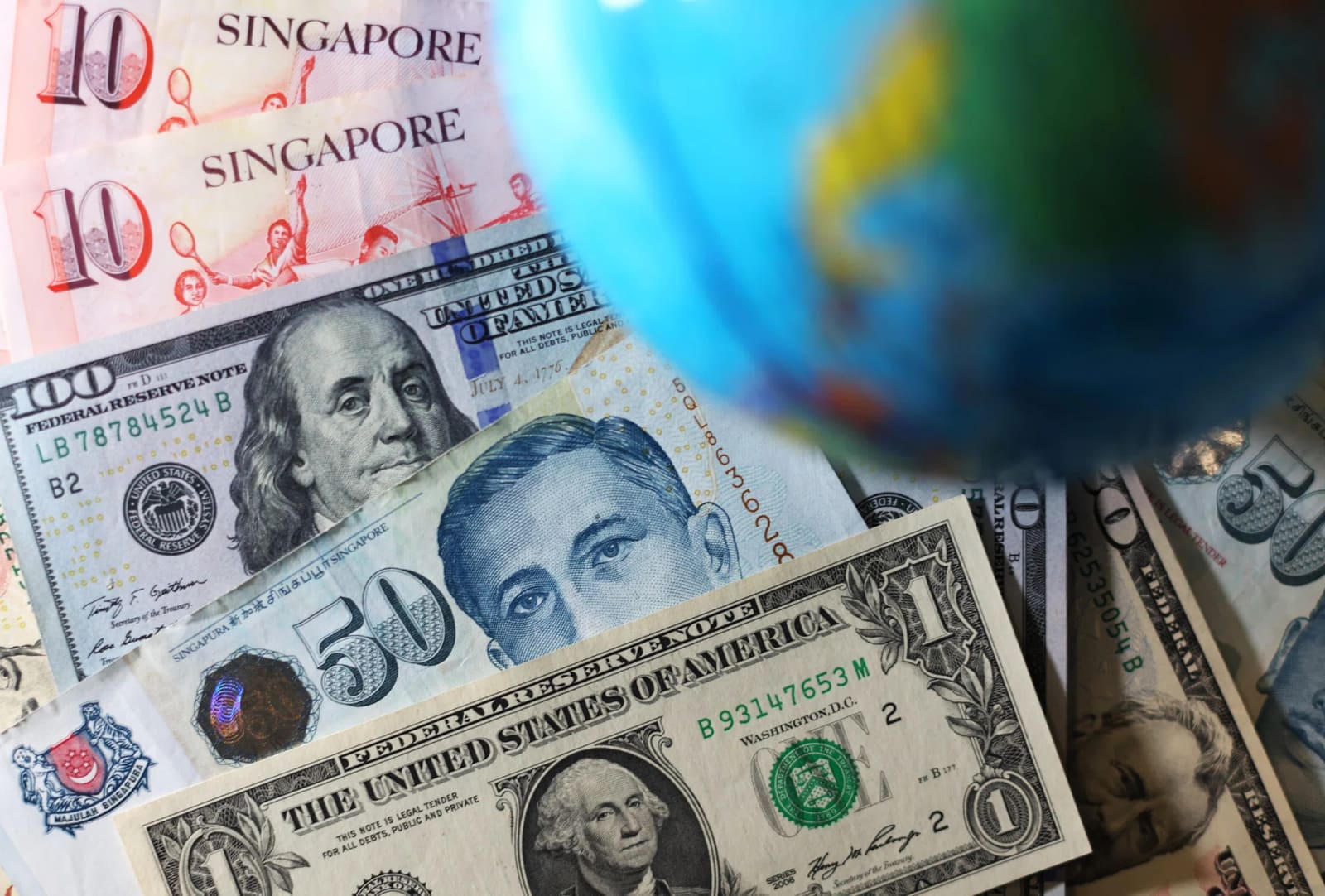
Singapore Dollar Gains Ground as Currency Diversification Pick
Private wealth managers report growing client interest in the city-state's currency as fiscal uncertainty and persistent inflation cloud the US dollar outlook.
KEY TAKEAWAYS
- ·Private wealth clients in Asia are shifting from US dollar concentration to Singapore dollar exposure, driven by a 10 per cent decline in the greenback in 2025 and persistent fiscal uncertainty.
- ·The Singapore dollar's managed float against a trade-weighted currency basket provides structural stability, making it an attractive hedge as US Treasury yields reach decade highs.
- ·Bank of Singapore favours China, Hong Kong and Singapore equities, with the Straits Times Index up 24 per cent year to date, supported by defensive sectors and government liquidity initiatives.
Shift in Currency Allocation
Private wealth clients across Asia are recalibrating their currency exposures, moving away from traditional US dollar concentration towards the Singapore dollar, according to Jean Chia, global chief investment officer at Bank of Singapore.
The shift marks a departure from decades of portfolio construction in which regional high-net-worth individuals defaulted to greenback-denominated assets as their primary diversification vehicle outside domestic currencies. The US dollar declined more than 10 per cent in 2025, prompting wealth managers to reassess the currency's risk profile.
Chia outlined the trend at Great Eastern's Private Client Summit on 8 September, noting that client demand for Singapore dollar exposure has accelerated over the past two years, particularly among investors based in China, Hong Kong, Malaysia and Singapore itself.
The Singapore dollar operates under a managed float regime, with the Monetary Authority of Singapore adjusting its value against an undisclosed basket of currencies tied to the Republic's main trading partners. The band is calibrated to maintain price stability rather than target a specific exchange rate, a framework that wealth managers now view as structurally defensive.
US Fiscal Trajectory Weighs on Dollar
The greenback's volatility stems from overlapping pressures: inflation remains above historical norms, and the US fiscal position continues to deteriorate. Long-term Treasury yields have climbed to levels not seen in a decade, reflecting investor uncertainty about the trajectory of American debt dynamics.
Chia highlighted that expectations around the next five to ten years have fractured, making it difficult to model currency movements with the confidence that once underpinned dollar allocations. Recent US Treasury buyback operations have added another layer of complexity, as lower yields could reduce the relative attractiveness of American assets and weaken the dollar further.
Despite these headwinds, the US equity market retains appeal, driven largely by the artificial intelligence investment cycle. However, Chia cautioned that the AI theme is not a US-only story. Capital expenditure tied to AI infrastructure is flowing into South Korea, Japan, China and Taiwan, where semiconductor manufacturing, component supply and hardware assembly are concentrated.
Selectivity in AI Exposure
The broader AI narrative requires discernment, according to Chia. Not every company or sector labelled as AI-related will deliver returns, a dynamic she compared to the late-1990s dotcom era when indiscriminate enthusiasm led to widespread losses.
Positioning within the AI ecosystem matters. Firms that manufacture advanced chips, build data centre infrastructure or control critical software layers stand to benefit, while those on the periphery face dilution as the market matures and competition intensifies.
Singapore Equities Attract Flows
Bank of Singapore currently favours three markets: China, Hong Kong and Singapore. The Straits Times Index has gained approximately 24 per cent year to date, outperforming many regional benchmarks.
Chia attributed Singapore's equity performance to a combination of defensive sector composition, attractive dividend yields and government initiatives such as the equity development programme, which has channelled liquidity into the local market. The programme, aimed at deepening capital markets, has drawn institutional and retail participation, supporting valuations even as global risk appetite fluctuates.
The convergence of currency stability and equity momentum positions Singapore as both a safe haven and a growth opportunity within Asian portfolios, a dual role that wealth managers are leveraging as they rebalance client allocations away from dollar concentration.
RELATED STORIES

India REIT Posts Distributable Income Growth Despite Currency Headwinds
Priyanka V. Rao · 3 min
DBS Posts Record Quarterly Profit of S$3.08 Billion, Lifts Full-Year Outlook
Priyanka V. Rao · 2 min

Singapore Court Awards UOB S$76 Million in Marina Collection Fraud Case
Priyanka V. Rao · 3 min
Singapore Brokerages Raise STI Targets on Earnings Strength
Jun-ho Seo · 3 min
Spot something wrong? Email editor@briefasia.com. We log every correction publicly.