Finance · Markets
Singapore Brokerages Raise STI Targets on Earnings Strength
Consensus 12-month forecast now sits at 6,140 points as corporate fundamentals catch up with macro optimism, reflecting a shift from valuation-driven to earnings-driven gains
KEY TAKEAWAYS
- ·Consensus 12-month target for the Straits Times Index now stands at 6,140 points, implying 5.5 percent upside from the September 4 close of 5,801.96 points.
- ·The rally has shifted from valuation-driven to earnings-driven, with the STI up roughly 25 percent since end-2025 on stronger corporate profits and heavyweight bank performance.
- ·Brokerage targets range from DBS's 5,850 year-end forecast to Maybank's bull-case 6,800, with further gains hinging on profit delivery rather than multiple expansion.
Earnings Replace Valuation as Primary Driver
Investment houses covering Singapore equities have revised their Straits Times Index forecasts upward heading into the final quarter of 2026, marking a fundamental shift in what's propelling the market higher.
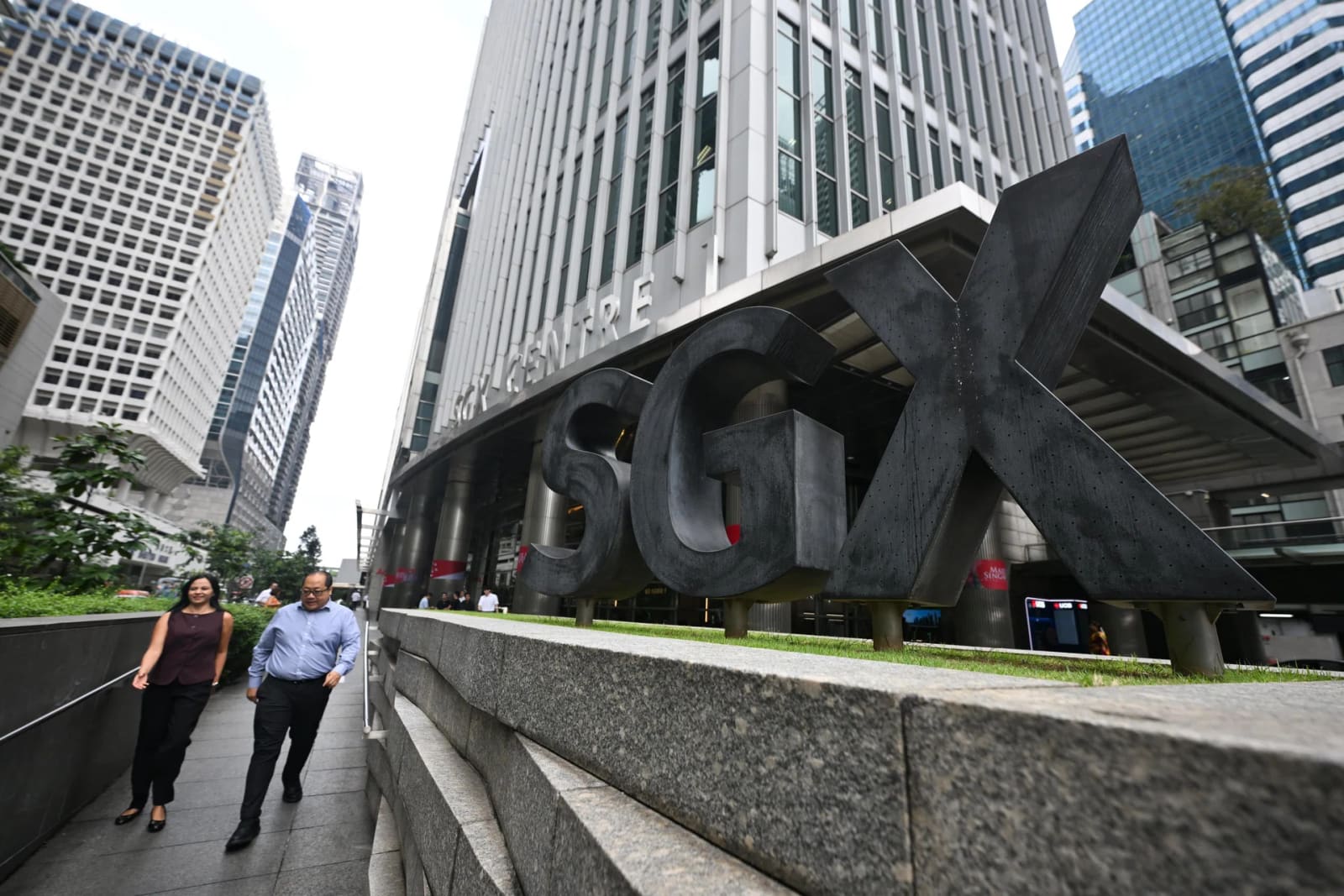
The consensus 12-month target now rests at 6,140 points, according to SGX market strategist Geoff Howie, representing approximately 5.5 percent upside from current levels. The index closed the trading week at 5,801.96 points on September 4.
What distinguishes this rally from previous cycles is its composition. Companies are generating stronger profits rather than simply trading at attractive discounts, a pattern that emerged clearly through the first-half results season. The STI has climbed roughly 25 percent since the end of 2025, with heavyweight banking stocks and broad-based earnings delivery accounting for much of the momentum.
Analysts had consistently flagged the index as undervalued by 15 to 19 percent during 2022 and 2023. That gap has closed as price targets derived from individual company fundamentals have converged with the more bullish macro forecasts that circulated over the past year.
Target Range Spans 5,850 to 6,800 Points
DBS Group Research set a year-end 2026 target of 5,850 points and introduced a 12-month forecast of 6,110 points on August 31. The firm applied a 5 percent haircut to its aggregated bottom-up target of 6,430 points, citing higher target prices for index-heavy banks and solid H1/Q2 earnings across the board.
The brokerage noted that while Singapore equities benefit from accelerating GDP growth, appealing dividend yields, safe-haven demand, and Monetary Authority of Singapore support, further gains will hinge on earnings rather than multiple expansion. The STI already trades at a premium 16.7 times forward price-to-earnings ratio.
UOB Kay Hian analysts pegged their 12-month target at 6,682 points on August 25, implying 18 percent upside. That valuation assumes a fair 2026 forward PE of 18.2 times, underpinned by a 2.5 percent risk-free rate and a 3 percent equity risk premium that currently sits one standard deviation below its long-term average.
Macquarie Group's head of ASEAN equity research, Jayden Vantarakis, upgraded his 12-month target to 6,000 points in July. Factoring in a 4.1 percent dividend yield, that implies a 14 percent total market return. The forecast rests on anticipated index earnings growth of 8 percent in 2027, alongside stock-specific upside across the firm's coverage universe.
Macquarie highlighted that robust economic expansion in high-value manufacturing and services is translating into a highly supportive backdrop for corporate profitability.
Bull Case Sees 6,800 on Liquidity and Reforms
Maybank's head of research, Thilan Wickramasinghe, outlined a bull-case scenario of 6,800 points over the next 12 months. The firm expects Singapore's stability premium, large-cap corporate reforms, and value unlocking among small- and mid-cap names to fuel the advance.
Rising liquidity momentum from the Equity Market Development Programme is also projected to lift valuations during this period. The EQDP, a government-backed initiative to deepen market liquidity, has begun to show measurable effects on trading volumes and price discovery for smaller constituents.
Macro Tailwinds Meet Micro Fundamentals
The confluence of factors supporting the revised targets extends beyond individual stock stories. Singapore's economy has demonstrated resilience amid global uncertainty, with services and advanced manufacturing sectors posting strong sequential gains. The city-state's role as a regional financial hub continues to attract capital flows, particularly as investors reassess risk allocations across Asia.
Banks, which comprise a significant portion of the STI by weight, have reported better-than-expected net interest margins and loan growth. Their revised forward guidance has provided a floor for index-level estimates, while second-tier financials and industrials have contributed breadth to the rally.
The shift from valuation-driven to earnings-driven appreciation also reflects a maturation of the current cycle. Markets that climb on multiple expansion alone face compression risk when sentiment turns. Gains anchored in profit growth, by contrast, tend to prove more durable through volatility.
What Comes Next
The coming months will test whether corporate earnings can sustain the elevated targets brokerages have set. Third-quarter results will offer the next meaningful checkpoint, particularly for banks navigating interest-rate dynamics and for exporters exposed to shifting trade flows.
Dividend yields remain a structural attraction for income-focused allocators, especially in a regional context where Singapore offers both stability and transparency. The EQDP's ongoing rollout may further narrow the liquidity discount that has historically weighed on mid- and small-cap names.
For now, the consensus view among sell-side analysts is clear: the STI has room to run, but the path higher depends less on re-rating and more on companies delivering the earnings growth that underpins current multiples.
RELATED STORIES

Shein Drops 4% in Hong Kong Debut as Tariff Pressure Weighs on Valuation
Priyanka V. Rao · 4 min
Singapore's Blue-Chip Rally Hides a Deeper Market Problem
Priyanka V. Rao · 4 min

Addvalue Technologies Lands $5 Million in Space and Radio Contracts
Tran Quoc Bao · 3 min
Singapore Tightens Stablecoin Rules to Separate Regulated Tokens From Crypto Claims
Priyanka V. Rao · 2 min
Spot something wrong? Email editor@briefasia.com. We log every correction publicly.