Finance · Markets
Singapore Airlines Reports S$76 Million Loss as Fuel Costs Surge
The national carrier swung to a quarterly loss driven by Middle East conflict-related fuel expenses and Air India losses, sending shares down over 4%
KEY TAKEAWAYS
- ·Singapore Airlines reported a net loss of S$76 million for Q1 FY2026, reversing a S$186 million profit from the prior year.
- ·Operating profit fell 73.8% to S$106 million as net fuel costs surged 78.5% due to Middle East conflict-related supply disruptions.
- ·Shares dropped over 4% in morning trade, with increased losses from Air India joint venture adding pressure alongside fuel cost headwinds.
Quarterly Results Mark Sharp Reversal
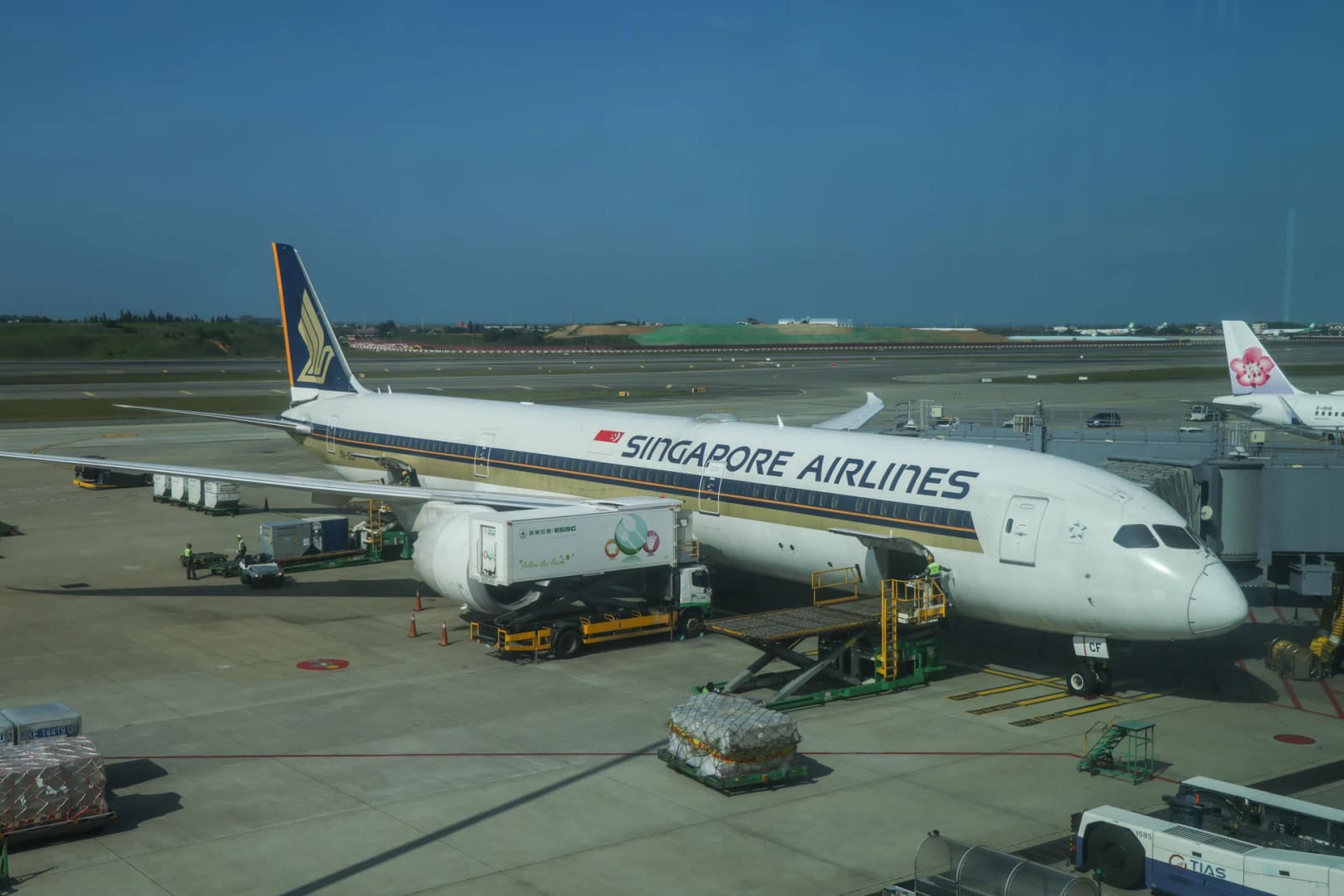
Singapore Airlines posted a net loss of S$76 million for the first quarter of fiscal year 2026, a sharp reversal from the S$186 million profit recorded in the same period last year. The national carrier announced the results Tuesday, triggering a selloff that pushed shares down more than 4% in morning trade Wednesday.
The stock opened lower and slid to S$7.44 by mid-morning, with 2.8 million securities changing hands in early trading. Shares recovered slightly to S$7.47 but remained down 3.9% as investors digested the unexpected loss.
Operating profit collapsed to S$106 million, down S$299 million or 73.8% from the prior-year quarter. The steep decline reflects mounting pressure on Asian carriers navigating volatile fuel markets and exposure to struggling regional investments.
Fuel Costs Jump on Middle East Tensions
Net fuel costs surged 78.5% during the quarter, according to Singapore Airlines, driven by supply disruptions and price volatility stemming from the ongoing Middle East conflict. The carrier absorbed nearly S$1 billion in additional fuel expenses compared to the year-ago period, overwhelming revenue gains and compressing margins across routes.
The Middle East crisis has disrupted global energy flows, pushing jet fuel prices higher and forcing carriers to adjust hedging strategies. Singapore Airlines, which operates extensive networks through the region, faced acute exposure as geopolitical risk premiums widened.
The fuel cost spike alone accounted for the bulk of the operating profit decline, underscoring how external shocks can rapidly erode profitability even as passenger demand remains resilient. Airlines across Asia have flagged similar pressures, though few have absorbed losses of this magnitude in a single quarter.
Air India Losses Compound Pressure
Singapore Airlines also recorded a higher share of losses from Air India, its joint venture partner under the Tata Group umbrella. The Indian carrier has been undergoing a multi-year restructuring, integrating operations and modernizing its fleet, a process that has weighed on near-term earnings.
The increased loss contribution reflects both Air India's operational challenges and Singapore Airlines' equity stake in the venture. While the partnership positions the carrier for long-term growth in India's fast-expanding aviation market, the near-term financial drag has intensified as restructuring costs mount.
Regional airline investments have become a double-edged sword for Singapore Airlines. India represents one of the world's fastest-growing travel markets, but legacy inefficiencies and competitive pressures have delayed profitability for incumbents.
Market Response and Outlook
Investor reaction was swift. The 4% share price decline wiped out recent gains and pushed the stock below key technical support levels. Trading volume spiked, with S$21.2 million in transactions recorded in the first hour, signaling broad-based selling pressure.
The loss marks a sobering turn for a carrier that had posted consistent profits through much of the post-pandemic recovery. Analysts will now scrutinize management's fuel hedging strategy, cost discipline, and exposure to volatile regional investments.
Singapore Airlines has not issued formal guidance for the remainder of fiscal 2026, but industry observers expect continued headwinds if fuel prices remain elevated and Air India's turnaround drags. The carrier's ability to pass costs through to passengers will depend on competitive dynamics and demand elasticity across key routes.
For now, the quarter underscores the fragility of airline profitability in a region where geopolitical risk, energy volatility, and investment exposure can converge to erase margins quickly. Singapore Airlines remains one of Asia's best-capitalized carriers, but restoring profitability will require both external conditions to stabilize and internal cost discipline to tighten.
RELATED STORIES
Temasek Defends SIA's Air India Stake as Loss-Making Carrier Seeks $1.5 Billion
Priyanka V. Rao · 3 min
Singapore Airlines Confronts $375 Million Capital Call From Air India
Priyanka V. Rao · 3 min

Addvalue Technologies Lands $5 Million in Space and Radio Contracts
Tran Quoc Bao · 3 min
Singapore Tightens Stablecoin Rules to Separate Regulated Tokens From Crypto Claims
Priyanka V. Rao · 2 min
Spot something wrong? Email editor@briefasia.com. We log every correction publicly.