Finance · Deals
Temasek Defends SIA's Air India Stake as Loss-Making Carrier Seeks $1.5 Billion
Singapore's sovereign wealth fund backs the airline's investment from a long-term perspective, even as scrutiny mounts over the Indian carrier's mounting losses and capital call.
KEY TAKEAWAYS
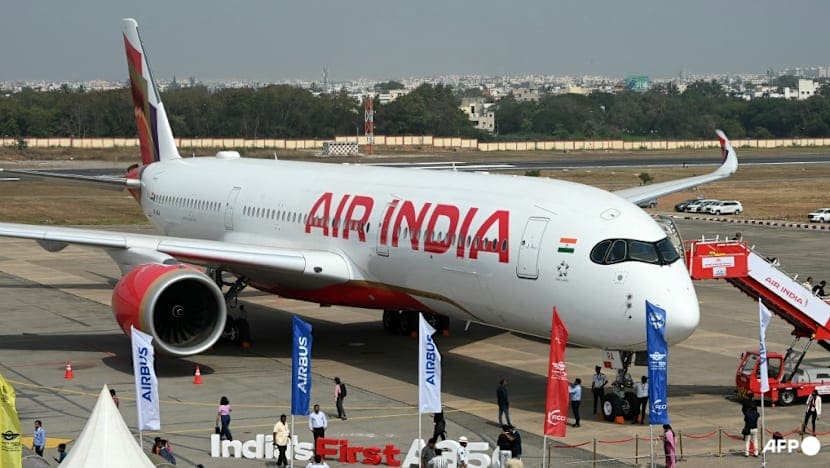
- ·Air India is seeking $1.5 billion in fresh equity from Tata Sons and Singapore Airlines, which holds 25.1 percent of the loss-making carrier.
- ·Temasek publicly backed SIA's investment from a long-term perspective but did not commit to funding any capital injection by the airline.
- ·Air India and Air India Express posted combined losses of $2.33 billion in the year to March, pressured by airspace bans, geopolitical disruptions and a fatal crash.
Temasek Breaks Silence on Controversial Investment
Temasek, Singapore Airlines' majority shareholder, has issued a rare public statement defending the carrier's stake in Air India, as the loss-making Indian airline prepares to request $1.5 billion in fresh capital from its two owners.
The sovereign wealth fund's intervention comes amid intensifying questions in Singapore over whether taxpayer-linked money is being used to shore up a protracted and costly restructuring effort. SIA holds 25.1 percent of Air India, with Tata Sons controlling the remainder.
Juliet Teo, joint head of portfolio development at Temasek Singapore, said in a letter published Saturday that the fund views the Air India investment through a long-term lens and remains supportive. The statement did not confirm whether Temasek would back any capital injection by SIA, leaving that decision to the airline's board.
Political and Market Pressure Builds
The capital call, first disclosed earlier this week, has triggered pushback from Singapore's opposition. Kenneth Tiong, a Workers' Party lawmaker, urged publicly that Temasek funds not be deployed to support the Indian carrier. Local business commentary has questioned what strategic value the 25.1 percent stake delivers beyond a board seat and a proportional share of losses.
One analysis noted that SIA faces limited exit options, with Tata the only realistic buyer, and questioned whether the original strategic rationale still holds given the deteriorating financial picture.
Air India and its budget subsidiary Air India Express posted combined losses of $2.33 billion in the year ending March, a figure that has weighed visibly on SIA's consolidated earnings. The Indian carrier's troubles stem from a confluence of external shocks: Pakistan's continued airspace ban on Indian flights, disruptions linked to conflict between the United States, Israel and Iran, and the operational and reputational fallout from a crash in 2025 that killed 260 people.
Transformation Timeline Stretches
Temasek's letter acknowledged the scale of the challenge. The transformation of Air India involves complex, multi-year operational and integration work, with outcomes shaped by industry cycles and external variables including airspace closures, geopolitical developments and volatile fuel prices, according to the fund.
"Efforts of this scale take time and are not expected to be linear," the letter stated.
Tata took control of the former state-owned airline in 2022 and has since embarked on a multibillion-dollar overhaul spanning fleet renewal, service standards, digital systems and workforce restructuring. The group has previously signaled that the turnaround could take up to a decade.
SIA entered the investment in 2023 as part of a broader strategic bet on India's aviation market, which remains one of the fastest-growing in the world by passenger volume. The carrier secured management influence and operational collaboration rights in exchange for its stake and an initial capital commitment.
SIA Board to Weigh Request
SIA said Thursday that its board would carefully assess any capital request from Air India, taking into account the group's other funding priorities and Air India's updated business strategy. The airline has not disclosed the size of its potential contribution or the timeline for a decision.
The $1.5 billion figure represents the total equity call across both shareholders. Based on SIA's 25.1 percent stake, its share would be approximately $377 million, though the actual allocation may differ depending on negotiated terms.
Air India has placed large aircraft orders with Airbus and Boeing as part of its fleet modernization plan, commitments that require sustained capital outlays even as revenue recovery lags. The carrier is also integrating Air India Express and Vistara, the latter a former SIA-Tata joint venture that was folded into the Air India group.
Regional Aviation Dynamics Shift
The scrutiny over Air India reflects broader tension in Asia's aviation sector between growth ambitions and financial discipline. State-linked carriers across the region, from Malaysia Airlines to Garuda Indonesia, have required repeated recapitalizations over the past decade, often with mixed results.
India remains a strategic priority for Singapore, both as an investment destination and a connectivity hub. SIA's India exposure extends beyond Air India, encompassing codeshare partnerships, cargo operations and ground handling investments.
Temasek manages over $380 billion in assets and has historically taken multi-year positions in infrastructure and transport. The fund's public defense of the Air India stake signals confidence that the Indian carrier's restructuring will eventually yield returns, even as near-term financials remain under pressure.
Whether that confidence is shared by SIA's board, and whether it will commit further capital, will become clear in the coming months as Air India formalizes its funding request.
RELATED STORIES
Singapore Airlines Confronts $375 Million Capital Call From Air India
Priyanka V. Rao · 3 min
Singapore's Azalea Secures $1 Billion Across New Private Equity Vehicles
Priyanka V. Rao · 4 min
CIMB Commits to 55% Dividend Floor as Regional Portfolio Offsets Indonesia Pressure
Priyanka V. Rao · 4 min
DBS Posts Record Quarterly Profit of S$3.08 Billion, Lifts Full-Year Outlook
Priyanka V. Rao · 2 min
Spot something wrong? Email editor@briefasia.com. We log every correction publicly.