Travel & Dining · Trends
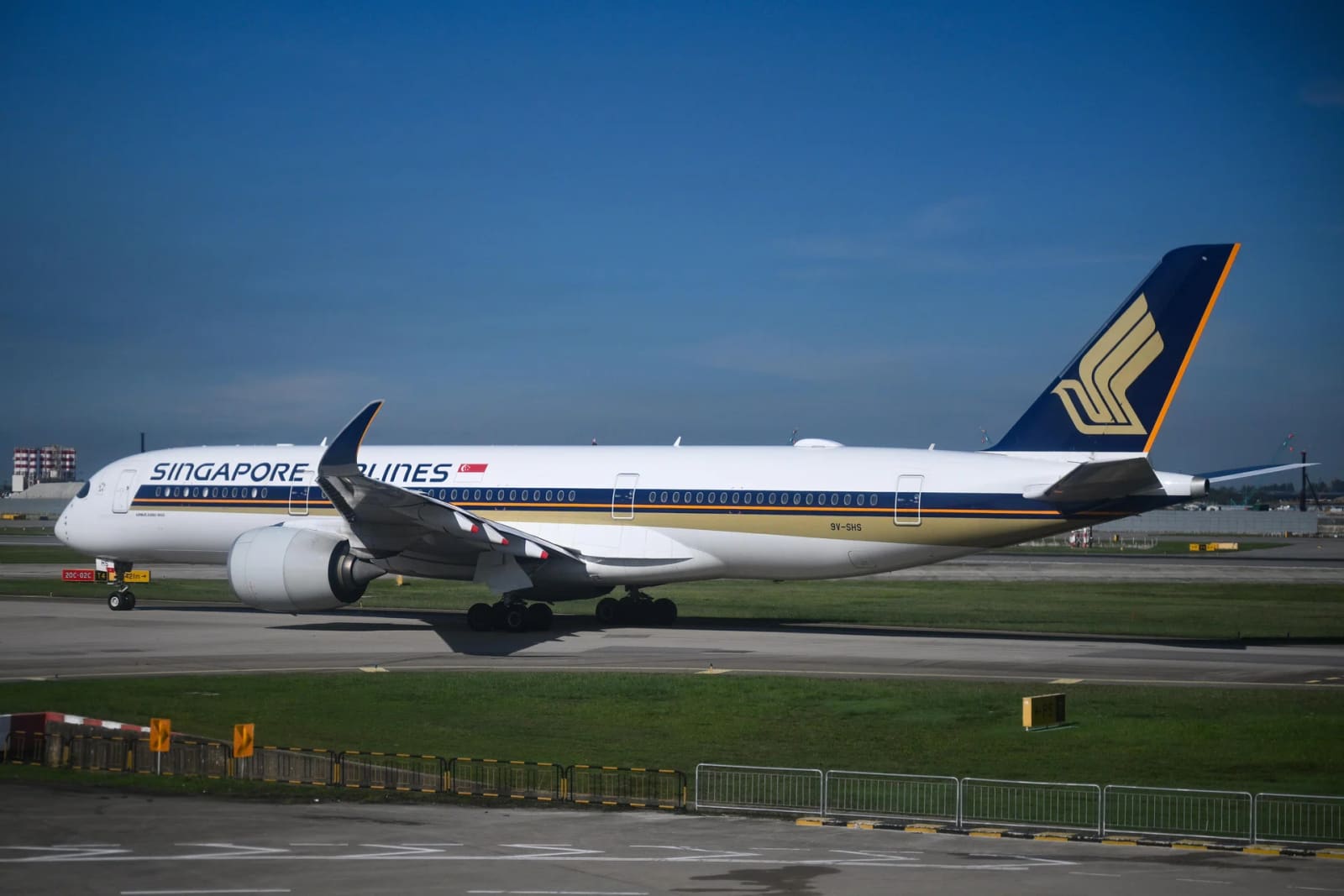
Singapore Airlines Reports S$76 Million Loss as Fuel Costs Surge
The carrier's first-quarter revenue hit a record S$5.7 billion, but jet fuel prices tied to Middle East conflict erased operating gains
KEY TAKEAWAYS
- ·Singapore Airlines reported a net loss of S$76 million for Q1 2026, reversing a S$186 million profit from the prior year, as jet fuel costs jumped 78.5 percent to S$2.3 billion.
- ·Quarterly revenue hit a record S$5.7 billion, up 19.3 percent, driven by 18.6 percent growth in passenger revenue and a 33.5 percent rise in cargo revenue.
- ·Operating profit fell 73.8 percent to S$106 million as fare and cargo rate increases failed to fully offset fuel inflation tied to the Middle East conflict.
Record Revenue Fails to Shield Carrier
Singapore Airlines posted a net loss of S$76 million for the quarter ending June 30, 2026, reversing a S$186 million profit from the same period a year earlier. The swing came as jet fuel expenses climbed 78.5 percent to S$2.3 billion, driven by supply disruptions stemming from the Middle East conflict that began in late February.
The airline announced quarterly revenue reached S$5.7 billion, up 19.3 percent from S$4.8 billion a year prior. Passenger revenue climbed 18.6 percent to S$4.6 billion on sustained travel demand across the region, while cargo revenue jumped 33.5 percent as semiconductor and data center shipments bolstered freight volumes.
Passenger yields rose 12 percent to S$0.112 per revenue passenger-kilometer, reflecting the carrier's ability to push through higher fares. The group carried 10.9 million passengers during the quarter, a 6.3 percent increase from 10.3 million in the corresponding period.
Capacity Growth Outpaces Traffic
The mainline Singapore Airlines brand transported 7.1 million passengers, up 4.1 percent year-on-year, while budget subsidiary Scoot carried 3.82 million travelers, a 10.8 percent gain. Group passenger load factor edged down 0.5 percentage points to 87.1 percent as capacity expansion of 5.9 percent outstripped traffic growth of 5.3 percent.
Scoot's load factor declined 0.9 percentage points to 90.6 percent. The mainline carrier saw its load factor slip 0.4 percentage points to 86.2 percent.
Cargo operations showed stronger utilization, with the group's freight load factor rising 1.9 percentage points to 58.8 percent. The airline noted resilient demand across most verticals, particularly in technology-related shipments.
Operating Profit Collapses
Group expenditure climbed 27.9 percent to S$5.6 billion, with the S$991 million increase in net fuel costs accounting for the bulk of the rise. Operating profit fell 73.8 percent to S$106 million from S$405 million a year earlier.
The airline also absorbed a larger share of losses from Air India, the carrier in which Singapore Airlines holds a minority stake. The Indian carrier has been undergoing restructuring since its privatization.
Jet fuel prices more than doubled following the outbreak of hostilities on February 28, 2026. The airline said prices remain volatile and elevated relative to pre-conflict levels, adding cost pressure across the industry. Jet fuel typically trades on a lagged pricing basis, meaning the full impact of spot-market spikes takes weeks to flow through airline financials.
Fare Adjustments Fall Short
Singapore Airlines and Scoot have raised airfares and cargo rates to offset fuel inflation, but the carrier said these adjustments do not fully compensate for the cost surge. The mismatch highlights the difficulty airlines face when input costs move faster than pricing power allows.
The airline said demand for air travel remains robust, supported by seasonal travel flows. However, macroeconomic and geopolitical developments continue to inject uncertainty into the operating environment. The carrier identified jet fuel pricing as the most immediate risk, given it represents the group's single-largest expenditure item.
Regional Implications
Singapore's flag carrier serves as a bellwether for aviation across Southeast Asia, where carriers depend heavily on international transit traffic. The fuel cost squeeze is particularly acute for hub operators like Singapore Airlines, which compete on network reach rather than point-to-point efficiency.
The airline's performance comes as other Asia-Pacific carriers grapple with similar margin pressure. Regional airlines have less fuel-hedging flexibility than their North American counterparts, leaving them more exposed to spot-market swings.
Shares of Singapore Airlines closed at S$7.77 on July 28, up S$0.06 or 0.8 percent, before the results were released.
RELATED STORIES
Temasek Defends SIA's Air India Stake as Loss-Making Carrier Seeks $1.5 Billion
Priyanka V. Rao · 3 min
Singapore Airlines Confronts $375 Million Capital Call From Air India
Priyanka V. Rao · 3 min
Singapore REITs Raise S$4.5 Billion in Nine Months as Fundraising Momentum Extends Into 2026
Priyanka V. Rao · 3 min

DBS Doubles Down on Asia, Ruling Out Global Expansion
Anand Sundaram · 3 min
Spot something wrong? Email editor@briefasia.com. We log every correction publicly.