Real Estate · Homes
Singapore's Aging HDB Flats Capture Largest Share of Resale Market
Buyers increasingly prioritize affordability and space over flat age as newer large units become scarce
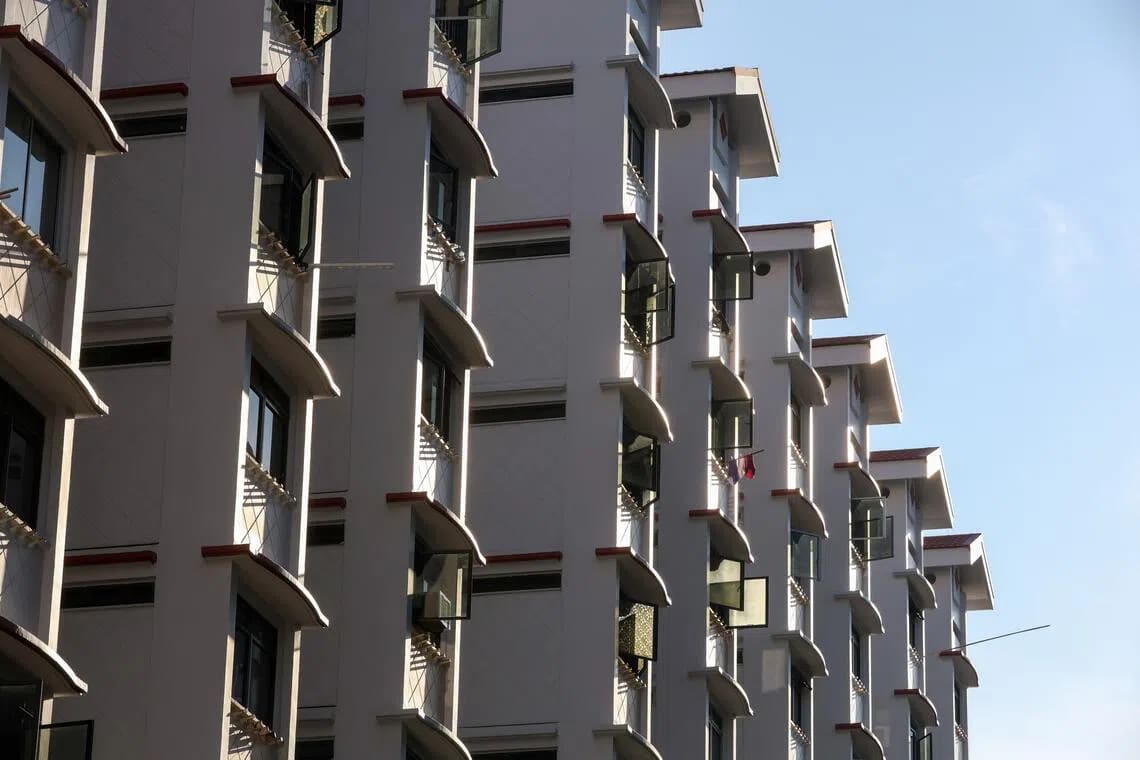
KEY TAKEAWAYS
- ·Older HDB flats now account for the largest share of Singapore's resale market, with a four-room Yishun unit selling for S$265,000 in July 2026.
- ·Buyers increasingly prioritize affordability and space over lease decay concerns as new large-format units become scarce.
- ·Mature estates offer established infrastructure and central locations that offset shorter remaining lease tenures in purchase decisions.
The Shift in Buyer Preferences
Older Housing and Development Board flats in Singapore have quietly overtaken newer units to claim the largest proportion of total resale sales, marking a notable shift in buyer behavior across the city-state's public housing market.
The change reflects a fundamental recalibration of priorities among homebuyers. Where lease decay and remaining tenure once dominated purchase decisions, affordability and livable space now drive transactions. This evolution comes as Singapore's public housing authority builds fewer large-format apartments and construction costs remain elevated.
Price Points That Work
Recent transaction data illustrates the appeal. A 104-square-meter four-room flat in Yishun Street 22 changed hands for S$265,000 in July 2026, offering buyers substantial living space at a fraction of the cost of newer developments. The same month, a 64-square-meter three-room unit in Toa Payoh, valued for its central location, sold for S$288,000.
These price points open homeownership pathways that newer flats cannot match. For young families stretching budgets or upgraders seeking more room without premium price tags, older estates deliver tangible value. The Yishun transaction pencils out to roughly S$2,548 per square meter, a figure that would be unthinkable in newer Build-To-Order precincts.
Supply Constraints Amplify Demand
The Housing Board's current development pipeline emphasizes smaller unit types, reflecting land scarcity and demographic shifts toward smaller household sizes. This supply reality has created a mismatch: families seeking four- or five-room configurations increasingly find their options concentrated in the resale market, where older stock dominates inventory.
The scarcity of new large flats has effectively pushed a segment of demand backward in time, toward estates built in the 1980s and 1990s. These mature neighborhoods often feature larger floor plates than contemporary designs, a legacy of earlier planning standards when land was less constrained.
The Lease Decay Debate Loses Heat
For years, the question of remaining lease tenure loomed over older flat purchases. Buyers worried about asset depreciation as leases ticked below the 60- or 50-year mark, particularly given uncertainties around the Selective En Bloc Redevelopment Scheme and other government rejuvenation programs.
That anxiety has softened. A combination of factors - government clarifications on housing policies, a more pragmatic view of HDB flats as consumption goods rather than pure investments, and the simple reality that many buyers plan to live in their homes rather than flip them - has diluted lease decay as a primary concern.
Mature Estate Advantages
Older precincts bring infrastructure that new towns cannot replicate overnight. Established hawker centers, schools with track records, direct rail connections, and neighborhood networks represent intangible value. Toa Payoh, for instance, sits on two MRT lines and offers proximity to the Central Business District that newer peripheral estates cannot match.
These amenities carry weight in purchase decisions. A flat in a mature estate may have 55 years left on its lease, but it also has a wet market two blocks away, a primary school within walking distance, and a bus interchange that predates most of the island's current road network.
Market Share Implications
The rise of older flats in total resale volume signals a market adapting to structural constraints. It also suggests that Singapore's public housing stock is functioning as intended: providing a spectrum of options across price, location, and vintage to serve diverse household needs.
For policymakers, the trend offers reassurance that older estates retain utility and demand even as they age. For the resale market, it underscores that price discovery is working - buyers are finding value where it exists, unconstrained by the biases that once favored only the newest stock.
The data points to a maturing market in more ways than one. As Singapore's housing landscape ages, so too does buyer sophistication. The calculus now weighs trade-offs with clear eyes: less time on the lease clock, but more space per dollar and better access to established urban fabric. That equation is closing deals.
RELATED STORIES
Sand Prices Surge 15 Percent in Parts of Malaysia as Construction Costs Edge Up
Priyanka V. Rao · 3 min

Vietnam Airlines Slash Fares to Singapore and Bangkok as Capacity Surges
Priyanka V. Rao · 2 min

Utah Positions Itself as Lower-Profile Alternative to Texas for Asian Capital
Priyanka V. Rao · 4 min
Singapore's Big Three Banks Post Solid First-Half Gains as Wealth Offsets Margin Pressure
Priyanka V. Rao · 3 min
Spot something wrong? Email editor@briefasia.com. We log every correction publicly.