Asia · Business
Utah Positions Itself as Lower-Profile Alternative to Texas for Asian Capital
Mountain state pitches critical minerals, aerospace growth, and lighter bureaucracy as Singapore investors expand US footprint beyond traditional hubs
KEY TAKEAWAYS
- ·Utah attracted $4.9 billion in foreign direct investment over five years to 2025, ranking 32nd nationally, with Japanese investors leading and Asian flows remaining a minority share.
- ·The state holds one of the most diverse critical mineral reserves in the US and aims to meet 20 to 25 percent of domestic demand, driven by supply chain security concerns.
- ·Enterprise Singapore opened a Texas office in early 2026 and sees opportunities beyond traditional US gateways, while Utah officials plan formal engagement with Singapore investors.
A Landlocked Pitch for Pacific Capital
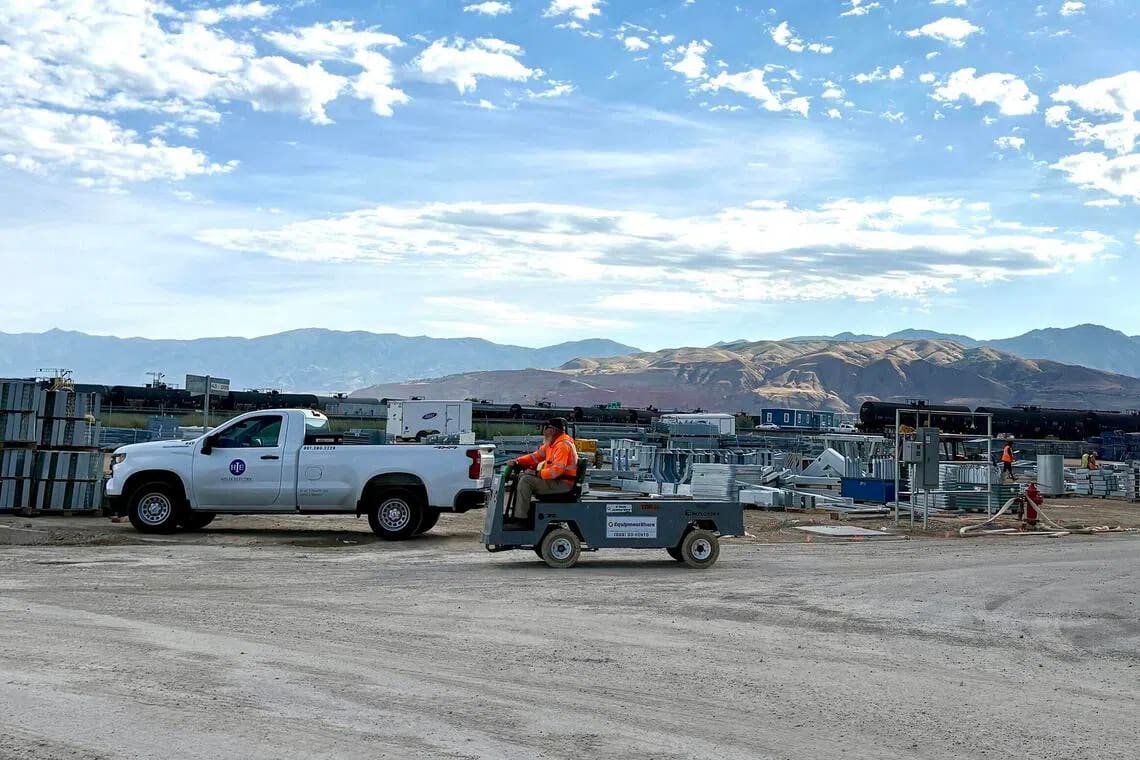
Asian foreign direct investment in the United States has traditionally clustered around familiar magnets: California's tech corridors, New York's financial district, Texas's energy belt. Utah, nestled between the Rockies and the Great Basin, has operated on the periphery of that geography. Now, state officials are making a deliberate play to shift the calculus.
Governor Spencer Cox frames the appeal in comparative terms. The state offers regulatory flexibility similar to Texas but with fewer competing voices and more direct access to decision-makers, according to Cox. That pitch comes as Utah recorded its second-highest foreign capital expenditure pledges in 2025 since tracking began, pulling in $4.9 billion in FDI over the five years to 2025. The state ranked 32nd nationally in foreign capital expenditure during that window.
Singapore's corporate footprint in the US spans more than 250 firms across 45 states, with close to 60 operating in Texas alone. Enterprise Singapore opened a fourth US office in Texas earlier in 2026, joining existing posts in New York, Los Angeles, and San Francisco. Lim Seow Hui, director for the Americas at Enterprise Singapore, noted steady interest from Singapore companies looking to deepen their US presence, with opportunities emerging beyond traditional gateway cities.
Critical Minerals and Supply Chain Urgency
Utah's geological endowment has become a strategic asset. The state holds one of the most diverse critical mineral reserves in the US, spanning copper, tellurium, beryllium, and rare earths. In early 2026, state lawmakers established a target to meet 20 to 25 percent of domestic demand for these materials, a goal tied to national security and technology supply chains.
Rio Tinto operates the Kennecott mine on the outskirts of Salt Lake City, an open-pit operation producing copper and tellurium. Copper demand is surging with data center construction, grid electrification, and electric vehicle rollout. Tellurium, extracted as a byproduct of copper refining, feeds into advanced thin-film solar panel production. The British-Australian miner is exploring an expansion that would yield an additional 1.5 million tonnes of copper.
Brian Somers, president of the Utah Mining Association, emphasized the need to accelerate production from existing sites rather than developing new mines, which can take a decade or longer. He pointed to China's dominance in critical mineral supply chains as a pressure point driving urgency in US policy circles.
Manufacturing Expansion Amid Tariff Headwinds
Austrian ropeway manufacturer Doppelmayr is nearly doubling its Utah production facility in a $60 million expansion set to complete in September. The company builds cable car systems deployed globally, including Singapore's Sentosa line. Keith Johns, chief executive of Doppelmayr USA, attributed growth to increased outdoor recreation following the pandemic, but noted that tariffs imposed by the Trump administration have complicated sourcing decisions.
Doppelmayr imports haul ropes - steel cables that move chair lifts and cabins - because US manufacturers do not produce them. Tariffs on these components have delayed some customer projects and raised costs. Johns said the impact has been tangible, with some clients postponing investments while others absorb the additional expense.
Demographics and Infrastructure Tailwinds
Utah's working-age population grew 10.8 percent between April 2020 and July 2025, the fastest rate among US states, according to US Census Bureau data. That demographic momentum supports labor-intensive industries and sustained economic expansion.
The state is also leveraging its role as host of the 2034 Winter Olympics to drive infrastructure investment. In May, Cox's administration launched the "Utah Elevated" plan, a ten-year economic development roadmap targeting both domestic and foreign capital. David Carlebach, chief operating officer of World Trade Center Utah, described the challenge as one of visibility. Utah has historically been perceived as a "flyover state," a label officials are working to shed through international outreach and direct engagement.
Asian Engagement Gains Traction
Utah conducted trade missions to Japan and South Korea nearly two years ago, which Cox credited with generating reciprocal investment interest. A direct flight from Salt Lake City to Seoul launched in June 2025, improving connectivity to East Asia. Japanese investors have been the most active in Utah, led by residential projects from Sekisui House. The United Kingdom, France, Canada, and Australia round out the top sources of foreign capital. Asian flows remain a minority share, though officials are intensifying regional outreach.
Cox indicated that formal engagement with Singapore is under consideration. He encouraged Singapore businesses to visit Utah and suggested reciprocal trips by state officials to strengthen ties.
Foreign direct investment in the US climbed by more than one trillion dollars since 2020, reaching $5.86 trillion in 2025, according to the US Bureau of Economic Analysis. Manufacturing saw the largest increase, driven by electrical equipment and components. Jonathan Samford, president of Global Business Alliance, noted that 75 percent of American voters now view international companies favorably, up from 62 percent two years prior, with bipartisan support.
Utah's pitch rests on a combination of resource endowment, population growth, and deliberate policy positioning. Whether that translates into sustained Asian capital flows will depend on how effectively the state differentiates itself in a crowded field of US investment destinations.
RELATED STORIES

Singapore Wage Council Opens Consultation for 2026-2027 Guidelines
Priyanka V. Rao · 2 min
Singapore's Religious Sector Collected $1.4 Billion in Donations Last Year
Priyanka V. Rao · 4 min
Singapore Banks Hit Record Highs on Wealth Management Surge
Priyanka V. Rao · 2 min
Allianz Acquires HSBC Singapore Insurance Operations in $2.3 Billion Deal
Priyanka V. Rao · 3 min
Spot something wrong? Email editor@briefasia.com. We log every correction publicly.