Finance · Markets
Singapore's Big Three Banks Post Solid First-Half Gains as Wealth Offsets Margin Pressure
DBS, OCBC, and UOB delivered strong H1 2026 results despite narrowing net interest margins, with wealth management and asset growth driving performance across the sector
KEY TAKEAWAYS
- ·DBS reported S$12 billion in total income for H1 2026, with non-interest income rising 15 percent to nearly S$5 billion as net interest income fell 3 percent to S$7.1 billion
- ·The three Singapore banks accounted for 89 percent of the Straits Times Index gains through July 30, making their earnings critical to overall market sentiment
- ·UOB continues share buybacks at current levels while DBS and OCBC last repurchased stock when prices were 40 percent and 25 percent lower respectively
Sector Carries the Index
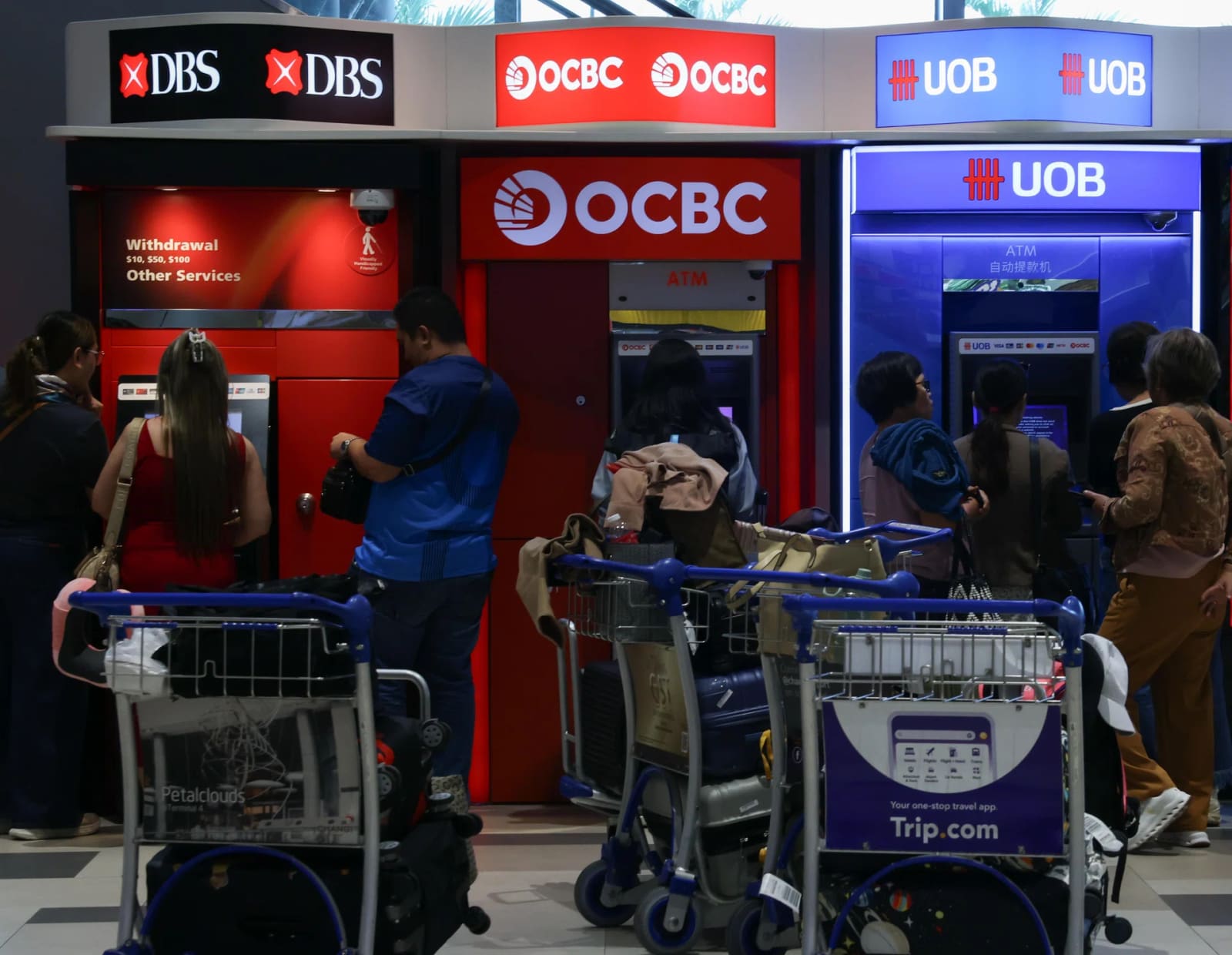
Singapore's banking trio entered earnings season under considerable scrutiny. By the end of July, DBS, OCBC, and UOB had collectively driven 89 percent of the Straits Times Index's gains since January, according to analyst calculations. That concentration made their first-half numbers crucial not just for the banks themselves but for the broader market's momentum.
The three institutions delivered. Each posted results that validated their elevated valuations, even as investors had grown increasingly nervous about how long the rally could sustain itself. The common thread across all three: wealth management revenue and balance-sheet expansion proved strong enough to counterbalance the continued narrowing of net interest margins.
DBS Leads with Non-Interest Income
DBS reported total income of slightly above S$12 billion for the six months ended June 30, up 3 percent year-on-year. The composition tells the story of where growth is coming from. Net interest income declined 3 percent to S$7.1 billion, reflecting the pressure on lending spreads as interest-rate cycles mature. But non-interest income surged 15 percent to nearly S$5 billion, driven primarily by wealth management fees, transaction services, and trading activity.
Net profit for the period climbed 5 percent to just over S$6 billion. The bank's ability to grow earnings despite shrinking interest income underscores the diversification strategy it has pursued over the past several years, particularly in private banking and asset management across Southeast Asia.
OCBC and UOB Follow Similar Patterns
OCBC and UOB posted comparable dynamics, though specific figures were not disclosed in available reporting. Both banks saw wealth management units contribute meaningfully to overall performance, while loan-book growth remained steady amid robust corporate and consumer demand across the region.
Asset quality held firm across the sector, with non-performing loan ratios stable and credit costs remaining benign. That stability has been a key pillar supporting valuations, particularly as regional economies continue to expand and corporate defaults remain low.
Valuation and Buyback Dynamics
The strong results have done little to dampen valuation concerns. All three banks trade at multiples well above their historical averages, and dividend yields have compressed as share prices have climbed. Still, those yields remain attractive relative to other income-generating assets in the region, particularly in a lower-rate environment.
UOB continues to execute share buybacks, a signal that management views current prices as reasonable despite the rally. DBS and OCBC last conducted buyback programs when their shares traded 40 percent and 25 percent lower, respectively. The divergence in capital-return strategy reflects differing views on valuation and capital allocation priorities across the three institutions.
Regional Context
Singapore's banks operate as regional franchises, not just domestic lenders. Their performance is tied to the health of trade corridors, capital flows, and wealth accumulation across Southeast Asia, Hong Kong, and Greater China. The first-half results reflect resilient economic activity in those markets, even as growth rates have moderated from post-pandemic peaks.
Wealth management growth, in particular, is a structural theme. High-net-worth individuals across Asia continue to consolidate assets with institutions that offer scale, regulatory stability, and cross-border capabilities. Singapore's banks, with their strong balance sheets and regional networks, remain natural beneficiaries.
What Comes Next
The key question for the second half is whether non-interest income can continue to offset margin compression. If interest rates stabilize or begin to decline further, net interest income will face additional headwinds. Wealth management and fee-based businesses will need to deliver sustained growth to keep earnings trajectories intact.
Credit quality will also warrant close monitoring. While asset quality remains strong today, any deterioration in regional economic conditions or sharp moves in property markets could shift the outlook quickly. For now, however, the sector's fundamentals remain solid, and the three banks have demonstrated their ability to adapt revenue streams as the operating environment evolves.
RELATED STORIES
Singapore's Three Banks Show Uneven Momentum in Mid-Year Earnings
Priyanka V. Rao · 4 min
Singapore Banks Split as DBS and OCBC Hit Record Highs While UOB Lags
Priyanka V. Rao · 3 min

Singapore Banks Hit Record Highs on Wealth Management Surge
Priyanka V. Rao · 2 min
OCBC Lifts Dividend as Wealth Management Drives 22% Profit Jump
Priyanka V. Rao · 2 min
Spot something wrong? Email editor@briefasia.com. We log every correction publicly.