Finance · Markets
Singapore Banks Split as DBS and OCBC Hit Record Highs While UOB Lags
Wealth management income propelled two of the city-state's major lenders to new peaks in Q2, but rising bad loans and conservative guidance held back the third
KEY TAKEAWAYS
- ·DBS and OCBC shares hit record highs after posting strong Q2 earnings driven by wealth management income, with net profit rising 9 per cent and 22 per cent respectively.
- ·UOB's stock lagged as new non-performing assets surged 90 per cent year on year to $902 million due to one Greater China real estate account, while its net interest margin fell 8 basis points.
- ·DBS and OCBC raised their 2026 financial targets, but UOB revised fee income guidance downward to low single-digit growth from high single-digit projections.
Diverging Fortunes
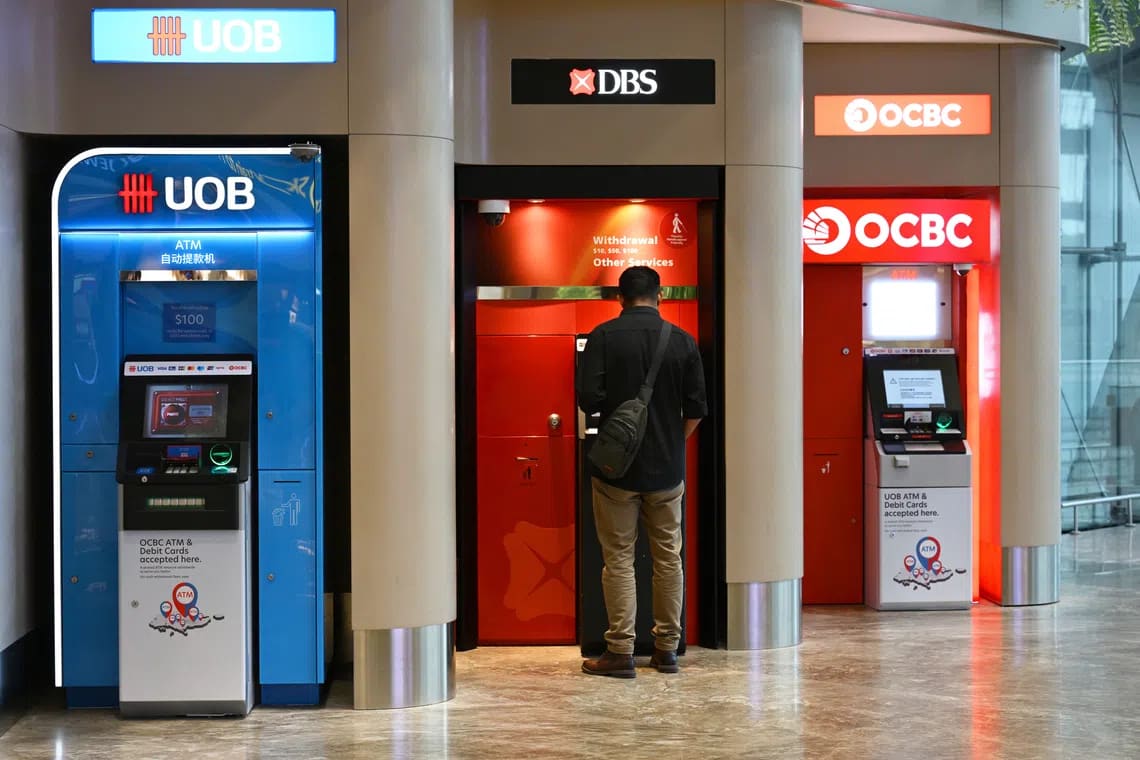
Two of Singapore's three major banks reached record valuations this week, underscoring a growing performance gap among the city-state's banking giants. DBS and OCBC both delivered second-quarter earnings that exceeded analyst expectations, driven primarily by surging wealth management revenue, while UOB confronted rising credit quality concerns that dampened investor enthusiasm.
OCBC shares crossed the $30 threshold for the first time, closing 3.94 per cent higher at $30.30 on August 7. DBS climbed 3.07 per cent to a fresh peak of $76.33. UOB, by contrast, slipped 0.23 per cent to $43.30 during the same session.
The performance divergence reflects distinct operating realities. DBS reported net profit of $3.08 billion for the quarter, up 9 per cent year on year, anchored by record wealth management income. OCBC's profit jumped 22 per cent to $2.22 billion. UOB posted a 10 per cent increase to $1.48 billion, but investors focused on underlying credit metrics rather than headline growth.
Wealth Management Drives Growth
Wealth management has emerged as the primary earnings engine for Singapore's banks as they compete for a growing pool of high-net-worth individuals across Asia. DBS and OCBC both highlighted wealth income as a key contributor to quarterly results, benefiting from higher assets under management and increased transaction volumes.
All three banks declared interim dividends. DBS will pay shareholders 81 cents per share, split between a 66-cent ordinary dividend and a 15-cent capital return dividend. OCBC announced a 47-cent dividend, while UOB set its payout at 88 cents per share.
DBS and OCBC raised their 2026 financial targets following the strong quarter. UOB maintained most of its guidance but revised fee income expectations downward, now projecting low single-digit growth compared with its prior forecast of high single-digit expansion.
Credit Quality Concerns
UOB's new non-performing assets reached $902 million in the second quarter, a 90 per cent increase from the prior year. The bank attributed the rise to a single real estate account in Greater China. UOB stated it has set aside adequate provisions to cover the exposure, but the development raised questions about potential headwinds in the property sector.
According to Macquarie Capital, UOB's net interest margin declined 8 basis points quarter on quarter, the steepest drop among the three banks. Net interest margin measures the difference between what banks earn on loans and pay on deposits, serving as a core profitability indicator.
The margin compression reflects competitive pressures in lending markets and shifting deposit dynamics as customers seek higher yields. While all three banks faced margin pressure to varying degrees, UOB's larger decline drew particular scrutiny from analysts tracking the sector.
Broader Market Context
The banking results came during a volatile week for regional markets. The Japanese yen struggled to hold gains from a recent joint US-Japan currency intervention, trading around 157.80 per US dollar on August 7 after briefly strengthening to 155.20. The yen's weakness reflects Japan's low interest rates relative to other major economies and concerns about the country's debt burden, which exceeds 200 per cent of GDP.
Oil prices climbed above $83 per barrel on August 7 amid uncertainty over negotiations to reopen the Strait of Hormuz. Gold surged past $4,300 an ounce after a weaker US jobs report reduced expectations for a Federal Reserve rate hike in September.
Singapore's broader earnings season continues, with property developers UOL and City Developments scheduled to report results in the coming week. The Ministry of Trade and Industry will release its full second-quarter economic survey on August 11, providing additional detail on GDP growth, which clocked in at 5.7 per cent year on year in the advance estimate.
What Comes Next
Investor attention will remain on how the banking sector navigates credit quality challenges while sustaining wealth management momentum. The gap between DBS and OCBC's upward trajectory and UOB's more cautious positioning suggests the market is differentiating based on asset quality and forward guidance rather than treating the three banks as a uniform bloc.
With Singapore serving as a key wealth hub for the Asia-Pacific region, the banks' ability to capture flows from mainland China, Southeast Asia, and India will likely determine relative performance in the quarters ahead. At the same time, exposure to property sectors across Greater China and potential margin compression from competitive lending markets present risks that investors will continue to monitor closely.
RELATED STORIES
Singapore's Three Banks Show Uneven Momentum in Mid-Year Earnings
Priyanka V. Rao · 4 min
Singapore's Big Three Banks Post Solid First-Half Gains as Wealth Offsets Margin Pressure
Priyanka V. Rao · 3 min

Singapore Banks Hit Record Highs on Wealth Management Surge
Priyanka V. Rao · 2 min
OCBC Lifts Dividend as Wealth Management Drives 22% Profit Jump
Priyanka V. Rao · 2 min
Spot something wrong? Email editor@briefasia.com. We log every correction publicly.