Finance · Banking
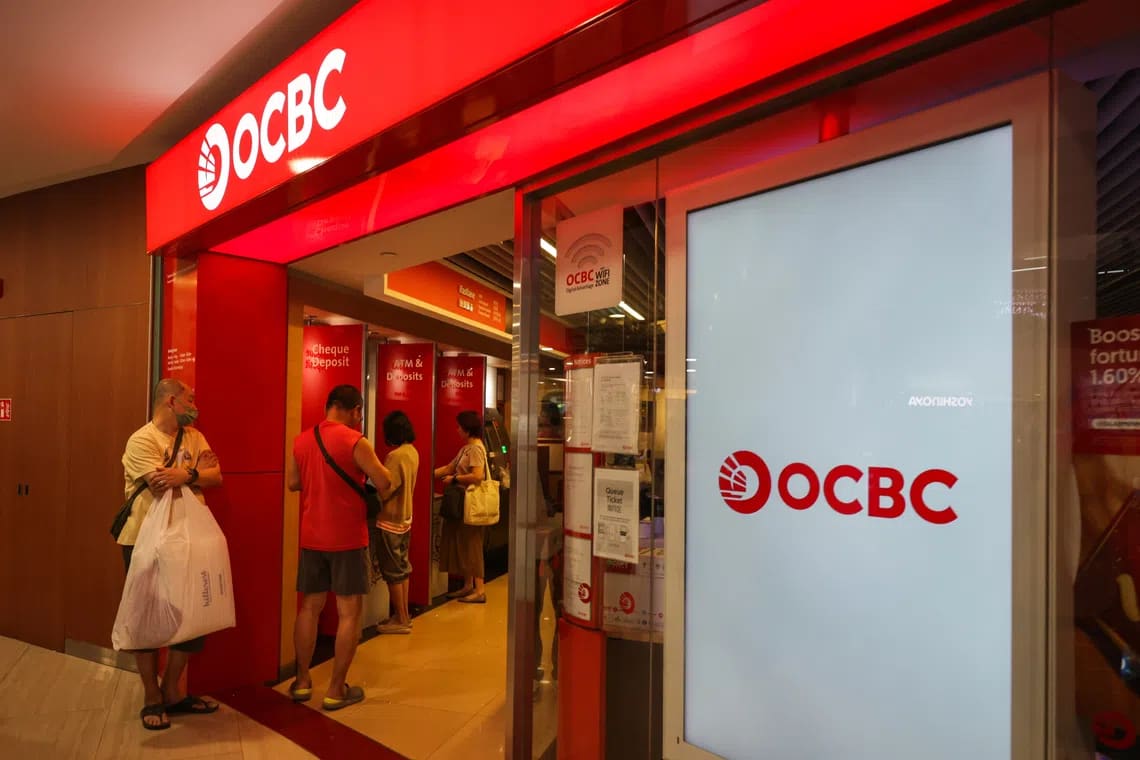
OCBC Lifts Dividend as Wealth Management Drives 22% Profit Jump
Singapore's second-largest lender posted $2.22 billion in second-quarter earnings, lifted by fee income and trading gains despite margin compression from lower rates
KEY TAKEAWAYS
- ·OCBC Bank posted $2.22 billion in second-quarter profit, a 22% year-on-year increase, and raised its interim dividend to 47 cents per share.
- ·Non-interest income surged 51% to $1.91 billion, led by wealth management fees up 28% and trading income up 85%, offsetting a 22-basis-point margin compression.
- ·The bank upgraded its 2026 loan growth target to high-single-digit or low-double-digit and plans to hire 600 relationship managers to expand wealth services.
Strong Quarter Despite Rate Headwinds
OCBC Bank reported earnings of $2.22 billion for the quarter ended June 30, up 22% from $1.82 billion in the same period last year, according to the bank. The result exceeded market expectations by roughly $310 million.
The Singapore lender declared an interim dividend of 47 cents per share for the first half, up from 41 cents a year earlier. The payout totals approximately $2.11 billion, representing about half of the group's first-half net profit of $4.19 billion.
Shares touched $30.11 in morning trading on August 7, marking the first time the stock crossed the $30 threshold.
Margin Squeeze, Fee Surge
Net interest income slipped 1% to $2.26 billion as borrowing costs declined across Asia. The bank's net interest margin compressed to 1.7%, down 22 basis points year-on-year, though a 12% expansion in average assets cushioned the decline.
Non-interest income surged 51% to $1.91 billion, driven by gains across fee-based businesses, trading desks, and insurance operations. Wealth management fees climbed 28%, while trading income jumped 85% and insurance income rose 68%.
Total allowances increased to $156 million from $114 million in the prior-year quarter, primarily reflecting higher provisions for impaired assets.
Upgraded Guidance
OCBC revised its full-year outlook, now targeting high-single-digit to low-double-digit loan growth, up from a previous mid-single-digit forecast. The bank also expects total income to grow, improving on earlier guidance for stable-to-growing revenue.
Management now anticipates a slight decline in net interest income, narrowing the expected drop from a previous range of slight-to-moderate. Credit costs are still forecast at 20 to 25 basis points.
Group chief executive Tan Teck Long noted that global conditions remain uncertain amid geopolitical tensions and elevated inflation risks, with near-term prospects hinging on the resolution of Asia's energy constraints tied to Middle East conflict. He highlighted continued strong growth in artificial intelligence and related technology sectors.
Wealth War Escalates
OCBC announced plans in July to deploy what it describes as Southeast Asia's first AI-native mobile banking application, featuring two virtual avatars designed to deliver round-the-clock personalized wealth insights to customers.
The bank intends to add 600 relationship managers to its consumer banking division over the next three years, underscoring its commitment to the wealth segment.
Singapore's three major banks are locked in aggressive competition for wealth assets. DBS, which reported a day earlier, posted $3.08 billion in second-quarter profit, a 9% increase driven by record wealth management income, and declared an 81-cent dividend per share. DBS has set a target of $1 trillion in wealth assets by 2030.
Regional Context
The results arrive as Singapore's banking sector navigates a shifting rate environment. Central banks across Asia have begun easing monetary policy following a prolonged tightening cycle, compressing the net interest margins that fueled record profits in recent years.
Lenders are pivoting toward fee-based revenue streams, particularly wealth management, to offset pressure on lending margins. The city-state's position as a wealth hub has intensified competition among domestic banks for high-net-worth clients and family office mandates.
OCBC emphasized its strong capital, funding, and liquidity positions, along with diversified income streams and disciplined risk management, as factors enabling the bank to navigate uncertainties and capture growth in emerging sectors while delivering sustainable long-term value.
RELATED STORIES
Singapore's Big Three Banks Post Solid First-Half Gains as Wealth Offsets Margin Pressure
Priyanka V. Rao · 3 min
Singapore Banks Split as DBS and OCBC Hit Record Highs While UOB Lags
Priyanka V. Rao · 3 min

UOB Raises Quarterly Profit 10% on Record Wealth Fees
Cheng Wei-Lun · 2 min
Singapore's Three Banks Show Uneven Momentum in Mid-Year Earnings
Priyanka V. Rao · 4 min
Spot something wrong? Email editor@briefasia.com. We log every correction publicly.