Finance · Deals
Sheng Siong Posts 11.7% Profit Growth as New Stores and Better Mix Lift First-Half Performance
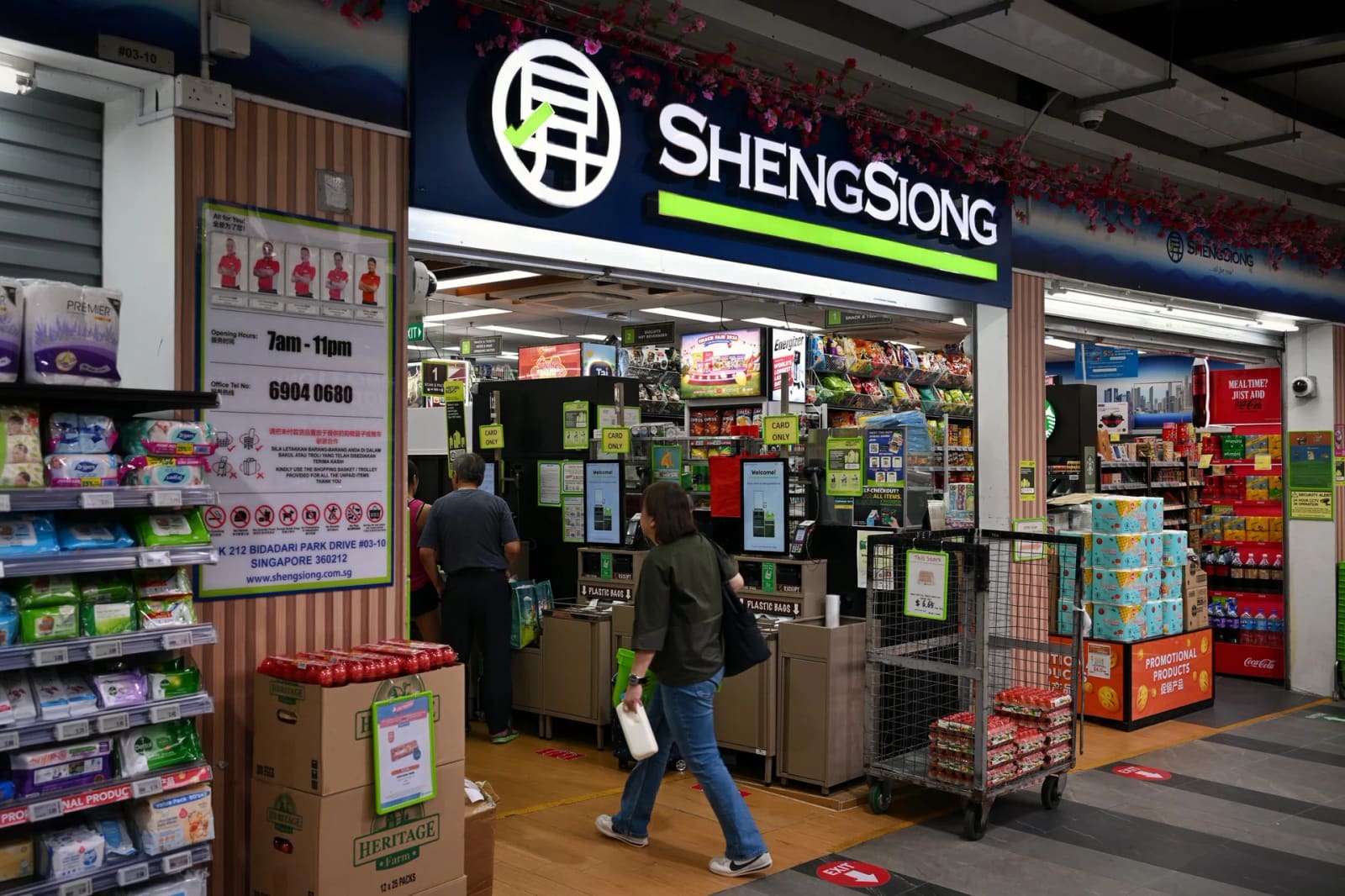
Singapore supermarket chain reports S$80.8 million net profit for H1 2026, driven by store expansion and improved gross margins amid competitive regional retail landscape
KEY TAKEAWAYS
- ·Sheng Siong reported net profit of S$80.8 million for H1 2026, an 11.7 per cent increase, driven by 16 new store openings and higher comparable-store sales.
- ·Gross margin widened to 31.8 per cent from 30.8 per cent a year earlier, reflecting improved sales mix and cost mitigation efforts; interim dividend rose 17.2 per cent to S$0.0375 per share.
- ·The company broke ground on a S$520 million Sungei Kadut distribution centre for completion in 2029, preparing for cross-border competition when the Johor Bahru-Singapore rail link opens in 2027.
Revenue Climbs on Store Expansion Push
Sheng Siong delivered net profit of S$80.8 million for the first half of its 2026 financial year, an 11.7 per cent increase from S$72.3 million in the same period a year earlier. Revenue rose 11.9 per cent to S$855.4 million from S$764.7 million, according to the company's announcement on 29 July.
The Singapore-based supermarket operator attributed the gains to 16 new store openings completed during FY2025 and the first half of FY2026, alongside higher sales at comparable locations. The expansion forms part of a broader footprint strategy targeting both densely populated housing estates and emerging residential clusters across the city-state.
Gross profit increased 15.6 per cent to S$272.4 million, with gross margin widening by one percentage point to 31.8 per cent from 30.8 per cent in H1 FY2025. Sheng Siong said the improvement reflects a deliberate shift in sales mix and measures to offset rising operational costs, including rent, utilities, and labour.
Dividend Increase Signals Confidence
The board declared an interim dividend of S$0.0375 per share for the period, up from S$0.032 per share in the prior corresponding half. The payout, scheduled for 28 August, represents a 17.2 per cent increase and underscores management's confidence in cash generation despite a capital-intensive expansion phase.
Sheng Siong shares closed at S$3.26 on 29 July, up S$0.01 or 0.3 per cent, before results were released.
Infrastructure Investment and Cross-Border Competition
On 13 July, Sheng Siong broke ground on a new distribution centre in Sungei Kadut, slated for completion in 2029. The facility is designed to support more than 120 supermarket stores, well above the chain's current network, and will incorporate automation to improve inventory turnover and reduce handling costs.
CEO Lim Hock Chee noted that the retail grocery sector remains highly competitive. He pointed to the Johor Bahru-Singapore Rapid Transit System Link, due to open in 2027, as a factor that may intensify cross-border shopping flows. The rail link is expected to cut travel time between Singapore's city centre and Johor Bahru to under an hour, potentially drawing Singaporean shoppers north in search of lower prices.
"We stand ready to adapt our pricing, promotions and product mix to remain competitive," Lim said in the results statement.
The Sungei Kadut distribution centre represents an investment of S$520 million, one of the largest single capital outlays in the company's history. Management expects the facility to deliver efficiency gains that partly offset margin pressure from regional competition and domestic cost inflation.
Three More Stores Slated for Q3
Sheng Siong plans to open three additional stores in the third quarter, continuing a pace that has seen the chain grow from fewer than 50 outlets a decade ago to a network approaching 80 locations today. The company has focused on heartland estates, often securing anchor tenancy in Housing & Development Board precincts where foot traffic is steady and demographics skew toward value-conscious families.
The chain's emphasis on fresh produce, house-brand staples, and competitive pricing has helped it maintain market share against both multinational hypermarket operators and neighbourhood provision shops. Management continues to invest in technology, including point-of-sale analytics and demand forecasting tools, to refine assortment planning and reduce waste.
Regional Dynamics and Margin Defence
Southeast Asian grocery retail is marked by thin margins, high inventory turnover, and sensitivity to commodity price swings. Sheng Siong's ability to widen gross margin by a full percentage point in a six-month period stands out, suggesting effective category management and supplier negotiations.
The planned rapid transit link to Johor Bahru introduces a new variable. Malaysian supermarkets and hypermarkets have long offered lower prices on many packaged goods, fresh meat, and household items, but friction costs such as immigration queues and petrol expenses have limited cross-border shopping. A fast, frequent rail service could tip the calculus for price-sensitive households, particularly those living in Singapore's northern suburbs.
Sheng Siong's response strategy appears to centre on agility in pricing and promotions, supported by the distribution infrastructure now under construction. The Sungei Kadut facility's scale suggests the company is preparing for a larger store network and tighter logistics coordination, both of which will be critical if competitive intensity rises.
The interim dividend increase and ongoing expansion signal that management views current profitability as sustainable, even as it navigates a shifting competitive map and prepares for cross-border retail dynamics that few Singapore grocers have faced at scale.
RELATED STORIES
Singapore Brokerages Raise STI Targets on Earnings Strength
Jun-ho Seo · 3 min

Addvalue Technologies Lands $5 Million in Space and Radio Contracts
Tran Quoc Bao · 3 min
Singapore Tightens Stablecoin Rules to Separate Regulated Tokens From Crypto Claims
Priyanka V. Rao · 2 min

Shein Drops 4% in Hong Kong Debut as Tariff Pressure Weighs on Valuation
Priyanka V. Rao · 4 min
Spot something wrong? Email editor@briefasia.com. We log every correction publicly.