Finance · Markets
Seoul Stocks Jump 17% as Chip Rally Pushes Kospi Above 6,500
Semiconductor shares drove South Korea's benchmark index nearly 1,000 points higher in morning trading, triggering circuit breakers
KEY TAKEAWAYS
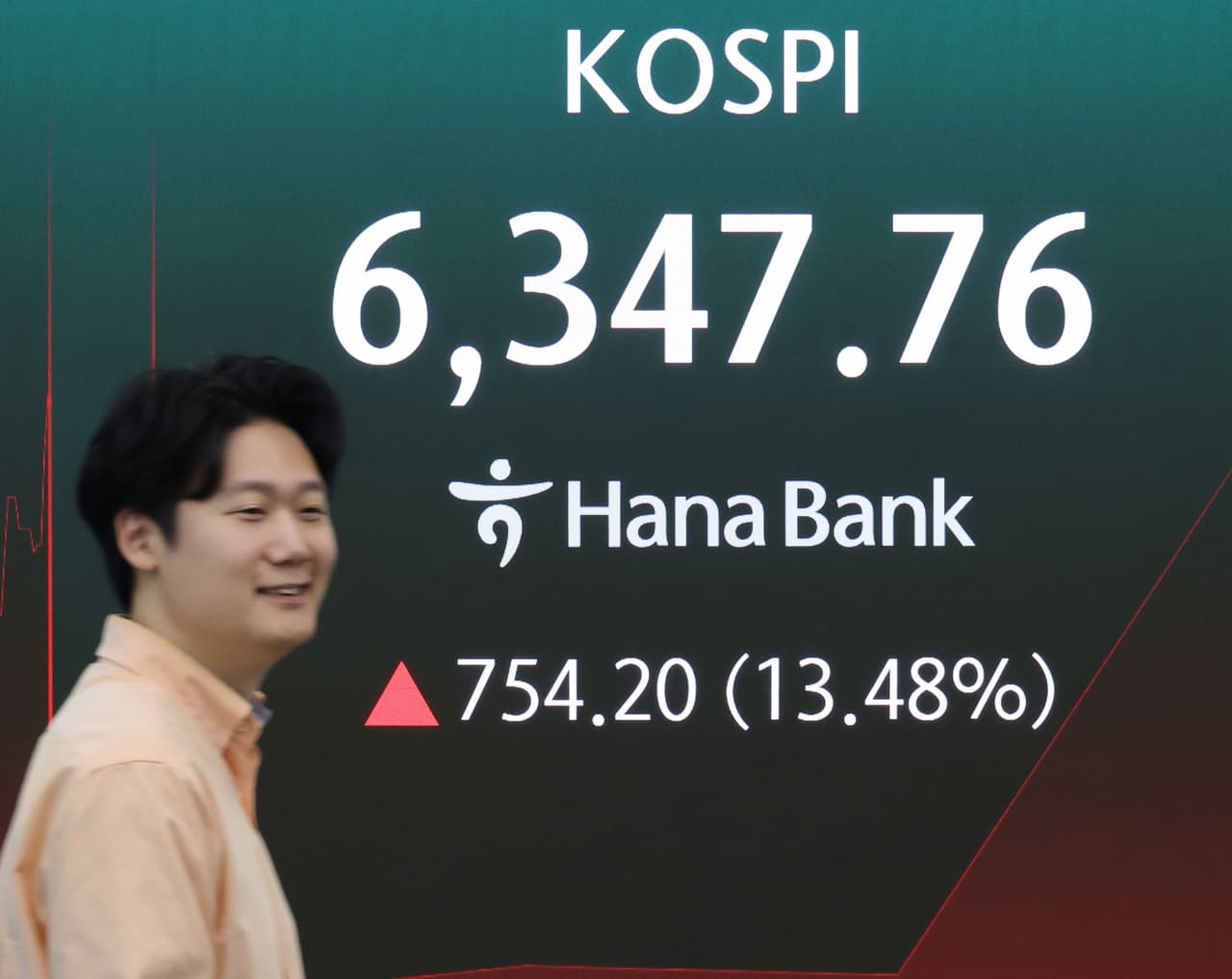
- ·South Korea's Kospi index surged 16.8 percent to 6,530 points in Friday morning trading, driven by sharp gains in semiconductor stocks.
- ·The rally triggered a buy-side sidecar at 9:06 a.m., suspending program trading for five minutes as the index climbed nearly 1,000 points.
- ·The concentration of gains in chip shares underscores the sector's dominance in Korean equity markets and its role as a regional bellwether.
Semiconductor Strength Drives Sharp Gains
South Korea's benchmark stock index climbed sharply in Friday morning trading, with the Kospi advancing 16.8 percent to reach 6,530 points by mid-morning. The rally, concentrated in semiconductor shares, pushed the index nearly 1,000 points higher and back above the psychologically significant 6,500 threshold.
The benchmark opened modestly higher at 5,657.79, gaining 1.15 percent in early trading. Within the first hour, however, buying accelerated rapidly across chip stocks, sending the index to an intraday peak of 6,548.64 - a gain of 17 percent from the previous close.
The velocity of the advance triggered Seoul's market stabilization mechanisms. At 9:06 a.m. local time, a buy-side sidecar was activated, suspending program trading for five minutes to allow the market to absorb the sharp price movements. The circuit breaker represents one of Korea Exchange's tools to prevent excessive volatility during periods of rapid directional moves.
Chip Sector Leads Regional Markets
The concentration of gains in semiconductor stocks underscores the sector's continued dominance in South Korean equity markets. Chip makers and equipment suppliers have represented the largest weight in the Kospi for years, and Friday's session demonstrated how movements in this narrow group can drive outsized index performance.
Regional semiconductor markets have experienced heightened volatility in recent months, driven by shifts in global demand patterns, inventory cycles, and capital expenditure announcements from major technology firms. South Korea's position as home to two of the world's largest memory chip producers means the Kospi often acts as a bellwether for broader sentiment toward the semiconductor cycle.
The morning's gains also reflect the broader pattern of concentrated leadership in Asian equity markets, where a handful of large-cap technology and chip names can account for the majority of index movements. For investors tracking regional capital flows, the Kospi's performance often signals shifting sentiment toward cyclical technology exposure.
Market Structure in Focus
The activation of trading halts during Friday's session highlights the role of circuit breakers in managing volatility. South Korea's sidecar system, which temporarily suspends program trading when the index moves beyond predetermined thresholds within short timeframes, aims to prevent cascading algorithmic trades from exacerbating price swings.
These mechanisms have become increasingly important as electronic and algorithmic trading represent a growing share of daily volume on the Korea Exchange. The five-minute pause allows market participants to reassess positions and can help prevent flash crashes or melt-ups driven purely by momentum-following algorithms.
For institutional investors, particularly those managing Asia-Pacific portfolios, the Kospi's swing represents a meaningful shift in regional equity exposure. A 17 percent single-session move in a major benchmark is rare outside of crisis periods or major policy interventions, suggesting either a significant repricing of chip sector fundamentals or a technical squeeze driving prices higher.
The sustainability of Friday's gains will depend on whether the rally reflects genuine shifts in earnings expectations for Korean chip makers or represents a short-term technical rebound. Observers will watch whether the move attracts sustained inflows from global investors or proves to be a localized momentum event concentrated among domestic traders.
RELATED STORIES
Seoul Stocks Drop on Mideast Tensions and Oil Price Surge
Tran Quoc Bao · 3 min
Samsung Electronics Drops 8% as Market Questions Buyback Strategy
Cheng Wei-Lun · 2 min
South Korea Extends Trading Hours to Attract Foreign Capital
Anand Sundaram · 2 min
Index Funds Face Hidden Concentration Risk From AI Boom
Cheng Wei-Lun · 3 min
Spot something wrong? Email editor@briefasia.com. We log every correction publicly.