Finance · Markets
Index Funds Face Hidden Concentration Risk From AI Boom
Market enthusiasm for artificial intelligence has pushed concentration levels in major indices to record highs, exposing passive investors to unforeseen volatility.
KEY TAKEAWAYS
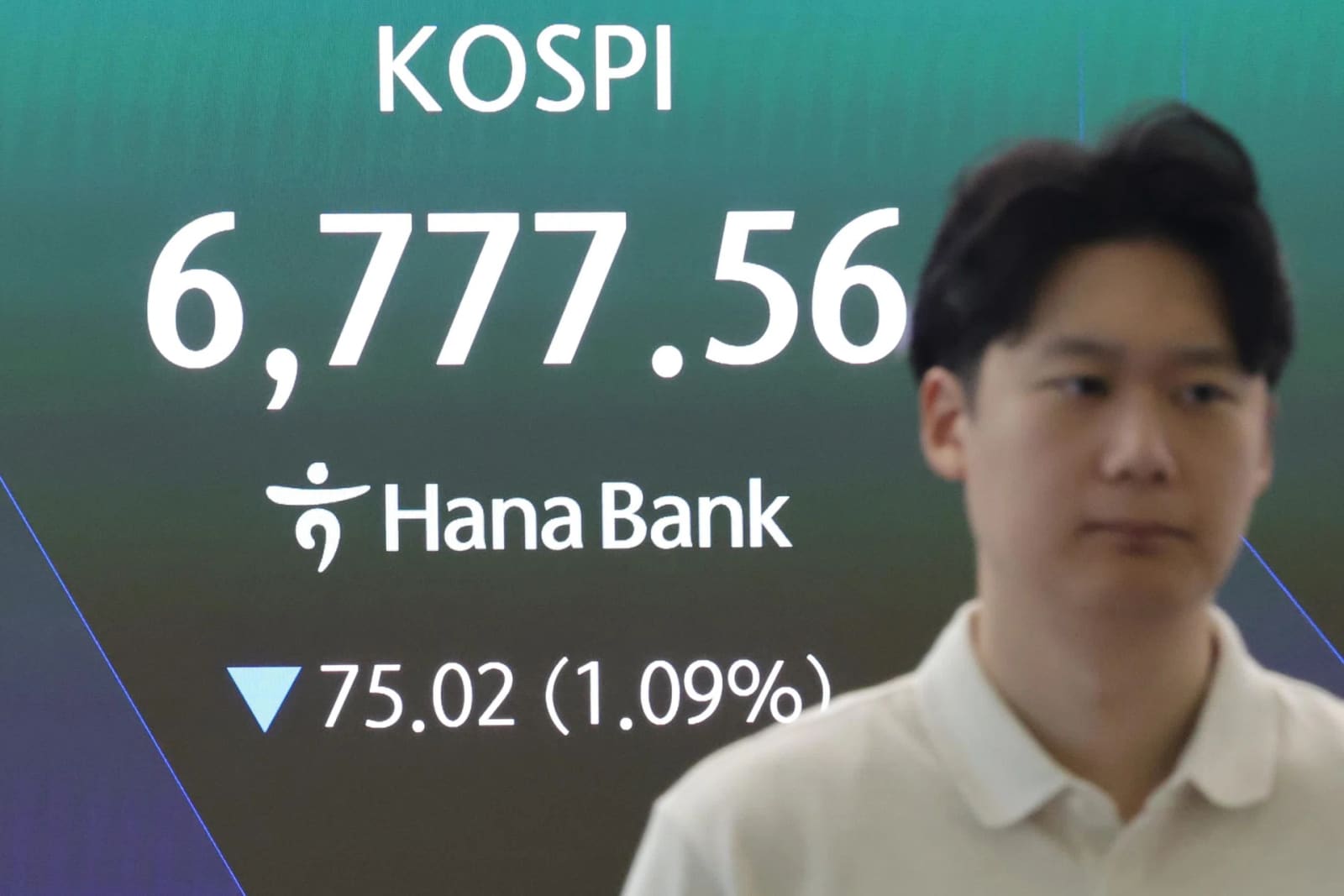
- ·Samsung Electronics and SK Hynix now account for over 50 percent of South Korea's Kospi index due to AI-driven market enthusiasm.
- ·Vanguard's first index fund grew from US$11 million at launch in 1976 to US$1.7 trillion today, driving passive investing dominance.
- ·Market-cap weighting means index funds automatically concentrate in surging stocks, exposing passive investors to reversal risk without active decision-making.
The Passive Revolution's Unintended Consequence
Five decades after Vanguard launched the first index-tracking fund to widespread skepticism, passive investing has become the dominant force in global markets. What began as an US$11 million experiment tracking the S&P 500 in 1976 has grown into a US$1.7 trillion behemoth, part of Vanguard's US$12 trillion empire that trails only BlackRock in global asset management.
But the triumph of indexing has created a new problem: investors who chose passive funds to avoid single-stock risk are now inadvertently concentrating their portfolios in ways that would have alarmed the strategy's pioneers.
When Diversification Becomes Concentration
The mathematics of market-cap weighted indices means that as certain stocks surge, they automatically consume a larger share of any fund tracking that benchmark. The artificial intelligence boom has accelerated this dynamic to historic levels.
In South Korea, Samsung Electronics and SK Hynix together account for more than 50 percent of the Kospi index, according to current market data. An investor who bought a Kospi tracker believing they were getting broad exposure to Korean industry is instead making a leveraged bet on memory chips and semiconductor cycles.
The pattern repeats across Asia. Technology hardware manufacturers, cloud infrastructure providers, and AI chipmakers have seen valuations multiply over the past two years, automatically increasing their weight in the MSCI Asia indices, the Hang Seng Tech Index, and Taiwan's benchmark.
The Irony of Passive Risk
Index funds were designed to eliminate the need for stock-picking and reduce concentration risk through broad market exposure. The First Index Investment Trust, initially derided as a path to mediocrity when Vanguard founder Jack Bogle introduced it, promised something revolutionary: market returns without manager risk, at minimal cost.
That promise held as long as market leadership rotated and no single sector or cluster of stocks dominated. But AI enthusiasm has upended that equilibrium.
When a handful of stocks drive index performance, passive investors face a paradox. They own the winners by default, benefiting from the rally. But they also carry outsize exposure to a reversal, with no mechanism to reduce positions as valuations stretch or sentiment shifts.
Asia's Chipmaker Dominance
The concentration problem is particularly acute in markets where national champions dominate. Beyond South Korea's chip duopoly, Taiwan's benchmark is heavily weighted toward TSMC, which manufactures the advanced processors powering the AI revolution.
Investors in Singapore, Hong Kong, and Tokyo face similar dynamics as a small number of technology and financial giants command the majority of index weight. The phenomenon mirrors patterns in the United States, where the so-called Magnificent Seven tech stocks have driven the bulk of S&P 500 returns in recent years.
For institutional and retail investors across Asia who have poured capital into low-cost index trackers, the risk profile of their portfolios has shifted materially without any active decision on their part.
What Passive Investors Inherit
Market concentration is not inherently dangerous. Dominant companies often earn their position through superior execution, innovation, or structural advantages. Samsung and SK Hynix are global leaders in memory technology; their index weight reflects genuine economic scale.
The risk lies in the mismatch between investor expectations and portfolio reality. Many who choose index funds do so precisely to avoid the concentrated bets that active managers make. Yet current market structure has delivered concentration anyway, driven by momentum and sector enthusiasm rather than deliberate allocation.
As indexing continues to grow, the feedback loop intensifies. Inflows into passive funds automatically flow to the largest stocks, supporting their valuations and further increasing their index weight. The cycle reverses just as mechanically when sentiment turns.
For investors who believed they were buying diversification, the current environment offers a reminder that index composition is never static and that passive strategies carry their own distinct risks, particularly when markets move in lockstep around a single theme.
RELATED STORIES

Samsung Electronics Drops 8% as Market Questions Buyback Strategy
Cheng Wei-Lun · 2 min
Samsung and SK Hynix Chart Opposite Paths on Record Shareholder Returns
Cheng Wei-Lun · 4 min
Seoul Markets Tumble as Tech Selloff Ripples Across Asia
Cheng Wei-Lun · 3 min
Korean Stocks Retreat as Nvidia Earnings Loom
Cheng Wei-Lun · 2 min
Spot something wrong? Email editor@briefasia.com. We log every correction publicly.