Asia · Business
Philippine Nickel Miners Push for Unified Policy Framework as Critical Minerals Race Intensifies
Industry leaders call for closer government coordination to attract investment under new executive order prioritizing strategic mineral assets
KEY TAKEAWAYS
- ·Philippine nickel producers are calling for closer government coordination after Executive Order 122 designated critical mineral projects as national priorities and established a unified policy framework.
- ·The executive order tasks agencies with streamlining permits, encouraging domestic processing, and creating a virtual one-stop shop to accelerate approvals and attract investment.
- ·Finance Secretary Frederick Go said the government will align policy with investment promotion to build processing and manufacturing industries around mineral resources, as global competition for battery metals intensifies.
A Strategic Pivot on National Mineral Assets
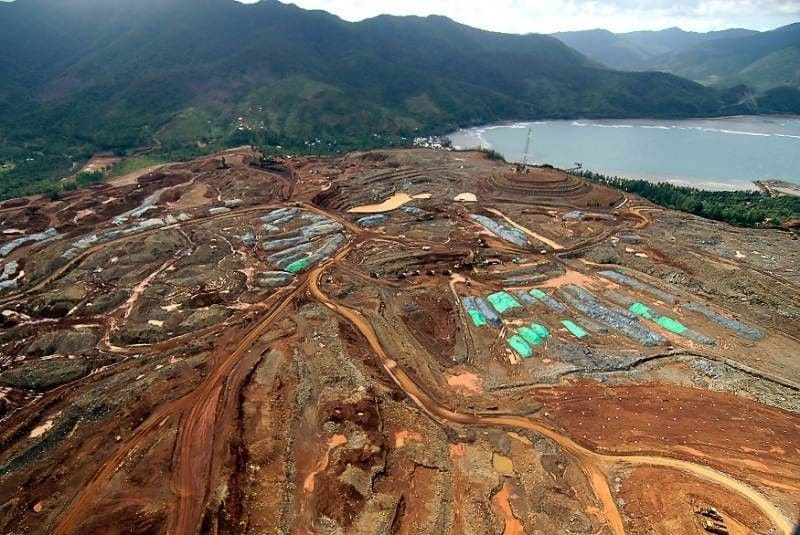
Philippine nickel producers are pressing Manila for tighter coordination as the archipelago nation positions itself in the global race for critical minerals. The call comes after President Ferdinand Marcos Jr. signed Executive Order 122, establishing a unified policy framework to develop the country's reserves of materials essential for green energy and digital infrastructure.
The Philippine Nickel Industry Association emphasized that mining development is a shared responsibility. Government must set policy direction, standards, and safeguards while creating an enabling environment, the group said, while industry brings capital, technology, and operational expertise. The statement signals the sector's readiness to scale up but underscores the need for predictable regulatory processes.
The executive order designates all critical mineral projects as national priority initiatives, a designation the industry association described as a fundamental shift in how Manila views its mineral endowment. These resources are now framed as strategic national assets capable of supporting industrialization, energy security, and the clean energy transition, rather than simply commodities for extraction.
Streamlining Investment Barriers
Executive Order 122 tasks government agencies with streamlining regulatory requirements for new mining ventures, encouraging domestic downstream processing, and reorganizing the Mining Industry Coordinating Council. The order also establishes a virtual one-stop shop and enables simultaneous processing of permits, measures the industry association believes could accelerate project approvals.
Nickel miners noted that sustained implementation will be critical. The next phase, they said, is translating policy intent into faster, clearer, and more predictable ground-level processes. Policy frameworks alone do not move investment decisions; investors need visibility into timelines, compliance costs, and operational certainty.
Finance Secretary Frederick Go, who co-chairs the Mining Industry Coordinating Council, said the Department of Finance will work with partner agencies to align policy with investment promotion. The goal is to build industries around mineral resources through processing, manufacturing, and value-adding activities that create jobs and generate greater economic returns, Go said.
Asia's Critical Minerals Competition
The Philippines holds the world's fifth-largest nickel reserves, a metal central to lithium-ion batteries for electric vehicles and energy storage systems. Regional peers Indonesia and Australia dominate nickel supply, while China controls much of the midstream refining and processing capacity. Manila's push to move up the value chain reflects a broader Southeast Asian effort to capture more margin in the battery metals supply chain.
Countries across Asia are racing to secure positions in critical minerals. Indonesia banned nickel ore exports in 2020 to force domestic smelting investment. Vietnam is developing rare earth processing capabilities. India is negotiating lithium supply agreements with Australia and Chile. The executive order positions the Philippines to compete for capital and technology partnerships in a crowded field.
The industry association acknowledged that global competition for critical minerals, investment, and supply chain integration is intensifying. Manila's signal that it intends not only to participate but to compete marks a departure from decades of policy ambivalence toward large-scale mining.
What Comes Next
The policy framework lays groundwork, but execution will determine outcomes. Investor confidence hinges on the speed and consistency of permit approvals, clarity on environmental compliance, and the government's ability to coordinate across agencies that have historically operated in silos.
The reorganization of the Mining Industry Coordinating Council is intended to address fragmentation. Whether the council can deliver integrated policy and resolve interagency friction remains to be seen. The virtual one-stop shop, if functional, could reduce the transaction costs that have deterred exploration and development capital.
For nickel miners, the stakes are immediate. Global battery demand is projected to triple by 2030, and supply chains are being redrawn around geopolitical risk and carbon intensity. The Philippines has ore; the question is whether it can build the infrastructure, processing capacity, and regulatory predictability to convert reserves into industrial advantage.
Manila's declaration that critical minerals are national assets signals intent. The industry is now watching for the implementing rules, the budget allocations, and the interagency coordination that will determine whether intent becomes reality.
RELATED STORIES
Philippine Economic Zones Pull Record ₱216 Billion in Eight Months
Priyanka V. Rao · 3 min
Manila Motorists Face Another Sharp Fuel Hike as Regional Oil Volatility Persists
Priyanka V. Rao · 4 min
Philippine Government Subsidies to State Firms Jump 118% in First Half of 2026
Mariel D. Santos · 3 min
Philippines Faces Prolonged Budget Deficit as Growth Slowdown Shifts Fiscal Timeline
Priyanka V. Rao · 3 min
Spot something wrong? Email editor@briefasia.com. We log every correction publicly.