Finance · Markets
South Korea Extends Trading Hours to Attract Foreign Capital
Seoul's exchange will add 90 minutes to its daily session from November, aligning more closely with Tokyo and Hong Kong in a bid to boost liquidity and overseas participation.
KEY TAKEAWAYS
- ·South Korea will extend stock market trading by 90 minutes to 4:30 pm starting November, targeting better overlap with European hours and higher foreign participation.
- ·The move addresses the Korea discount, where equities trade at lower valuations than regional peers, partly due to limited foreign ownership around 30 per cent.
- ·Brokerages face operational costs for the extension, and success hinges on whether the extra session delivers measurably higher turnover and tighter spreads.
A Calculated Shift
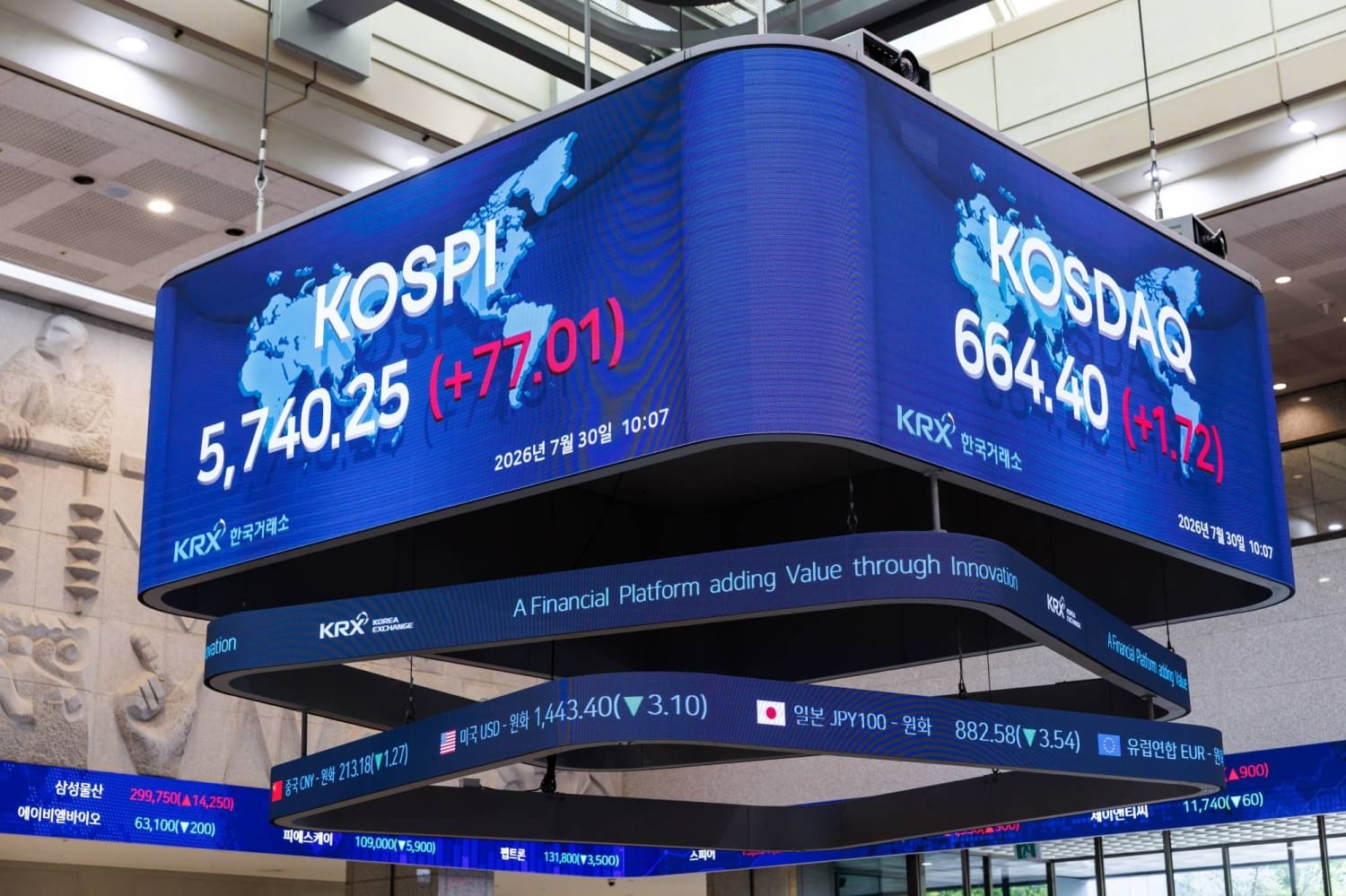
South Korea will extend its stock market trading hours by 90 minutes starting in November, bringing the closing bell to 4:30 pm local time. The Korea Exchange announced the change as part of a broader effort to attract foreign capital and reduce the discount at which Korean equities trade compared to regional peers.
The extended session applies to both the Kospi and Kosdaq markets. Currently, trading ends at 3:30 pm, leaving a narrow overlap with other major Asian exchanges and almost no window for European investors during their morning hours. The new schedule aims to improve liquidity during the final stretch of the trading day, when institutional orders often concentrate.
Liquidity and the Korea Discount
Korean equities have long traded at a valuation discount relative to markets such as Taiwan and Japan, a phenomenon often attributed to governance concerns, geopolitical risk, and limited foreign participation. Foreign ownership of Korean stocks has hovered around 30 per cent in recent years, below levels seen in Hong Kong or Singapore.
Extending trading hours addresses one friction point: time zone misalignment. Fund managers in London or Frankfurt will gain an additional 90 minutes to react to news or adjust positions before Korean markets close. The Korea Exchange estimates that the overlap with European trading hours will increase by roughly 50 per cent.
The move also brings Seoul closer in line with Tokyo, which trades until 3:30 pm, and Hong Kong, which closes at 4:00 pm. Shenzhen and Shanghai run until 3:00 pm. The alignment matters for index providers and asset allocators who compare execution quality across the region.
Infrastructure and Costs
Brokerage firms and institutional investors have raised concerns about the operational burden. Extending hours requires staffing adjustments, system upgrades, and coordination with clearing and settlement infrastructure. Smaller brokerages, in particular, face higher marginal costs for the additional 90 minutes.
The Korea Exchange has offered a six-month lead time to allow participants to prepare. It will also monitor trading volume during the extended period to assess whether the change delivers the intended liquidity boost or simply spreads existing volume across more hours.
Retail participation, a significant force in Korean markets, may not shift materially. Most individual investors trade during lunch breaks or after standard working hours, and the extension pushes the close further into the evening. Institutional flow, rather than retail, is the primary target.
Regional Context
South Korea is not alone in re-examining market structure. Taiwan has discussed extending its hours, and Japan has explored pre-market sessions to better capture overnight moves in US equities. The competitive pressure is real: capital is mobile, and exchanges compete not only on fundamentals but on accessibility.
The test for Seoul is whether longer hours translate into sustained foreign inflows. If the extension results in measurably higher turnover and tighter spreads during the final 90 minutes, other regional exchanges may follow. If volume remains flat, the case for further structural reforms weakens.
The Korea Exchange has set November as the implementation date. Market participants will be watching the first few weeks closely, measuring not just volume but the quality of price discovery in the extended session.
RELATED STORIES

MBK Partners Chair Questioned Over Homeplus Debt Issuance Ahead of Collapse
Anand Sundaram · 3 min
Seoul Stocks Drop on Mideast Tensions and Oil Price Surge
Tran Quoc Bao · 3 min
Samsung Biologics Plans $2.2 Billion Rights Offering to Fund Peptide Acquisition
Jun-ho Seo · 3 min
Samsung Electronics Drops 8% as Market Questions Buyback Strategy
Cheng Wei-Lun · 2 min
Spot something wrong? Email editor@briefasia.com. We log every correction publicly.