Finance · Markets
Seoul's Market Tumbles as Chip Selloff Ripples Through Asia
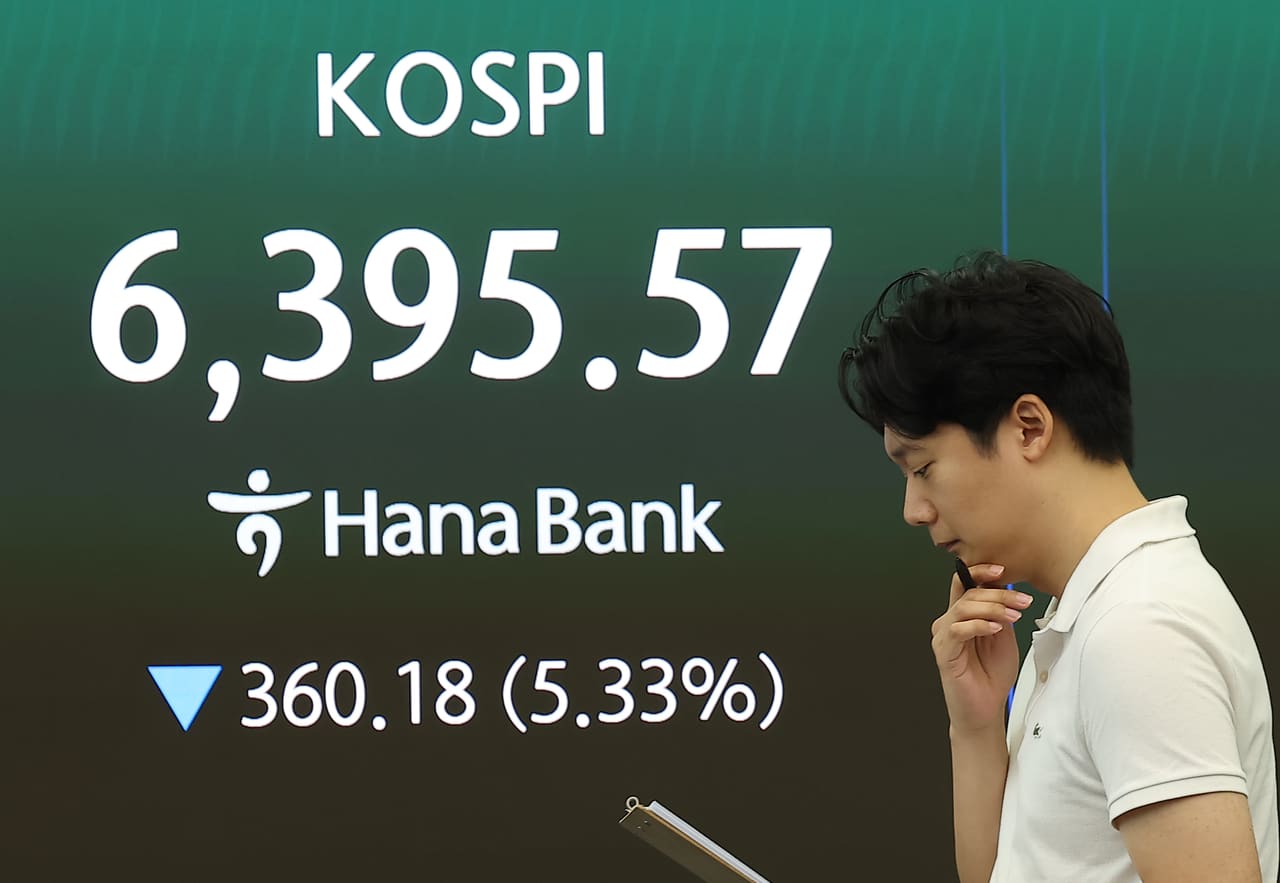
South Korea's benchmark index triggered circuit breakers after plunging more than 6 percent in early trading, extending Wall Street's semiconductor rout across the region.
KEY TAKEAWAYS
- ·South Korea's KOSPI index dropped 432.95 points to 6,322.80 by 9:15 a.m., triggering a twenty-minute sell-side trading halt after breaching the 5 percent threshold.
- ·Technology stocks drove the decline following heavy semiconductor losses on Wall Street, with memory chip manufacturers facing renewed concerns about oversupply and weakening demand.
- ·The selloff occurred despite easing Middle East tensions, signaling that sector fundamentals now outweigh broader geopolitical tailwinds in shaping Asian equity sentiment.
Circuit Breakers Activated
Trading in Seoul turned chaotic Tuesday morning when the Korea Composite Stock Price Index dropped 432.95 points to 6,322.80 within fifteen minutes of the opening bell. The 6.41 percent decline prompted the Korea Exchange to implement a sell-side sidecar mechanism at 9:06 a.m. local time, pausing bearish trades for twenty minutes after the threshold breach.
The index had already opened 5.26 percent below Monday's close, signaling immediate distress among investors. By the time circuit breakers kicked in, technology stocks had erased billions of dollars in market capitalization, with semiconductor manufacturers bearing the brunt of the liquidation.
The sidecar tool represents one of several market stabilization measures Korean regulators deploy during periods of extreme volatility. It temporarily blocks sell orders that would push the index lower, giving traders time to reassess positions and preventing panic-driven cascades. The last time authorities invoked this mechanism was during the pandemic-era volatility of early 2020.
Semiconductor Contagion
Seoul's rout follows a punishing session on Wall Street, where chipmakers absorbed heavy losses Monday evening. The selling pressure reflects mounting concerns about oversupply in certain semiconductor segments, inventory corrections among major buyers, and recalibrated expectations for artificial intelligence infrastructure spending.
South Korea's equity market holds outsized exposure to the global chip cycle. Samsung Electronics and SK Hynix together account for roughly one-fifth of the KOSPI's total market value, making the index especially vulnerable when semiconductor sentiment sours. Both companies manufacture memory chips that feed into data centers, smartphones, and consumer electronics, sectors now facing demand headwinds.
The timing amplifies the pain. Memory chip prices had begun stabilizing after a prolonged downturn, and manufacturers had started reporting improved margins in recent quarters. Tuesday's selloff suggests investors are repricing those recovery narratives, potentially anticipating a longer path back to normalized profitability.
Regional Spillover
The Seoul decline mirrors a broader pattern emerging across Asian technology hubs. Investors in Taiwan, Singapore, and Tokyo are also reassessing valuations for chip-related equities, though the magnitude of Seoul's drop stands out. South Korea's concentrated exposure to memory and foundry operations makes its market a bellwether for semiconductor sentiment in the region.
Korea's stock exchange architecture differs from many Western counterparts in its use of real-time circuit breakers. The sidecar mechanism activates automatically when the index moves beyond predetermined thresholds during intraday trading, a design intended to smooth volatility spikes. Critics argue these tools can delay necessary price discovery; proponents counter that they prevent feedback loops where algorithmic selling triggers more algorithmic selling.
The timing of the selloff, just after the opening bell, suggests overnight positioning adjustments by institutional investors responding to the Wall Street session. Korean retail investors, who typically enter the market after 9 a.m., faced a sharply lower index before many could react, raising questions about fairness in access to price information.
Geopolitical Backdrop
Tuesday's market action unfolded against a backdrop of easing tensions in the Middle East, a development that would ordinarily support risk appetite. Oil prices have retreated from recent highs, and shipping routes through critical chokepoints have seen reduced insurance premiums. Yet equity investors in Seoul ignored these tailwinds, focusing instead on sector-specific fundamentals in technology.
The divergence underscores a shift in how Asian markets are pricing risk. Geopolitical stability, while welcome, no longer automatically translates into bullish sentiment when corporate earnings outlooks dim. For South Korea, whose economy depends heavily on export-driven technology manufacturing, the health of global demand for semiconductors outweighs broader geopolitical calm.
Currency markets offered a mixed picture. The Korean won weakened modestly against the dollar in early trading, reflecting capital outflows from equities, but the move remained orderly. Central bank officials have not commented on the stock market turbulence, and no emergency liquidity measures have been announced.
What Comes Next
Market participants will watch whether the KOSPI can stabilize above the 6,300 level, a psychological threshold that held during previous corrections. A sustained break below that mark could trigger additional stop-loss orders and force leveraged investors to unwind positions, deepening the selloff.
Semiconductor analysts are scrutinizing order books from major customers, particularly hyperscale cloud providers in the United States and China. Any signs of deferred capital expenditure or reduced chip purchases would validate the bearish sentiment driving Tuesday's decline. Conversely, reassurances from supply chain partners could halt the rout.
South Korea's financial regulators face a delicate balance. Intervening too aggressively risks moral hazard and distorts price signals; standing aside invites accusations of negligence if losses mount. The sidecar activation bought time Tuesday morning, but it did not address the underlying concerns about chip demand that triggered the selloff in the first place.
For now, Seoul's market remains hostage to Wall Street's semiconductor narrative. Until American investors regain confidence in chip valuations, Korean equities are likely to trade defensively, with technology stocks under pressure and investors rotating toward less cyclical sectors. The next few sessions will reveal whether Tuesday's plunge marks a temporary correction or the start of a deeper revaluation.
RELATED STORIES
Seoul Stocks Drop on Mideast Tensions and Oil Price Surge
Tran Quoc Bao · 3 min
Samsung Electronics Drops 8% as Market Questions Buyback Strategy
Cheng Wei-Lun · 2 min
Seoul Markets Tumble as Tech Selloff Ripples Across Asia
Cheng Wei-Lun · 3 min
Index Funds Face Hidden Concentration Risk From AI Boom
Cheng Wei-Lun · 3 min
Spot something wrong? Email editor@briefasia.com. We log every correction publicly.