Technology · AI
SanDisk Posts Record Quarter as Data Center Revenue Surges on AI Storage Demand
The NAND flash maker secured multi-year customer commitments worth tens of billions of dollars as AI workloads drive unprecedented demand for enterprise storage
KEY TAKEAWAYS
- ·SanDisk reported record fiscal Q4 and full-year 2026 results with data center operations now the primary revenue driver, fueled by AI storage demand.
- ·The company secured multi-year customer contracts valued at tens of billions of dollars to hedge against historical NAND price volatility.
- ·Industrywide NAND supply tightness has lifted contract prices 20 to 30 percent above year-ago levels as manufacturers maintain capacity discipline.
Data Center Segment Takes the Lead
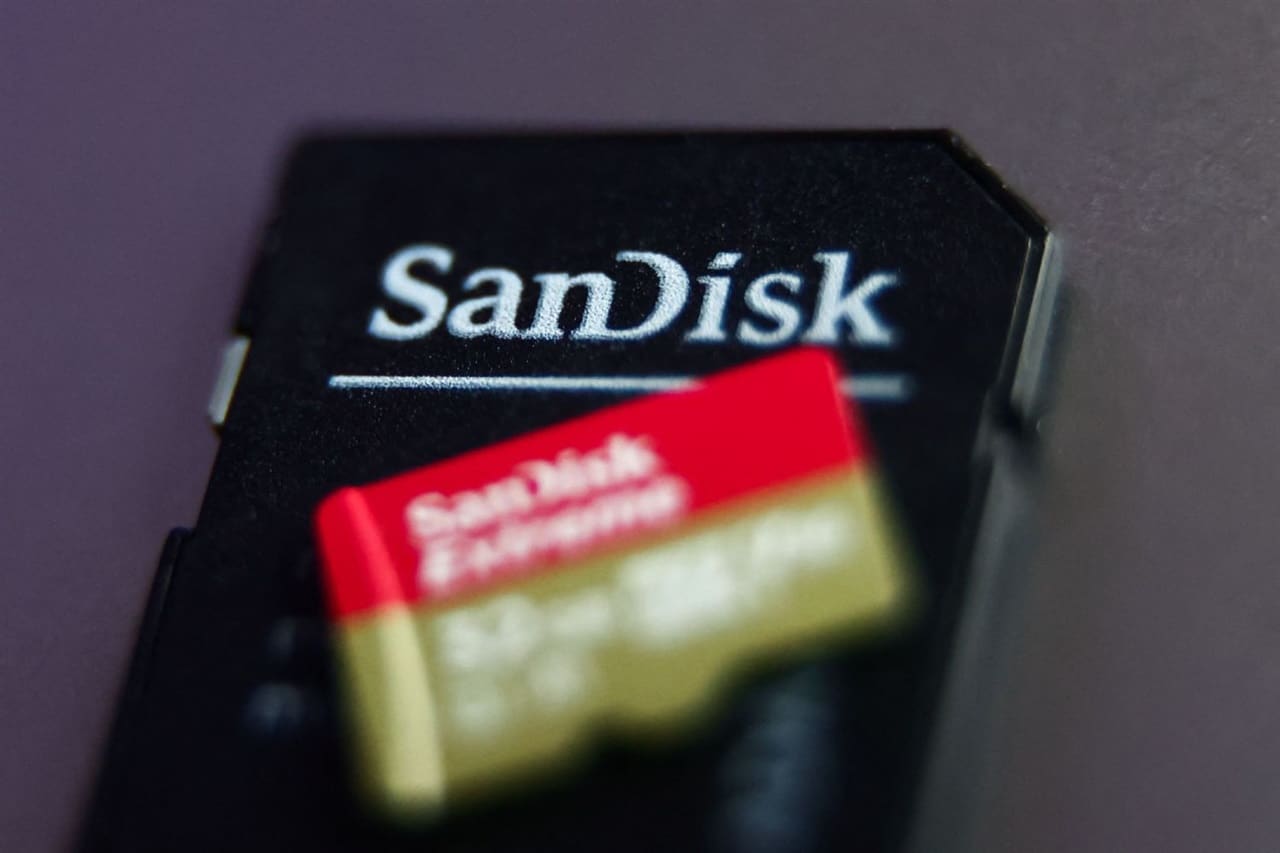
SanDisk announced fiscal fourth-quarter and full-year 2026 earnings on August 5, marking a decisive shift in its revenue composition. The company's data center operations have overtaken traditional consumer storage as the dominant business line, driven by enterprise customers building out infrastructure to support artificial intelligence applications.
The results signal a structural transformation in the NAND flash memory industry. What was once a business built on USB drives, memory cards, and portable SSDs for consumers has become increasingly dependent on hyperscale cloud operators and enterprises deploying high-capacity storage arrays for machine learning training and inference workloads.
Multi-Year Contracts Shield Against Price Volatility
Management disclosed that the company has locked in customer commitments spanning multiple years, with contract values reaching tens of billions of dollars. These agreements represent a strategic departure from the spot-market pricing that has historically defined the memory chip sector.
NAND flash has long been among the most cyclical semiconductor categories, with prices swinging by 30 to 50 percent within a single year depending on supply-demand balance. By securing long-term contracts, SanDisk aims to insulate revenue from the boom-bust cycles that have plagued memory manufacturers for decades.
The move mirrors strategies employed by DRAM producers in recent quarters, where leading suppliers have negotiated fixed-price or formula-based contracts with major cloud providers to stabilize cash flow and justify capital expenditure on new fabrication capacity.
AI Workloads Reshape NAND Specifications
The surge in data center demand is not merely a volume story. AI training clusters require storage systems with different performance profiles than traditional enterprise workloads. Model checkpointing, dataset versioning, and high-speed inference serving place a premium on sequential write throughput and sustained read bandwidth, rather than the random IOPS that dominated earlier SSD design priorities.
SanDisk and its competitors have responded by developing NAND products optimized for these use cases, including higher-density 3D NAND architectures that sacrifice some endurance in favor of capacity per square millimeter. The economics favor this trade-off in AI environments, where datasets measured in petabytes must be stored cost-effectively even as access patterns evolve.
Supply Tightness Persists Across the Industry
The company's record quarter coincides with broader tightness in NAND supply chains. Industrywide bit shipments have grown more slowly than anticipated through the first half of 2026, as manufacturers exercise discipline on capacity additions following the oversupply conditions that depressed prices in 2024 and early 2025.
This disciplined approach has allowed pricing to recover. Contract negotiations for the second half of 2026 have settled at levels 20 to 30 percent above year-ago benchmarks, according to industry analysts tracking memory spot markets. The tighter supply-demand balance has been a tailwind for all major NAND producers, though SanDisk's early pivot toward data center customers has positioned it to capture a disproportionate share of the margin expansion.
Asia Production Footprint Remains Central
SanDisk's manufacturing base spans facilities in Japan and partnerships with foundries across East Asia. The company operates joint ventures that give it access to leading-edge 3D NAND process nodes, essential for maintaining cost competitiveness as the industry migrates toward 200-layer and eventually 300-layer architectures.
These production relationships place SanDisk at the center of regional semiconductor supply chains, where proximity to hyperscale data center customers in Singapore, Tokyo, Seoul, and emerging markets like Jakarta and Mumbai reduces logistics lead times and enables rapid response to shifting demand patterns.
The geographic concentration also exposes the company to regional risks, including potential export controls on advanced manufacturing equipment and geopolitical tensions that could disrupt cross-border supply lines. Management has not disclosed plans to diversify production outside Asia, suggesting confidence that current arrangements will remain viable through the next investment cycle.
Looking Ahead
The fiscal 2026 results establish data centers as the anchor for SanDisk's forward strategy. Whether the company can sustain this momentum depends on the trajectory of AI adoption, the pace of competitive capacity additions, and the durability of the multi-year contracts now underpinning its revenue base.
Industry observers will watch closely to see whether other NAND suppliers follow SanDisk's lead in prioritizing enterprise contracts over consumer exposure, and whether the current supply discipline holds as new fabs come online in the back half of the decade.
RELATED STORIES
SK Hynix Commits $38 Billion to Two New Memory Fabs in South Korea
Cheng Wei-Lun · 3 min
Samsung Unveils Vertical Memory Stack and 400-Layer NAND at FMS Conference
Cheng Wei-Lun · 3 min
Chinese Optical Module Makers Face $19 Billion Wipeout on FCC Restriction Rumors
Cheng Wei-Lun · 4 min
Samsung Wins HBM4 Supply Deal for AMD's Helios AI Server Rack
Cheng Wei-Lun · 3 min
Spot something wrong? Email editor@briefasia.com. We log every correction publicly.